 Drape Haus
Drape Haus
Preparing the room
Drape Haus
Preparing the room
Wall Panels
Slatted louvers in PVC, WPC, aluminium and timber, for partitions, ceilings, facades, balcony screens and gates. They give privacy and shade while letting air move, which is exactly what a Goan house needs.
In short
By the Drape Haus studio · How we write
Is it right for you?
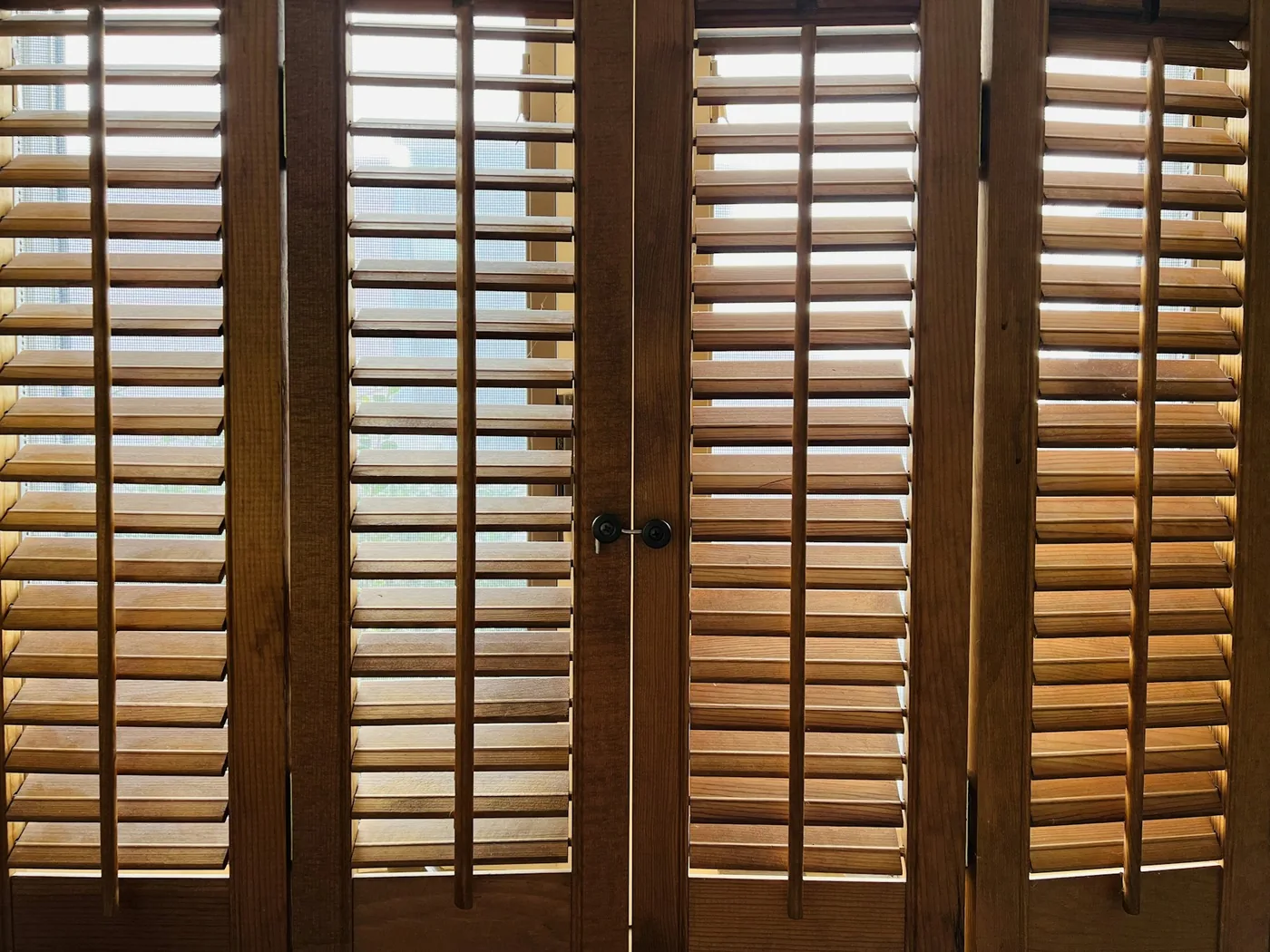
Louvers are rows of slats fixed with gaps between them. Indoors they form slatted partitions, ceiling features and textured walls. Outdoors they screen balconies, shade facades, clad gates and hide service areas while letting air and some light pass through. The spacing and the angle of the slats set how much privacy and how much breeze you get.
In a hot, humid climate, that airflow is the point. A solid wall blocks the breeze; a louvered screen keeps the view from the street or the neighbour while allowing the air movement that makes a Goan house comfortable. On a facade, louvers also shade the wall and windows behind them, which reduces heat gain on west-facing elevations.
Louvers are not a weather barrier. Wind-driven rain passes straight through horizontal gaps, and a louvered screen in front of an open veranda will not keep the floor dry in a monsoon storm. Nor are indoor-grade products suitable outside: the sun and the expansion of a hot afternoon will warp them within a season.
The details
Indoors, louvers make a partition that divides a room without closing it off, a ceiling with rhythm, or a feature wall with depth. Interior PVC and WPC profiles are light, termite-resistant and easy to keep clean.
Outdoors the brief is tougher. Exterior louvers face full sun, monsoon rain driven sideways and, near the coast, salt in the air. They need exterior-grade WPC or powder-coated aluminium, stainless fixings, and expansion gaps at the ends so long slats do not bow in the heat.
The slat spacing and depth decide how much you see and how much air passes. Deep slats closely spaced give privacy from the lane; wider spacing keeps the breeze and the view. We set the angle and spacing to the sightline you want to block.
On laterite walls and parapets, exterior louvers are fixed to a galvanised or aluminium sub-frame anchored into sound masonry, so water drains freely behind them and nothing sits in a pool of rain.
Your options
The material decides where a louver can go; the configuration decides what it does there. Indoor and outdoor use have very different demands.
Swipe for all 6 →
The honest view
Privacy with airflow
A louvered screen hides a balcony or partition while letting the breeze through, which a solid wall cannot do.
Shade on hot walls
Exterior louvers shade the facade and windows behind, cutting heat from the afternoon sun.
Strong architectural line
Repeating slats give rhythm to a plain facade, gate or ceiling with one material.
Low-maintenance options
PVC, WPC and coated aluminium need little more than washing, unlike painted timber.
Not rainproof
Driven rain passes through the gaps. Behind a louvered screen, floors and furniture still get wet in a storm.
Thermal movement outdoors
PVC and WPC expand in the sun. Without end gaps and slotted fixings, they bow or buckle.
Dust and cobwebs
Every slat collects dust and salt. Outdoors, they need washing a few times a year.
Side by side
Inside, almost any material works; outside, the differences decide how a screen looks after a few monsoons.
| PVC | WPC | Aluminium | Timber | |
|---|---|---|---|---|
| Indoor use | Very good | Very good | Good | Excellent |
| Outdoor UV stability | Exterior grade only | Good, exterior grade | Very good, coated | Needs oiling |
| Salt air | Good | Good | Very good with coating | Moderate |
| Termites | Immune | Highly resistant | Immune | Must be treated |
| Span between supports | Short | Moderate | Long | Moderate |
| Look | Clean, plain | Wood-look | Crisp, modern | Warm, natural |
Swipe to compare →
Near the sea, the fixings fail before the slats. Specify stainless or coated fixings whatever the slat material.
Rather see it in your own room?
We bring samples to the house, measure every window, and specify for the light and exposure you actually have.
Room by room
A slatted screen separates zones while keeping light and sightlines. PVC, WPC or timber all work indoors.
Privacy from neighbours with full breeze. Use exterior WPC or aluminium and stainless fixings.
Excellent on west-facing walls. Needs a properly anchored sub-frame and allowance for movement.
Gives privacy from the road while letting air reach the garden. Must be stiff enough for wind and use.
Slatted ceilings hide services and add warmth. PVC is light and simple to fix overhead.
Louvers will not keep rain out. Pair with roll-down blinds or a roof overhang if the space must stay dry.
PVC louvers for ceilings or partitions cope with steam; avoid timber here.
In depth — tap a heading to read
The same slat profile can be sold for indoor and outdoor use, but the material inside differs. Outdoor grades contain UV stabilisers and are formulated to cope with heat; indoor grades are not. An interior PVC slat fixed outside will fade, become brittle and bow under afternoon sun, often within a single year.
We specify outdoor grades for anything exposed to sun or rain, even under a partial roof. On a sea-facing elevation we often prefer coated aluminium, which handles UV and salt better than plastics and spans further between supports.
If the louver will ever see direct sun, treat it as outdoor.
Plastics and composites expand noticeably as they heat up. A long WPC slat fixed tight at both ends on a west wall will bow by mid-afternoon. We leave end gaps, use slotted holes or clip systems that let the slat move, and keep supports close enough that slats do not sag between them.
Near the coast, fixings are the weak point. Plated screws rust, stain the slats and eventually fail. We use stainless steel or coated fixings throughout outdoor work, including the anchors into the wall.
Louvers are fixed to a sub-frame, usually aluminium or galvanised steel, which is anchored to the wall. Laterite is soft and varies from block to block, so anchors must suit it and be set at enough points to spread the load. On a facade, wind load on a large screen can be considerable.
The sub-frame also creates a gap behind the louvers. That gap lets air move and rain drain away, rather than water sitting against the wall. It should be open at the bottom so nothing collects there.
Spacing and angle decide how private a screen is. Close spacing hides more but cuts airflow and light. Angled slats block the view from one direction while staying open in another, so a balcony screen can block the neighbour's window while letting you see the garden.
We stand at the important viewpoints with you, the street, the neighbouring balcony, the seat inside, and set the spacing and angle to suit, rather than using a standard gap.
Remember that privacy reverses at night. With lamps on inside and darkness outside, a louvered screen that hides you by day can show a good deal of the room to the street. If a balcony or bedroom is overlooked, plan curtains or blinds on the window behind the screen as well.
Horizontal louvers angled downward shed some rain, but in a monsoon gale water still blows through. Vertical slats let rain through freely. Floors behind louvered screens need a fall to drain, and furniture there should be outdoor-rated.
Timber louvers outdoors should be oiled before the rains and inspected afterwards. WPC and aluminium only need a wash to remove salt and grime once the monsoon ends.
Where a louvered screen fronts a room rather than an open veranda, the window or door behind it remains the real weather line. We check that its sill and frame drain properly, because louvers slow the water down and can leave it pooling against the glass for longer than an open elevation would.
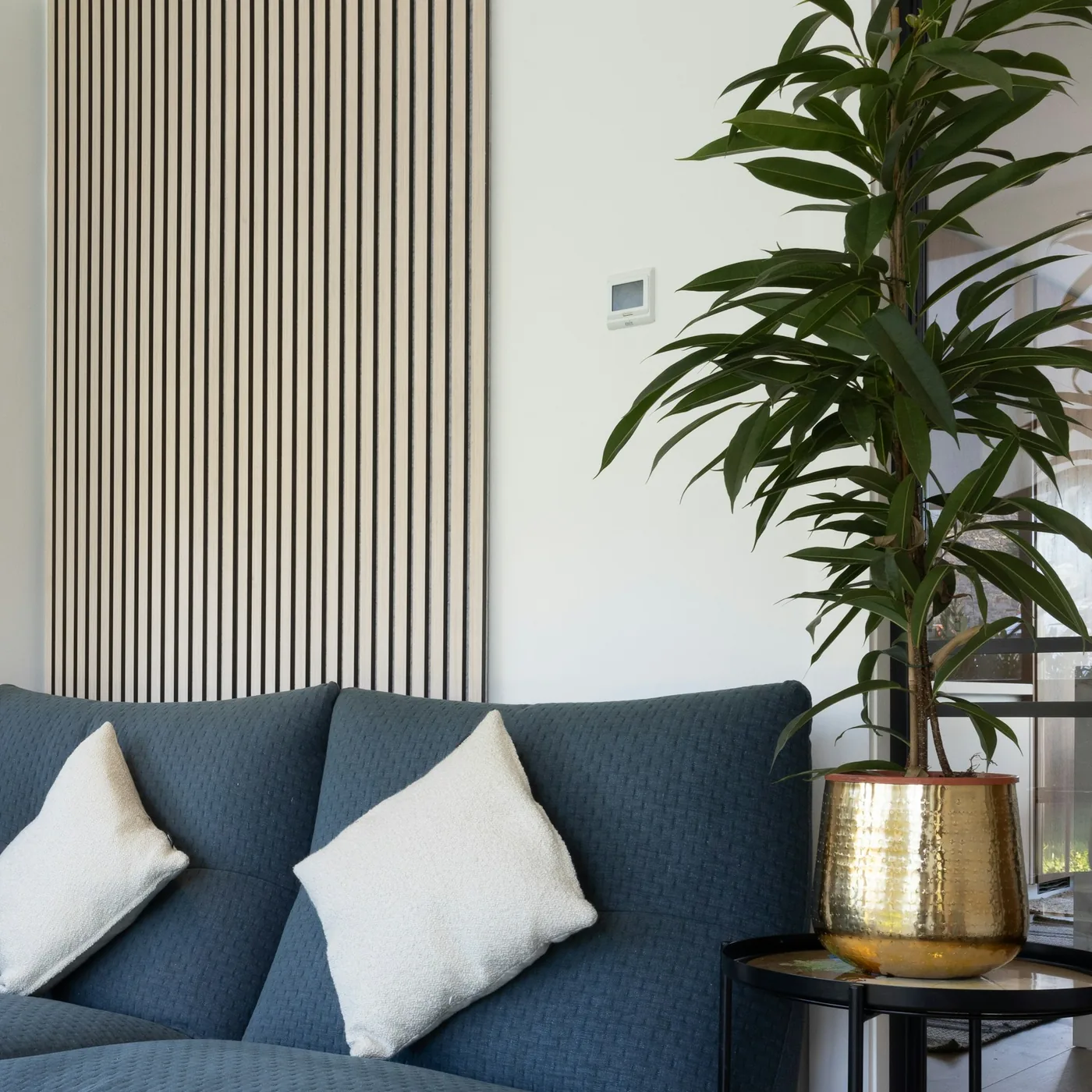
Inside the house, louvers do a gentler job. A slatted partition between a living and dining area, or beside an entrance, gives a sense of separation without closing the room off. Light from the window still reaches the far side, and the breeze from a ceiling fan still crosses the space, which a solid wall or a cabinet would stop.
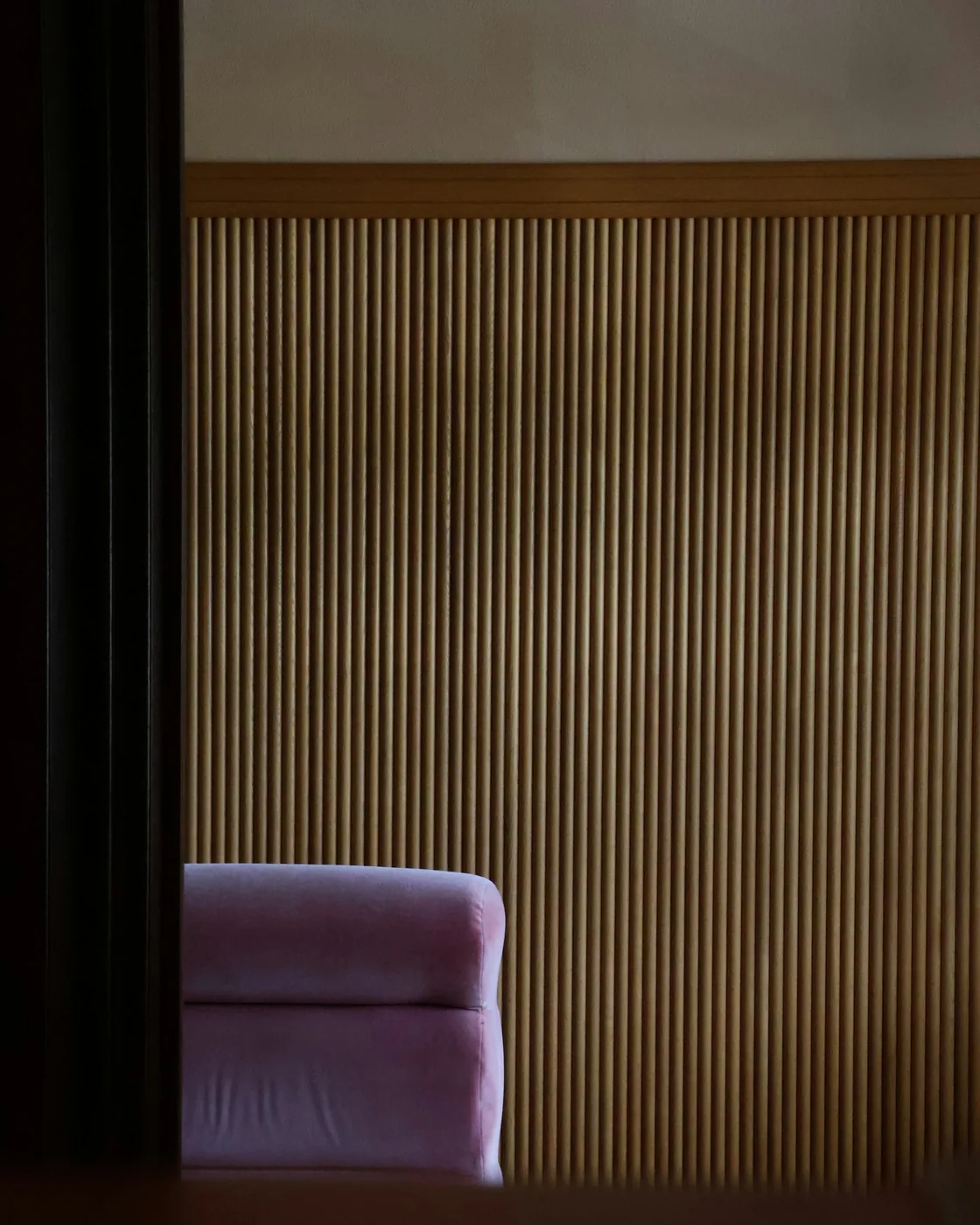
The slats can run floor to ceiling, fixed top and bottom to concealed channels, or stop short at a counter or low wall. Spacing is usually closer than outdoors because the aim is visual rather than shading. A timber or timber-look finish warms a room of hard floors and white walls; a painted PVC slat in the wall colour gives texture without a new material.
Overhead, louvered ceilings hide beams, ducts and wiring and soften a tall room's echo slightly. PVC is light enough to fix overhead without heavy framing, and it does not mind the moisture that collects under a roof slab in the monsoon. Lights and fans are planned into the slat layout so no slat has to be cut awkwardly around a fitting.
Living with it
Rinse outdoor louvers with fresh water a few times a year, especially after the monsoon and on sea-facing walls.
A soft brush or vacuum attachment along each slat keeps indoor louvers clean.
Inspect outdoor fixings after each monsoon. Replace any that show rust before they stain or fail.
Outdoor timber louvers need oiling before the rains to keep water and sun from cracking them.
Keep leaves and debris from collecting at the foot of the screen, where they hold water against the frame.
Avoid these
Interior PVC or WPC fades and warps in sun. Always use outdoor grades outside.
Slats fixed tight at both ends bow in the heat. Leave gaps and use slotted fixings.
They rust and stain. Use stainless or coated fixings.
Louvers let rain through. Plan blinds or overhangs where you need dryness.
Privacy depends on viewpoints. Set spacing and angle for the actual sightlines.
Checklist
More in wall panels
PVC, WPC, wood, fluted, acoustic and marble-effect panels, chosen for the wall they are going on as much as for the look.
Our process
One team from the first visit to the last bracket, so nothing is lost between the person who specified it and the person who fits it.
FAQ
Exterior-grade WPC or powder-coated aluminium, with stainless fixings and expansion gaps. Interior PVC louvers should not be used outside.
Yes, when slat depth, spacing and angle are set to block the sightline. Wider spacing trades some privacy for more air and view.
Yes. Floor-to-ceiling louvers divide a room while letting light and air through, and can be fixed or sliding.
Exterior WPC weathers slowly and may lighten over time in full sun. Capped profiles and pale colours hold their look longer.
Only exterior grades with UV stabilisers. Standard indoor PVC fades and warps in sun. On exposed facades, WPC or coated aluminium is usually more durable.
WPC is a wood-plastic composite, stiffer and more wood-like. PVC is lighter and fully water-resistant. Both resist termites; WPC tends to span further between supports.
No. They screen views and sun and let air through, but wind-driven rain passes between the slats. Use roll-down blinds or an overhang where the area must stay dry.
Stainless steel or coated fixings throughout, including anchors into the wall. Plated steel rusts and stains the slats.
Yes, on a sub-frame anchored with fixings suited to laterite. The sub-frame spreads the load and leaves a drainage gap behind the slats.
Next step
The right louver depends on where the sun, the sea and the neighbours are. We visit, stand at the viewpoints that matter, check the wall for anchoring and decide indoor or outdoor grades with you. We then draw the spacing, angle and sub-frame, specify fixings that will stand up to salt air, and fit the screen. Book a visit and we will plan it on site.