 Drape Haus
Drape Haus
Preparing the room
Drape Haus
Preparing the room
Restaurant & Café · Wall Panels
Panels that bring the volume down on a full Saturday night, give the room a signature wall worth photographing, and stand up to chair backs, splashes and kitchen air.
In short
Put acoustic panels on the largest bare walls or ceiling areas of a loud dining room, fluted or timber-look panels on the wall you want guests to remember, wipe-clean PVC or WPC behind service stations and booths, and louvers to screen the pass or the washrooms. Keep combustible finishes away from cooking heat.
What your restaurant or café asks of wall panels
See it in your restaurant or café
We bring samples to your home, hold them to your light and measure every opening — anywhere in North or South Goa.
A restaurant that is uncomfortable when full loses repeat guests, even if the food is excellent. The problem is usually reflection: sound bounces off tile, glass and plaster and builds on itself. Acoustic panels on a few large surfaces — the longest wall, the wall opposite the windows, or the ceiling above the busiest tables — absorb enough of it to change how the room feels.
Panels can be fabric-wrapped in your colours, finished in timber slats over an absorbent backing, or set into a pattern that becomes part of the décor. Combined with upholstered booths and curtains, they turn a hard, echoing room into a lively but comfortable one.
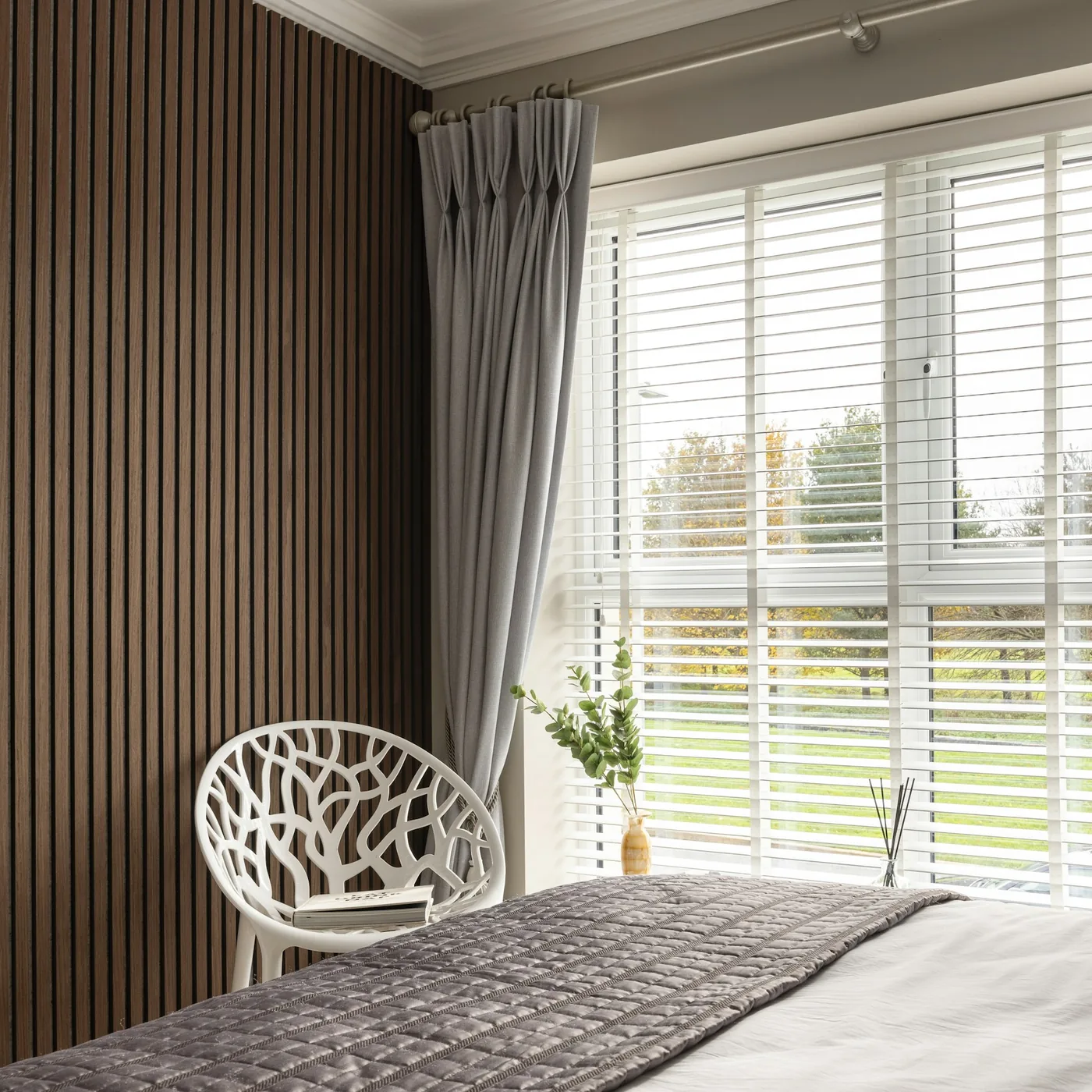
Decide which wall the camera will find — usually the one guests face when they enter, or the one behind the most popular booth. Fluted panels, timber-look slats or 3D panels there, lit by a wall washer or a row of spots, give the room a signature without much building work. Keep the rest of the walls quieter so the feature reads clearly.
The band of wall from the floor to just above the backs of chairs and booths takes the most wear in a restaurant. WPC or PVC panels there resist knocks, don't absorb splashes and wipe clean. Around service stations and coffee machines, choose surfaces that tolerate steam and spills.
Louvers screen the pass, the bar back or the corridor to the washrooms. Guests don't see the working parts of the restaurant, but air still moves and staff can pass freely.
Keep decorative panels away from cooking heat, grills and tandoors, and follow your fire-safety advisor's guidance on finishes in escape routes. Ask for fire-performance information on the panel materials you choose.
Behind the kitchen pass and around coffee machines, use non-combustible or tile-type finishes rather than decorative panels; keep the feature work for the dining side.
In Goa
Many Goan restaurants open fully to a street, a garden or the beach. Walls near those openings take humidity, salt and sometimes rain. Choose WPC or PVC rather than MDF-based panels there, and fix them on battens so the wall behind can dry during the monsoon.
Restaurants that close for the rains should ventilate the room periodically; acoustic fabric panels in a sealed, damp room can develop mildew.
More for your restaurant or café
Wall Panels for other spaces
We measure and fit wall panels across Goa — Panjim, Porvorim, Dona Paula, Mapusa, Candolim, Calangute, Assagao, Anjuna & Vagator, Siolim, Benaulim, Colva, Varca, Cavelossim, Margao, Majorda, Vasco da Gama, Canacona & Palolem, Ponda.
FAQ
Yes. Placed on large reflective surfaces they reduce echo noticeably, especially combined with upholstered seating and curtains.
Fluted, timber-look or 3D panels, lit to bring out their texture.
PVC and WPC panels wipe clean and suit the walls behind seating and service stations.
Keep decorative panels away from cooking heat, and follow your fire-safety advisor's guidance.
Usually, on your closed day or across a couple of mornings.