 Drape Haus
Drape Haus
Preparing the room
Drape Haus
Preparing the room
Wall Panels
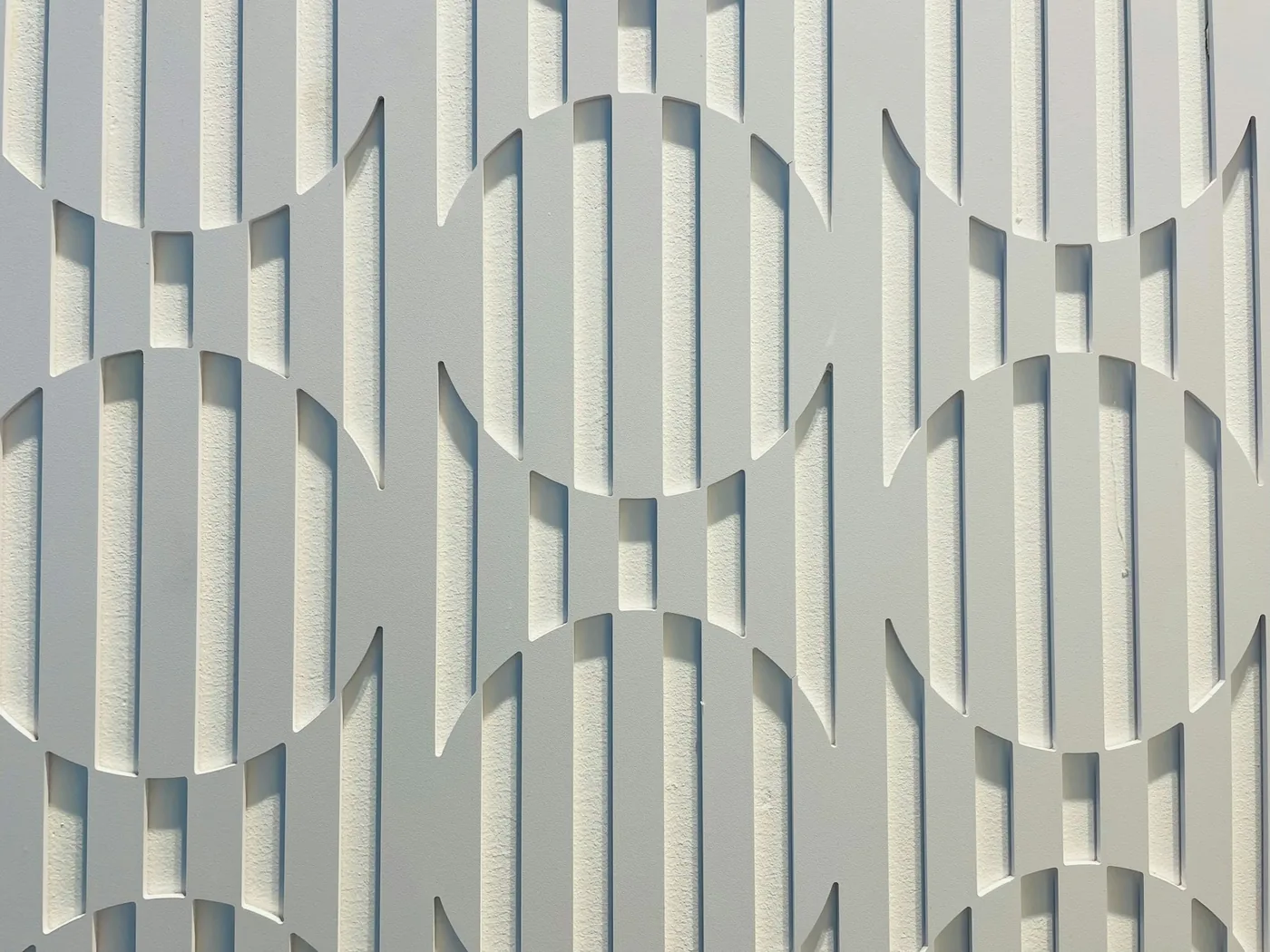
Moulded panels with a raised pattern — waves, geometric facets, ripples, bricks — that join into a continuous relief. Used well, on one wall with the right light, they give a room a focal point that paint cannot.
In short
By the Drape Haus studio · How we write
Is it right for you?
A 3D wall panel is a tile or board with a moulded, carved or pressed relief on its face: waves, facets, ribs, pyramids, organic ripples, geometric hexagons. Fitted edge to edge and painted or finished in one colour, the panels build a continuous textured surface that changes as the light moves across it. The effect depends far more on shadow than on colour, which is why the same wall can look flat at noon and dramatic in the evening.
They are made from several materials, and the choice matters in Goa. Vacuum-formed PVC is light and shrugs off humidity. Cast gypsum gives crisp, heavy detail but is brittle and dislikes damp. Routed MDF can be sharp and precise but swells if moisture reaches an unsealed edge and is attractive to termites. Composite and polyurethane panels sit between these.
The design question is usually more important than the material. A 3D surface is a strong statement and works best on a single wall that has a reason to be the focus: behind a bed, a sofa, a reception desk or a dining table. Used on several walls, or with a pattern too large for the room, it quickly becomes tiring to live with. Done with restraint and good lighting, it gives a plain room depth without adding clutter.
The details
3D panels are made in several materials. PVC panels are light and moisture-proof, and come ready to paint or pre-finished. Gypsum panels give the sharpest, most sculptural relief but are heavy and dislike damp. MDF and bamboo-fibre panels sit in between.
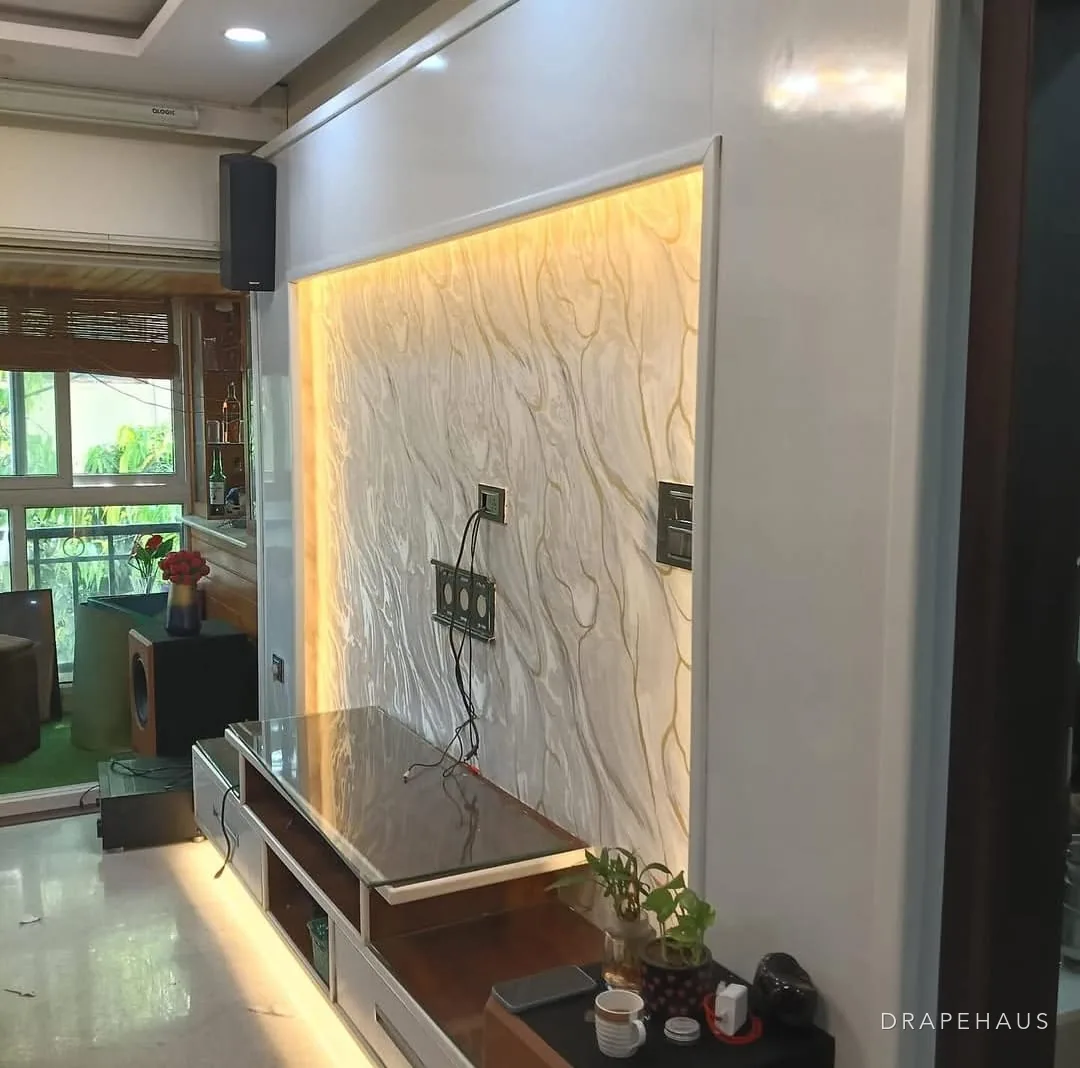
Relief only exists when light rakes across it. A 3D wall lit from the front looks like a patterned wallpaper; lit from above or the side, it comes alive. We usually pair a 3D wall with a linear light at the ceiling or a few angled spots.
Scale and restraint matter. A bold pattern on a small bedroom wall feels busy, and two relief walls in one room fight each other. One wall, a pattern sized to the room, and a plain colour usually make the strongest result.
On damp or exterior-facing walls in Goa, we steer towards PVC on a batten frame, and away from gypsum, which softens and stains if moisture reaches it.
Your options
Material sets how the panel copes with your climate and how sharp the relief can be. Pattern sets the mood. Choose both together.
Swipe for all 6 →
The honest view
Depth without objects
A relief wall adds texture and interest to a room without shelves, art or clutter. It suits minimal interiors that feel flat.
Light becomes the decoration
The same wall changes through the day, and a well-placed light at night turns it into the main feature of the room.
Hides wall imperfections
A strong relief disguises minor waves and patching in old plaster far better than a smooth painted finish.
Paintable and adaptable
Most panels can be repainted to a new colour later, so the wall can change with the room without being removed.
Dust settles in the relief
Every ledge and hollow collects dust, and near the sea, salt and fine sand. A 3D wall needs more regular cleaning than a flat one.
Easy to overdo
The wrong scale or more than one feature wall makes a room feel restless and dated quickly.
Joints need skill
Panels must align perfectly and joints be filled and sanded, or the pattern breaks at every seam and the illusion is lost.
Some materials dislike damp
Gypsum and MDF can stain, swell or soften in a humid room that is not air-conditioned or that sits closed through the monsoon.
Side by side
A relief wall competes with fluted panels, wallpaper and a textured paint finish for the same job. This is how they differ.
| 3D panels | Fluted panels | Textured wallpaper | Textured paint | |
|---|---|---|---|---|
| Depth of relief | Deep | Moderate, linear | Shallow | Very shallow |
| Effect of side light | Dramatic | Strong | Subtle | Subtle |
| Humidity tolerance | Material-dependent | Good in PVC or WPC | Depends on paper and wall | Good with right paint |
| Dust collection | High | Moderate | Low | Low |
| Ease of change | Repaint or remove | Remove | Strip and rehang | Repaint |
| Risk of dating | Higher with bold patterns | Moderate | Pattern-dependent | Low |
Swipe to compare →
If you want texture that will not tire, a gentle wave or a fine flute in one colour is the safer start.
Rather see it in your own room?
We bring samples to the house, measure every window, and specify for the light and exposure you actually have.
Room by room
Behind the headboard, a soft wave pattern lit by wall washers gives a calm focal point without competing with the bedding.
One wall behind a sofa or console. Choose the wall you see on entering the room, and leave the others plain.
A geometric relief behind a desk gives a strong first impression and frames signage well. Use durable composite at touch height.
Works as a backdrop with a pendant or wall lights. Keep it clear of food splashes and serving trolleys.
PVC relief can go on a dry wall away from the shower, but cleaning soap film from every hollow is tedious. Smooth surfaces are kinder in wet rooms.
Large patterns overpower small spaces and catch shoulders in narrow corridors. Use a fine, shallow relief or skip it.
Grease and steam settle in the relief and are hard to clean. Keep 3D panels out of cooking areas.
In depth — tap a heading to read
The size of a pattern should follow the size of the wall and the distance you usually see it from. A large wave across a double-height living room reads as a gentle landscape; the same wave on a small bedroom wall becomes overpowering. Smaller geometric tiles can look like a fine texture from across a big room, but close up in a compact space they can feel busy.
We usually suggest starting from what the wall is for. Behind a bed or sofa, a relief that runs horizontally or in soft curves tends to feel restful. Behind a desk, a counter or a TV, a crisp vertical or geometric pattern frames the object. If in doubt, a single colour and a shallower relief keep the wall interesting without dominating the room.
One feature wall per room is usually enough. The relief should frame the room, not fill it.
A 3D panel is only as good as the light that crosses it. Flat light from the front, such as a ceiling downlight pointing straight at the wall, washes the relief out. Grazing light from directly above or below, set close to the wall, throws long shadows into every hollow and brings the pattern to life.
In practice this means a linear light in a recess at the ceiling line or a skirting-level uplighter, chosen for a warm, even beam. Plan the cable runs before the panels go up so wires are hidden behind them. Daylight from a side window does the same job during the day, which is worth considering when choosing which wall to treat.
Relief panels magnify every flaw in the wall behind them. Before choosing, we read the moisture in the plaster and check how flat the wall is. On a dry, true wall, PVC and composite panels can be bonded directly; gypsum needs a sound, primed surface and careful adhesive work. On older laterite walls with uneven render, a framed backing or a levelling board brings the surface true first.
If the wall shows damp, especially near the floor or under a window, the panel choice narrows quickly. Gypsum and MDF should not be fitted until the source is fixed and the wall has dried. PVC or composite panels tolerate humid air but still should not seal a wet wall, which would leave the plaster behind them to deteriorate unseen. In a home closed through the monsoon, we steer away from gypsum unless the room will be kept ventilated or dehumidified.
The pattern must flow across joints without a visible break. That means setting out from the centre, checking each panel against its neighbour, and filling and sanding seams with a compatible filler before painting. Gypsum and MDF panels are almost always painted on site so the joints disappear; pre-finished PVC panels rely on precise alignment instead.
Paint choice matters in humid weather. A washable, mould-resistant finish lets you wipe the surface, while a deep matte hides minor imperfections but marks more easily. Pale tones show the shadows best; very dark colours flatten the relief and show dust.
Living with it
A soft dusting brush followed by a vacuum with a brush head clears the hollows. Do this regularly, before dust settles into a film.
Use a barely damp microfibre cloth on painted panels. Soaking gypsum or MDF can lift paint and swell edges.
Wipe the ledges after windy spells, because salt draws in moisture and leaves faint marks in the relief.
Keep a little of the original paint for chips at corners and touch height. Small dabs disappear in the shadows of the relief.
In gypsum or MDF rooms, run a fan or dehumidifier during long humid spells, especially if the house is closed.
Avoid these
More than one relief wall in a room competes for attention. Choose one wall and keep the rest calm.
A large pattern in a small room, or a tiny one on a vast wall, never looks right. Match the pattern to wall size and viewing distance.
Front lighting flattens the relief. Plan grazing light from above or below before the panels are fixed.
Plaster panels in an unventilated, humid room stain and soften. Use PVC or composite instead.
Unfilled or misaligned joints break the pattern and give away the panels. Allow time for proper finishing.
Checklist
More in wall panels
PVC, WPC, wood, fluted, acoustic and marble-effect panels, chosen for the wall they are going on as much as for the look.
Our process
One team from the first visit to the last bracket, so nothing is lost between the person who specified it and the person who fits it.
FAQ
PVC 3D panels are. Gypsum panels are not suited to bathrooms or walls that carry damp.
Most PVC, gypsum and MDF panels can be painted after fitting, which also hides the joints. Some pre-finished panels should not be painted over.
A soft brush or vacuum attachment for dust, and a lightly damp cloth on PVC. Deep reliefs gather more dust than shallow ones.
The one you see on entering the room, or behind the bed or TV — somewhere light can graze it and furniture will not hide it.
PVC and composite panels cope well with humid air. Gypsum and MDF panels are best kept to air-conditioned or well-ventilated rooms and should never go on a damp wall.
Yes, more than a flat wall. A soft brush and vacuum every few weeks keeps them clean. Near the sea, a light wipe after windy weather stops salt settling.
With grazing light from directly above or below, close to the wall, rather than light from the front. A linear fitting at the ceiling line or skirting brings out the shadows.
Usually not. A single relief wall gives a strong focal point; several compete with each other and can make a room feel busy.
Next step
A 3D pattern looks very different in a brochure and on your wall at dusk. We visit, check the wall for moisture and flatness, help choose the one wall that should carry the texture, and bring sample panels to hold up in your light. We then plan lighting and cable runs, set out the panels from the centre, and finish the joints so the pattern flows. Book a visit and we will help you get the scale right.