 Drape Haus
Drape Haus
Preparing the room
Drape Haus
Preparing the room
Goan & Portuguese House · Blinds
Old Goan houses already have the best window treatment ever invented for this climate: timber shutters. A blind should work alongside them, not replace them.
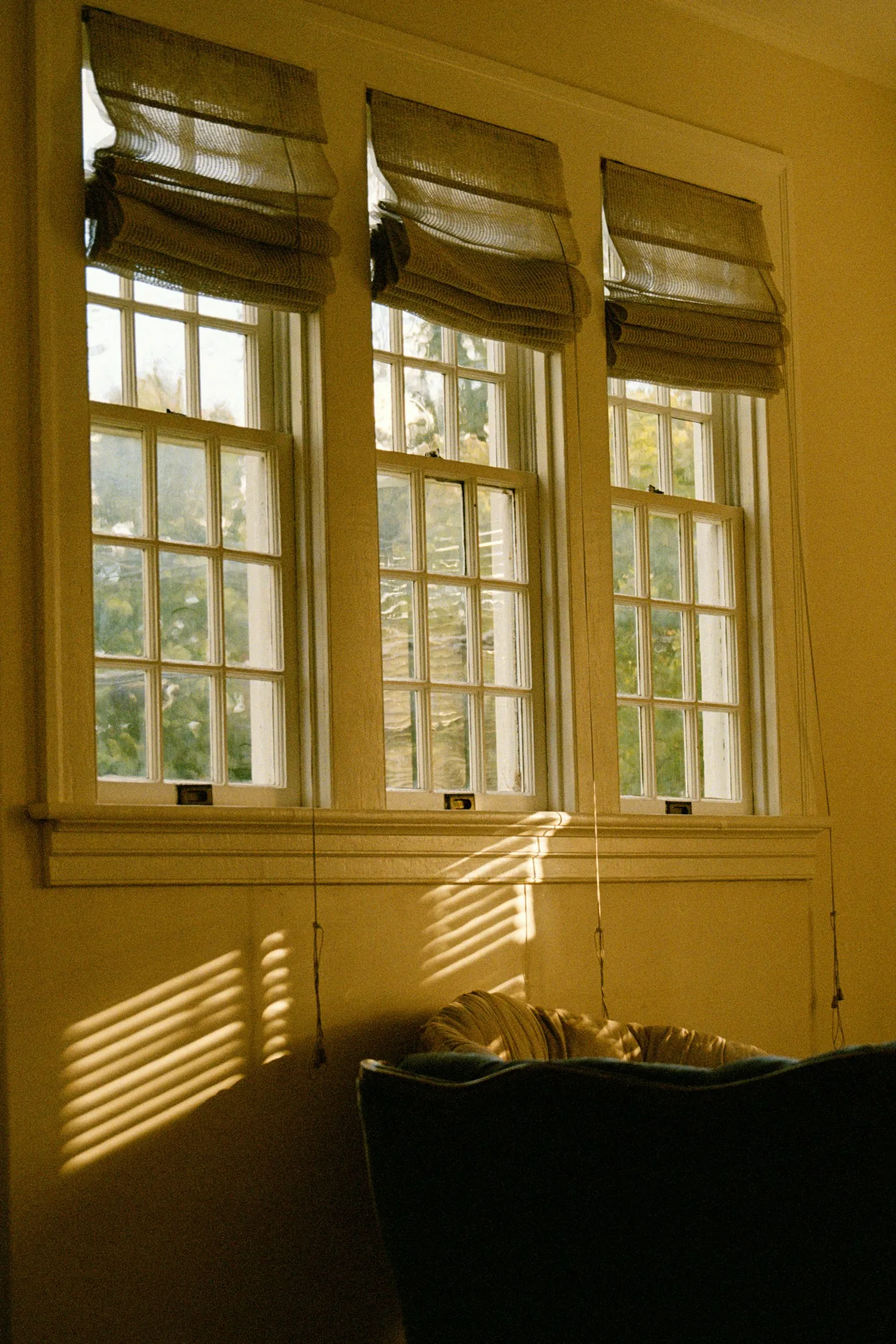
Roman · Midday
Treatment
Time of day
Fabric that folds up in soft pleats — the look of a curtain in the footprint of a blind. Lined, it is fully private at night.
In short
In a heritage house, use blinds sparingly and where they help: roman blinds in soft linen on bedroom and study windows, bamboo chik on the balcão and verandah, timber blinds where the house has dark wood throughout. Fit them inside the reveal or on the masonry above it, behind the shutters, so the shutters still close and the frame is never drilled.
What your Goan house asks of blinds
See it in your Goan house
We bring samples to your home, hold them to your light and measure every opening — anywhere in North or South Goa.
A typical old Goan window has three layers: the glazed or oyster-shell casement, the timber shutters, and sometimes an iron grille or balustrade outside. Before adding a blind, decide what each layer will do. Often the shutters handle darkness and security, the casement handles the weather, and a blind is needed only for softer light control or privacy when the shutters are open.
In practice, that means a light roman or roller blind fitted high inside the reveal, clear of the shutter leaves, so the shutters can still fold back flat and close fully.
We never screw into carved or moulded timber frames. Blinds go into the masonry at the top of the reveal or the lintel above the window, using fixings sized for soft lime plaster and laterite. Where plaster is loose, we find solid material or use a small timber batten fixed into sound wall. Everything should come out cleanly one day, leaving the house as it was.
The balcão — the covered porch with its built-in seats at the front of many Goan houses — was designed for sitting out in the cool of the evening. A bamboo chik between its pillars on the sun side gives shade in the afternoon and a sense of privacy from the road, while keeping the breeze. Hang it from the beam, not the pillars' mouldings, and tie it down in the wind.
A roman blind in a heritage house reads like a curtain folded up. Choose natural linen or cotton in a colour that suits the lime-wash — ivory, sand, a soft ochre or a faded indigo. Line it for bedrooms; leave it unlined in rooms where you want light to glow through. Avoid glossy synthetics and bold prints, which feel modern against old plaster.
In Goa
Many owners close the shutters for long stretches in the monsoon, especially when the house is empty. A blind trapped between closed shutters and damp glass for weeks can mildew. Raise blinds fully before closing the house, or take fabric blinds down and store them dry.
Chik on the balcão should be rolled up in heavy rain and allowed to dry before being rolled again.
More for your Goan house
Blinds for other spaces
We measure and fit blinds across Goa — Panjim, Porvorim, Dona Paula, Mapusa, Candolim, Calangute, Assagao, Anjuna & Vagator, Siolim, Benaulim, Colva, Varca, Cavelossim, Margao, Majorda, Vasco da Gama, Canacona & Palolem, Ponda.
FAQ
Yes, carefully. Fit them inside the reveal or on the masonry above, behind the shutters, without drilling the timber frames.
Roman blinds in natural linen or cotton, bamboo chik on the balcão and verandah, and timber blinds in rooms with dark wood. All sit comfortably against old walls.
Often not in every room. Shutters handle darkness and security well; blinds add softer light control and privacy when the shutters are open.
Yes, it is the traditional choice. Hang it from the beam on the sun-facing side and tie it down in wind.
Yes, in Salcete, Bardez, Tiswadi and beyond. We look closely at every frame before suggesting a fixing.