 Drape Haus
Drape Haus
Preparing the room
Drape Haus
Preparing the room
Blinds
A blind for glass above your head has to work against gravity, stay flat across a slope or a level ceiling, and run without anyone climbing a ladder. We make tensioned skylight blinds for roof windows, flat-roof lanterns and atrium glazing, usually with a motor.
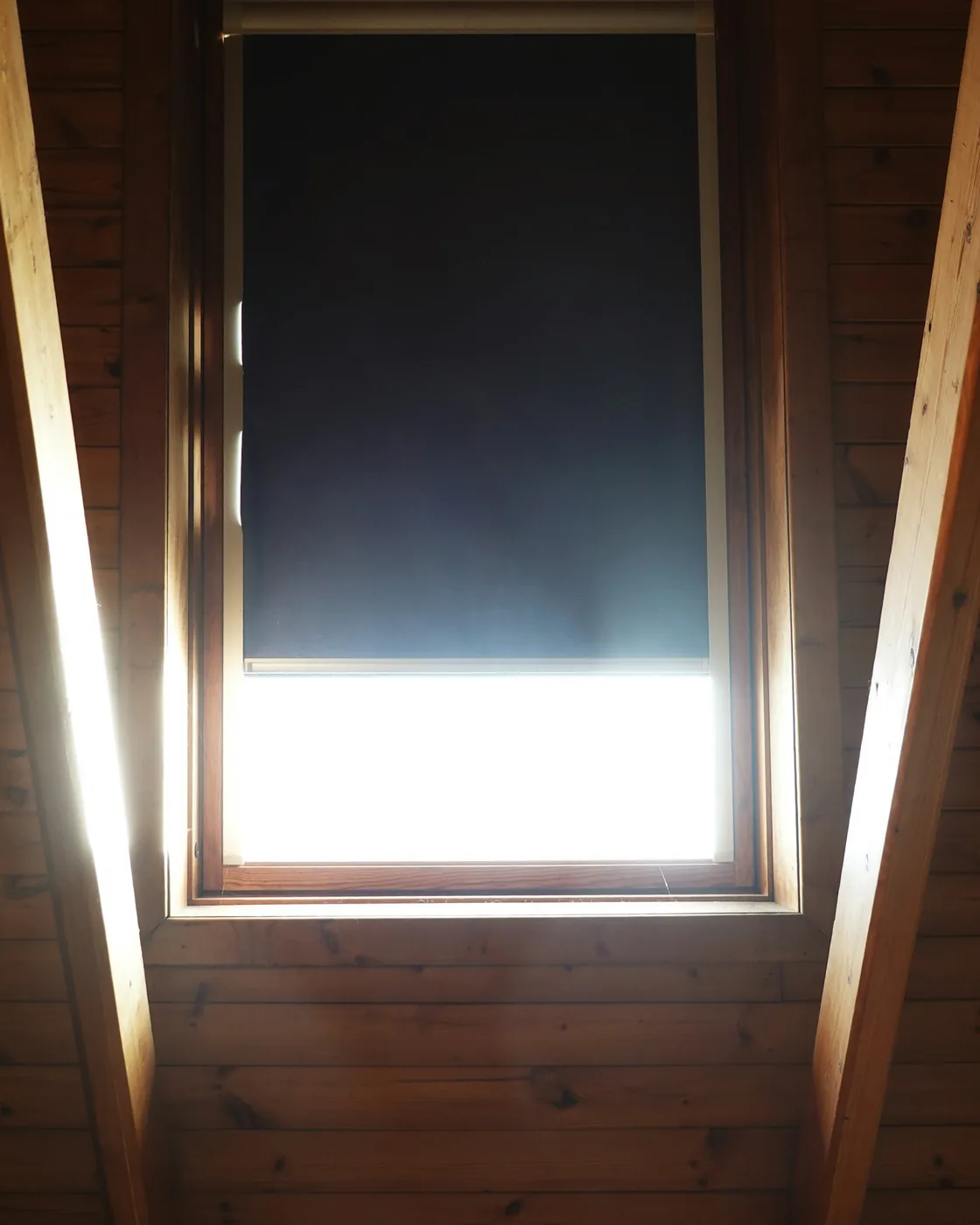
Roller · Midday
Treatment
Time of day
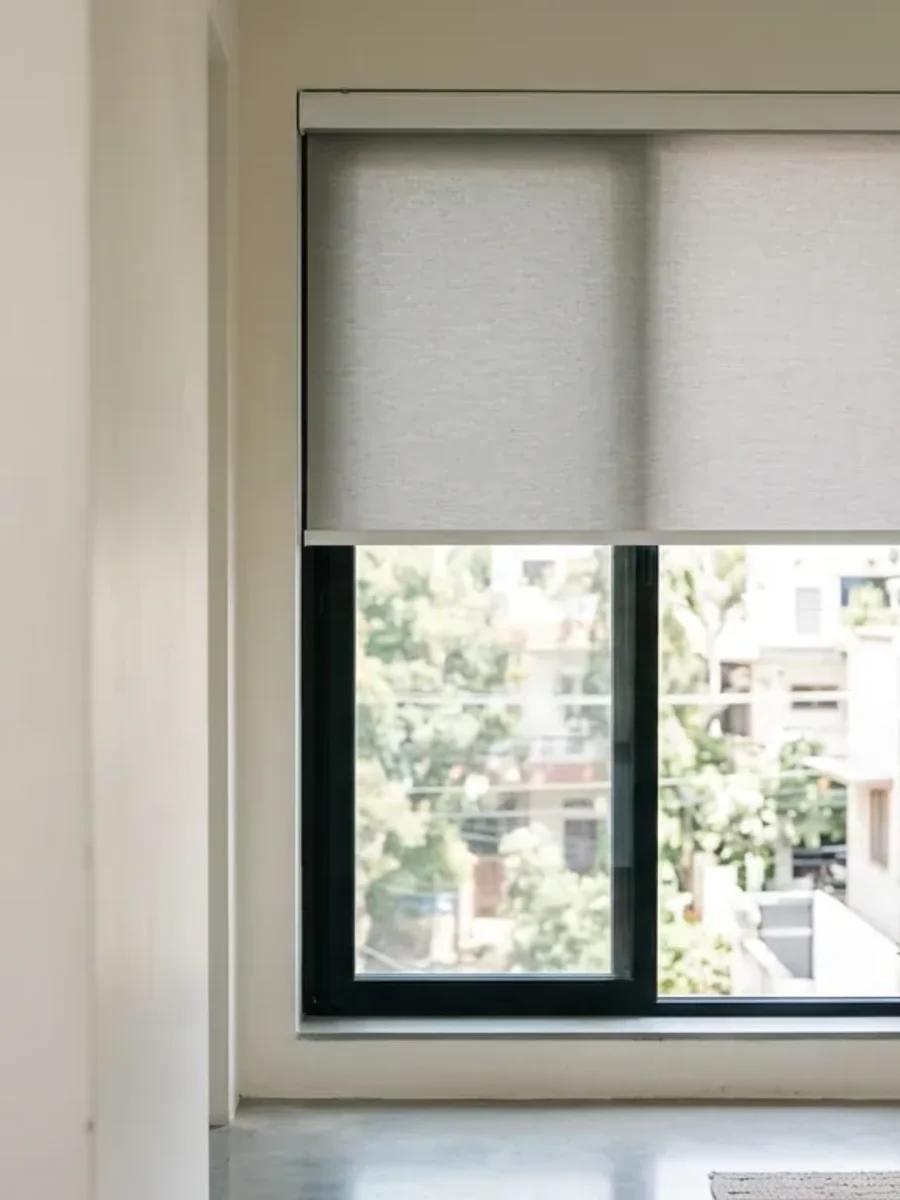
Light-filtering roller fabric: soft, even light and daytime privacy. For a bedroom, choose blackout fabric and side channels.
In short
By the Drape Haus studio · How we write
Is it right for you?
Skylights are usually added for one reason: daylight in a part of the house that a wall window cannot reach. A loft bedroom, a windowless stair, a bathroom in the middle of the plan, a deep living room under a flat roof. The trouble starts in the first dry season, when the same glass that lights the room by day pours heat and glare straight down onto a bed, a sofa or a stair tread. A skylight blind lets you keep the opening and decide, hour by hour, how much of the sky to let in.
It is the wrong answer if the real problem is a leaking skylight, a cracked seal or glazing that lets in so much heat the room is unusable even with a blind. Those need the roofer or the glazier first. It is also worth pausing if the skylight is still on the drawing board: the glass specification and any external shading do more than any interior fabric, and our Journal article on skylight blinds sets out why. Where the glass is already in and the room is otherwise right, a well-fitted tensioned blind is what makes it comfortable.
The details
An ordinary roller blind fitted to a skylight sags in the middle within days, because nothing holds the fabric up once it leaves the roller. Skylight systems solve that with tension: the fabric runs in side channels or along fine guide wires, and a spring or a second motorised roller keeps it taut from end to end, whatever the angle of the glass.
Three kinds of overhead glazing turn up in Goan houses. Pitched roof windows set into a tiled roof, often over a loft bedroom or a stair. Flat-roof lanterns and walk-on rooflights in newer villas, where the blind lies horizontal. And large atrium or courtyard glazing, where several panels need one blind each and one control for the lot. Each takes a different system.
Because the glass is out of reach, most skylight blinds we fit are motorised. Battery and solar motors suit retrofits where no wiring reaches the ceiling, and keep working through a power cut. Our motorised blinds page explains the motor and control choices in more detail.
The fabric decides what the blind actually does. A light-coloured or reflective outer face turns back more sun before it becomes heat in the room; a blackout fabric darkens a bedroom under a roof window; a pleated honeycomb traps a layer of air against the glass. Our Journal article on skylight blinds goes into the heat science; this page is about what we make and fit.
Your options
The system is chosen by the shape and angle of the glass and by how far away it is. The fabric is a separate decision, made afterwards for the room.
Swipe for all 5 →
The honest view
Keeps the daylight, loses the glare
You decide how much sky comes in. A light-filtering fabric softens the glare on a stair or a desk without making the room feel shut in, and it can be opened again once the sun moves off the roof.
Flat at any angle
Tension keeps the fabric tight and close to the glass, whether the roof pitch is steep, shallow or level. It does not sag, billow under a ceiling fan or rattle in a draught.
Real darkness under a roof window
With a blackout fabric in closed channels, a loft bedroom under a skylight can be as dark as any other bedroom in the house.
More involved to fit
The channels or wires, the motor and the power all have to be planned around the frame, the plaster and sometimes a wet roof void. It is not a fit-it-yourself product.
Interior shading has limits
A blind inside the glass catches heat after it has come through. It makes a room noticeably more comfortable, but on a large, unshaded rooflight it will not do what an external screen would.
Side by side
The realistic alternatives are a film on the glass, an external screen above it, or leaving it bare and living with the light. Here is how a tensioned interior blind compares.
| Tensioned skylight blind | Solar film on glass | External screen | Bare glass | |
|---|---|---|---|---|
| Adjustable through the day | Yes | No, always on | Yes, if retractable | No |
| Can darken a bedroom | Yes, with blackout in channels | No | Partly | No |
| Effect on heat | Good with a reflective face | Moderate, permanent | Strongest | None |
| Monsoon exposure | Indoors, protected | Indoors, protected | Fully exposed to wind and rain | Not applicable |
Swipe to compare →
Rather see it in your own room?
We bring samples to the house, measure every window, and specify for the light and exposure you actually have.
Room by room
The commonest reason people call us about a roof window. A blackout fabric in side channels gives a dark room for sleep, and a timed motor can open it again at a set hour.
Glare on the treads is a safety issue as much as a comfort one. A light-filtering fabric on a motor keeps the stair bright but even, and nobody needs to reach over a drop to work it.
A top-hung, bottom-anchored blind with a reflective outer face cuts the midday glare on a sofa or screen. On a very large lantern, split it into bays.
Workable with a fully synthetic fabric, sealed motor and stainless fixings, but steam and the humidity of a Goan monsoon together are hard on anything overhead. Ventilation matters more than the blind.
A multi-panel system on one control lets you shade the panels the sun is on and leave the rest open. It needs careful planning of motors, power and access.
In depth — tap a heading to read
We measure the opening from inside the room, but what matters is where the blind will fix. On a factory-made roof window, the blind usually fits to the frame itself, just inside the glazing bead, and the exact width between the frame sides at the top and the bottom decides the channel length. On a site-built lantern, the blind often fixes to the plaster of the light well instead, and plaster walls are rarely parallel, so we measure at several points along each side.
We also record the depth of the light well, the angle of the glass, the position of any opening handle or vent, and what the ceiling is made of. A tensioned blind pulls on its fixings constantly, so the head and the foot must go into something solid. Old timber ceilings, thin gypsum board and laterite that crumbles at the surface all need a different fixing plan.
If the skylight opens, the blind must be planned so it never stops the sash closing before rain. Check the vent and its handle before anything is ordered.
Almost every skylight blind above head height is motorised, because a blind that needs a ladder is a blind that stays in one position. There are three ways to power it. A rechargeable battery motor sits inside the roller and is topped up with a cable every few months; a small solar panel can be added on the outside face of the glass to keep it charged; and a wired motor runs from a mains supply brought to the head of the blind.
In Goa, power cuts settle the question for many houses. A battery or solar motor keeps working when the supply drops, which matters in a loft bedroom on a summer afternoon. A wired motor needs either an inverter circuit or acceptance that the blind will stay where it is until power returns. Our motorised blinds page compares the motors, remotes and wall controls in more depth.
For heat, the face that looks at the sky is what counts. A white, pale or metallised outer face reflects more of the sun back out through the glass; a dark face absorbs it and warms the air under the ceiling. A lower-openness fabric cuts more glare, a more open one keeps a view of the sky. In a living room we usually choose a reflective-backed screen fabric; in a bedroom, a blackout fabric with a pale outer side.
The air at the top of a room is the warmest and wettest in the house, and during the monsoon a skylight can run with condensation for days. A blind pressed against cold, wet glass will mark and, if it is a natural fibre, grow mildew. We specify fully synthetic fabrics overhead, leave a small air gap between fabric and glass where the system allows, and suggest opening the blind on dry spells so the glass and the fabric both dry out.
Leaks are the other concern. A skylight that seeps at a corner will find the blind before it finds the floor. Before fitting, we look for water staining on the light well and the frame. If there are signs of a leak, the skylight should be resealed before the blind goes in, or the new fabric will carry the stain within a season.
Near the coast, the weak points of a skylight blind are metal: the guide wires, the springs, the tension fittings and the screws into the frame. Salt carried in the air settles high up where it is never wiped away, and plain steel parts rust and stain the fabric. We use stainless steel wires and fixings and anodised or powder-coated aluminium channels as standard in sea-facing houses.
Motor heads and battery packs need the same thought. A motor in a closed cassette is far better protected than one left open in a damp roof void, and in a house that stays shut through the monsoon, a battery should be charged before it is left and checked when the owners return.
Living with it
A soft brush on a telescopic pole lifts dust and salt film from the fabric without a ladder. Do it with the blind fully closed so the whole face is reachable.
Run the blind open for a few hours whenever the sun comes out, so the fabric and the glass behind it can dry. It is the simplest guard against mildew.
If the fabric begins to sag in the middle or the bottom bar sits crooked, the tension needs adjusting. Ask for it to be reset rather than forcing the blind.
Charge a battery motor before the season changes and before the house is closed. A flat battery overhead is a nuisance to reach.
Avoid these
Without channels or wires, the fabric sags off the glass within days and flaps under a fan. A skylight needs a tensioned system.
A dark fabric facing the sky absorbs heat and warms the room below. Choose a pale or reflective outer side, whatever colour faces into the room.
A blind fitted under a seeping skylight is stained by the first heavy rain. Fix the seal first.
Checklist
More in blinds
Blinds do what curtains cannot: tight light control in a shallow recess, a clean line on a busy window, and genuine blackout when they run in side channels.
Our work
Our process
One team from the first visit to the last bracket, so nothing is lost between the person who specified it and the person who fits it.
FAQ
Not successfully. Without tension the fabric sags away from the glass and flaps when a fan is on. A skylight blind needs side channels or guide wires and a spring or motor that keeps the fabric taut.
Not always. A low roof window can be worked with a telescopic pole and a hook. Anything higher, or any flat lantern or atrium, is far more practical with a motor and a remote.
Yes, with a blackout fabric running in closed side channels. The channels stop the bright line of light that would otherwise show round the edges of the glass.
Battery and solar motors carry on as normal. A wired motor stops where it is until power returns, unless it is on an inverter circuit, so we plan the power source around how often the house loses supply.
They are the same family. Roof window usually means a factory-made, opening window set into a pitched roof; skylight is used for any overhead glazing, including fixed lanterns and atria. Both need a tensioned blind; the fixing method differs.
For anything out of reach, yes. A motor means the blind is actually moved with the sun rather than left in one position. Battery and solar motors suit retrofits and carry on through power cuts.
Yes, with a top-hung, bottom-anchored system that holds the fabric level across the glass. On a large lantern we split the glazing into bays, each with its own blind on one control.
It will not stop it, but a cellular or pleated fabric reduces it by keeping a layer of still air against the glass. Ventilation and opening the blind on dry days do the rest.
Next step
Overhead glazing varies more than any other window, so we start with a visit. We measure the frame and light well, check the angle, the vents and any sign of a leak, look at where power could reach, and bring fabric samples you can hold up against the sky. We then specify the system, fabric, fittings and motor, make the blind to those measurements and fit it. Book a home visit, and tell us which room sits under the glass.