 Drapehaus
Drapehaus
Preparing the room
Drapehaus
Preparing the room
Material
Bamboo chik blinds have hung on Indian verandas for a very long time, and they remain the right answer for a certain kind of Goan space. They filter hard sun into dappled light, they move with the breeze rather than blocking it, and they cost very little.
By the Drapehaus studio · 19 September 2026 · How we write
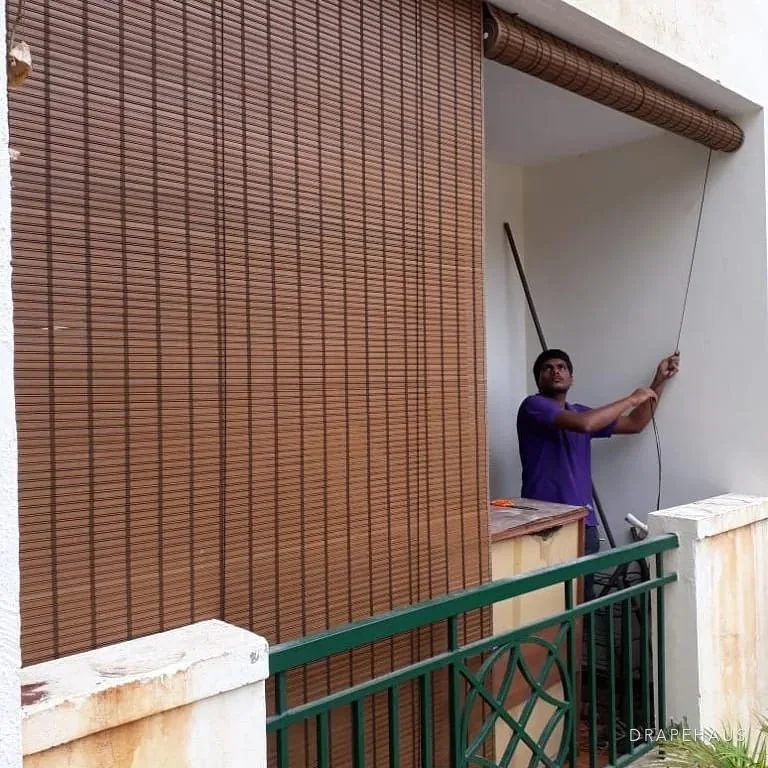
They are also, honestly, consumable. A chik blind on an exposed veranda has a life measured in a few years rather than a decade, and anyone specifying them should understand that going in. Treated as an inexpensive replaceable layer they are excellent value; treated as a permanent installation they disappoint.
Light quality first. A woven natural blind breaks sun into a dappled, moving pattern that no manufactured fabric reproduces, and on a veranda it is genuinely lovely.
Airflow second. Because the weave is open and the blind hangs loose, air moves through and around it freely. On a traditional house relying on cross-ventilation, that matters enormously — it shades without sealing.
Cost third. They are inexpensive enough to replace without resentment, which is the right mental model for anything hanging outdoors in this climate.
Direct monsoon rain is what finishes them. Repeated wetting and drying makes natural fibre swell, split and eventually rot, and the cotton or nylon cords holding the reeds together generally fail before the reeds do.
Taking them down for the monsoon roughly doubles their life, and it is a ten-minute job. Stored dry and flat, they come through the season fine.
On a sheltered veranda with a deep overhang they do considerably better, because the rain rarely reaches them. On an exposed terrace with driving monsoon rain they will not last more than a season or two whatever you do.
Some are supplied with a protective coating, which helps with water resistance at the cost of some of the natural texture. Worth considering on an exposed position, unnecessary on a sheltered one.
Rather see it in your own room?
We bring samples to the house, measure every window, and specify for the light and exposure you actually have.
More on this — tap a heading to read
The family covers several materials. Traditional chiks use thin split bamboo or reed, strung together side by side. Matchstick blinds use finer bamboo strips for a tighter, more even look. Woven grass, jute and seagrass shades are denser and more textured, and are usually made up as roll-up or Roman blinds rather than hung loose.
Whatever the reed, the binding thread decides much of the life of the blind. Cotton thread absorbs water and rots. Nylon holds up to water but weakens in sunlight. Polyester twine resists both rot and UV better than either, so where the choice exists, a polyester binding is worth asking for on any blind that will see weather.
The lift cords and pulleys wear too. A cord that runs over a rough edge or a corroded hook every day will fray long before the reeds give out, so smooth pulleys and stainless hooks are small details that pay back.
Bamboo contains starch, and starch attracts wood-boring beetles. The sign is a fine, flour-like powder collecting beneath the blind or on the sill, and small round exit holes in the reeds. An infested blind is best removed from the house promptly, particularly if there is timber furniture or joinery nearby, rather than treated in place.
Bamboo that has been properly treated, commonly with a borate preservative, resists borers much better, and it is worth asking whether a blind has been treated. Termites are a separate risk: they reach blinds that are stored on the floor or left leaning against a wall, so blinds taken down for the monsoon should be stored off the ground.
During the rains, bamboo and grass can also develop dark surface mould, especially in shaded positions. Brushing it off and drying the blind in the sun on the first dry days usually deals with it; if the mould has spread through the binding cords, the blind is near the end of its life.
In the dry north of India, vetiver or khus blinds are traditionally hung in doorways and wetted so that air passing through them is cooled by evaporation, with a pleasant scent as a bonus. It is an effective technique in hot, dry air, and people sometimes ask for it in Goa.
It works poorly here. Evaporative cooling depends on dry air that can absorb more moisture, and Goan air is humid for most of the year, very humid through the monsoon. A wetted blind adds moisture to a room without much cooling effect, and a blind kept damp in warm, humid air grows mould quickly.
Khus and other natural weaves can still be used dry as shade screens, where they perform like any chik. For cooling, shading the opening from outside and keeping air moving with fans does far more in this climate.
Indoors, woven wood and grass shades are a good way to bring texture and warmth to a room, and they avoid the rain that shortens their life outside. They still diffuse light and still show sightlines when backlit, so bedrooms and bathrooms facing a lane usually need a privacy liner or a blackout liner fitted behind the weave.
Natural grasses vary in colour from batch to batch and fade in strong sun, typically lightening towards a pale straw. Matching a new blind to an old one is rarely perfect, so it is sensible to order all the blinds in a room at the same time.
They cannot be washed. Regular vacuuming with a brush attachment keeps dust down, and spills should be blotted immediately, since water marks on natural grass often remain. In humid months, an indoor woven shade should be raised and lowered regularly rather than left rolled for weeks.
A loose chik on a windy veranda swings, knocks against posts and glass, and wears through its cords quickly. Tying the bottom rail to hooks or cleats at each side steadies it in a breeze while still letting air pass through the weave. On exposed positions this single detail adds noticeably to the blind's life.
The seasonal routine is short. Take chiks down in late May, before the IMD normal monsoon onset date of 5 June; brush them, dry them in the sun, roll them loosely and store them flat and off the floor in a dry room. Rehang after the rains withdraw in October, shaking each one out first and checking for nests, borer powder and weak cords.
In a homestay or a restored heritage house let to guests, chik blinds are part of the character people come for, and they photograph beautifully. They are well worth using, provided the owner accepts them as a seasonal, replaceable layer and someone is responsible for taking them down and putting them back up each year.
Guests use them roughly. Cords are yanked, blinds are left half-rolled and flapping, and nobody ties the bottom rail down before going out. Simple, robust operation matters more here than in a family home: a fixed cord cleat at a sensible height, a tied-down bottom rail and a clear note in the house manual all help.
Where guests need privacy at night, pair the chik with curtains or roller blinds inside the room. The chik then does what it does best on the veranda, filtering daylight and softening the view, while the room itself stays private after dark.
Diagnosis
WhyLeft up through driving rain. The binding cords rot before the reeds do, and the blind comes apart at the strings.
FixTake them down for the monsoon and store flat and dry. It roughly doubles their working life.
WhyRepeated wetting and drying plus UV, which is simply what happens to untreated natural fibre outdoors.
FixExpect it and plan for replacement. Consider a coated version on exposed positions.
WhyThe open weave that makes them good at airflow also makes them partially transparent, particularly when backlit.
FixUse them for shade and light quality, and add a separate layer where privacy is the requirement.
WhyA rolled natural blind left undisturbed for months is an attractive place to nest.
FixUnroll and check periodically, and shake out before rehanging after storage.
WhyWood-boring beetles feeding on the starch in untreated bamboo.
FixRemove the blind from the house promptly, especially near timber. Ask for borate-treated bamboo next time.
WhyThe bottom rail hangs free, so the blind swings and its cords wear against the fixings.
FixTie the bottom rail to hooks or cleats at each side so it stays steady while air still passes through.
WhyEvaporative cooling needs dry air. In Goan humidity the blind stays damp and mould grows on it.
FixUse khus dry as a shade screen only. For cooling, rely on external shading and moving air.
Checklist
Treat them as consumable, not permanent
Take down and store flat for the monsoon
Prefer sheltered positions with a deep overhang
Consider coated versions where exposed
Add a separate layer if privacy is needed
Shake out before rehanging after storage
Ask for polyester binding twine and borate-treated bamboo
Tie the bottom rail down on windy verandas
Store off the floor, away from walls, to avoid termites
Do not wet khus blinds for cooling in this climate
From the Journal
All articlesFAQ
Two to three years on an exposed veranda if left up year-round, and roughly double that if taken down and stored dry for the monsoon. The binding cords usually fail before the reeds, so the blind comes apart at the strings rather than rotting through.
Yes, and it is a ten-minute job that roughly doubles their life. Repeated wetting and drying is what destroys natural fibre, and stored flat and dry they come through the season in good condition.
Partial, and less than people expect when they are backlit. The open weave that makes them good at letting air through also lets sightlines through. Use them for shade and light quality, and add a separate layer where real privacy is needed.
On an exposed position, yes — the coating improves water resistance meaningfully. On a sheltered veranda with a deep overhang it is unnecessary, and the coating costs you some of the natural texture that made you want them in the first place.
Almost certainly wood-boring beetles, which feed on the starch in bamboo and leave flour-like dust and small exit holes. Take the blind out of the house promptly, especially if there is timber furniture nearby. Borate-treated bamboo resists borers much better, so ask whether a replacement has been treated.
Not well. Evaporative cooling relies on dry air, and Goan air is humid for most of the year and very humid in the monsoon. A wetted blind adds moisture without much cooling and grows mould quickly. Use khus dry as a shade screen, and cool rooms with external shading and fans instead.
Yes, and indoors they avoid the rain that shortens their life outside. They still show sightlines when backlit, so add a privacy or blackout liner in bedrooms and bathrooms. Natural grasses fade and vary between batches, so order all blinds for a room together and vacuum rather than wash them.
Brush or vacuum off dust regularly, and rinse outdoor chiks lightly with water only when they can dry fully in the sun the same day. Remove surface mould with a stiff brush on a dry day. Never roll or store a chik while it is damp, and avoid harsh detergents, which weaken the binding cords.
Keep reading