 Drapehaus
Drapehaus
Preparing the room
Drapehaus
Preparing the room
Material
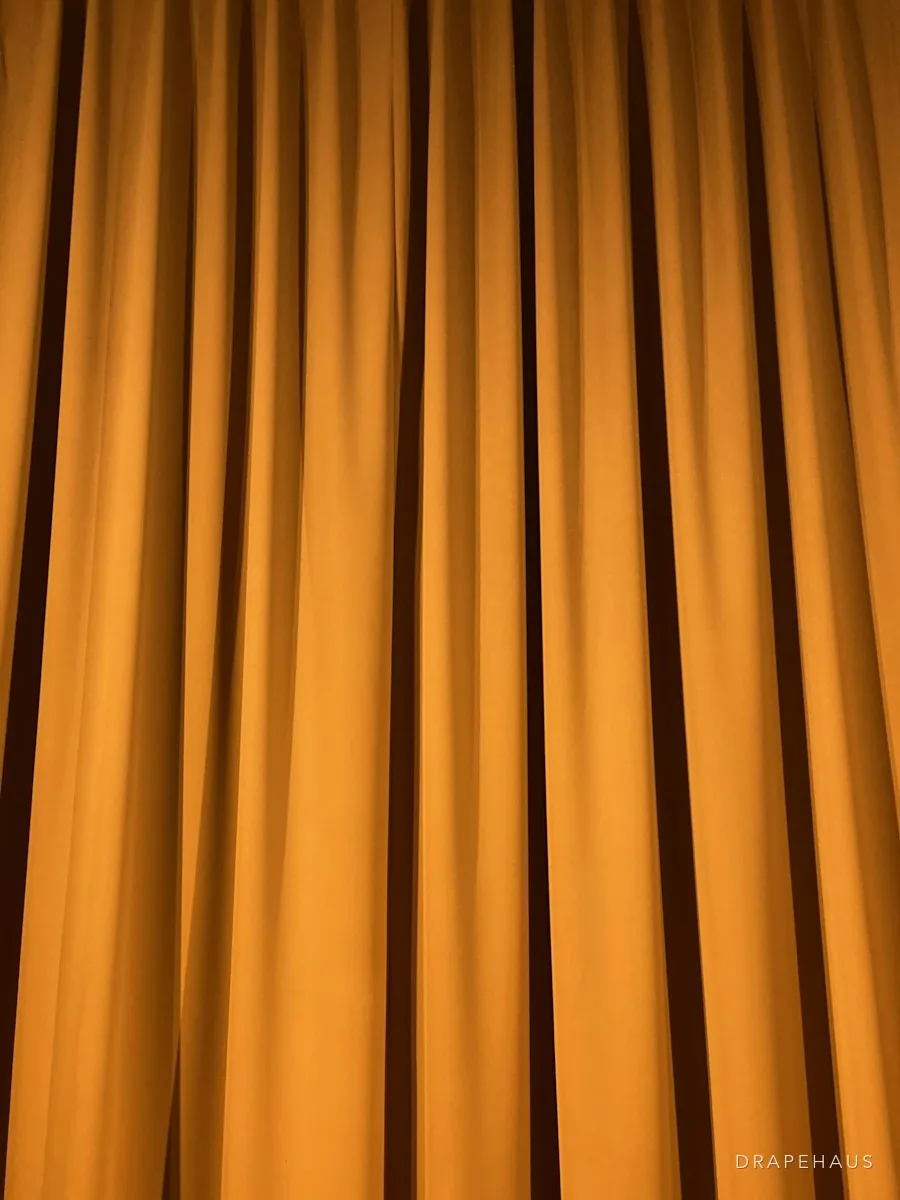
Velvet and heavy drapes are requested for formal rooms, for festive occasions and for the drama they bring to a high-ceilinged heritage space. They are also, in most Goan contexts, a difficult material to make work.
By the Drapehaus studio · 19 September 2026 · How we write
The problems are the ones you would expect: a dense pile holds moisture, a heavy curtain blocks airflow, and a thick fabric against a cool external wall in monsoon is close to a worst case. None of that makes velvet impossible, but it narrows considerably where it belongs.
Air-conditioned rooms are the clearest case. A sealed cooled space has controlled humidity, the curtain adds useful insulation against hot glass, and the conditions that cause problems elsewhere do not arise.
High-ceilinged formal rooms in heritage houses are the second. The scale of the space carries a heavy fabric that would overwhelm a small room, and the depth of colour in velvet suits rooms with strong architecture.
Festive and occasional use is the third. A drape brought out for a wedding or Christmas and stored properly the rest of the year avoids the sustained exposure that causes the problems.
Synthetic velvet rather than cotton or silk. Polyester velvet holds almost no moisture, resists mildew far better and cleans more easily, and modern versions look very good. Cotton velvet in a Goan monsoon is asking for trouble.
Never interline it. The fabric is already heavy and dense; adding an absorbent layer inside creates exactly the sealed damp sandwich that fails here.
Hang it well off the wall on deeper brackets, keep the hem clear of the floor, and draw it fully back during the day so both faces get air. These are the same rules as any heavy fabric, applied more strictly.
And be honest about the room. In a naturally ventilated Goan house with no air conditioning, velvet will block the draught that keeps the room comfortable, and the room will be hotter for it.
Rather see it in your own room?
We bring samples to the house, measure every window, and specify for the light and exposure you actually have.
More on this — tap a heading to read
Velvet is a woven fabric with a dense cut pile standing up from its surface. That pile is what gives it depth of colour and its soft hand, and it is also what makes it difficult here: a thick layer of upright fibres has an enormous surface area, holds dust and moisture, and dries slowly once it is damp.
The fibre in the pile decides how serious that is. Polyester velvet absorbs almost nothing and dries quickly. Cotton velvet absorbs readily and holds moisture deep in the pile. Viscose velvet, which is widely used because it has a beautiful lustre, is the most vulnerable of all: viscose absorbs even more than cotton, loses much of its strength when wet and shows permanent pale marks where water has touched it.
Silk and silk-blend velvets are the most luxurious and the least suited to this climate. Silk weakens quickly in sunlight and marks easily. In a Goan house they belong only in a sealed, air-conditioned room, well away from direct sun.
Velvet looks different depending on which way the pile lies. Viewed with the pile running down, it appears lighter and smoother; with the pile running up, it looks deeper and richer in colour. This is called the nap, and it has to be respected in every cut.
If two widths of the same velvet are joined with the pile running in opposite directions, the result looks like two different fabrics. The same happens between a pair of curtains cut carelessly from one roll. A competent workroom marks the pile direction on every piece and keeps it consistent across the whole room, including pelmets and tiebacks.
Velvet also marks under the presser foot of a sewing machine and shows every fold. Heavy velvets are best made up with generous hems, hand-finished headings and minimal handling, and they should be hung as soon as they are made rather than folded for delivery and left.
Heavy drapes fail at the top more often than anywhere else. A pair of full-length velvet curtains at proper fullness is a considerable load, and it hangs from brackets that are pulled forward and down every time the curtain is drawn. Track should be chosen by the actual weight of the made-up curtains, and brackets spaced more closely than they would be for a light fabric.
The fixing into the building matters as much as the track. In heritage houses with lime plaster over laterite, or old timber ceilings, standard plugs can pull out gradually under load. Fixings should reach sound material, and where the plaster is fragile a timber batten spreading the load across several fixings is often the right answer.
Heavy curtains are also where cord-drawn or motorised tracks make sense. Drawing velvet by hand leaves marks where it is gripped, and on a tall heritage window the fabric at the leading edge takes the most wear. A draw rod or a motor keeps hands off the face of the fabric.
Velvet should be cleaned gently and regularly rather than washed hard occasionally. Vacuum it with a soft brush attachment in the direction of the pile, and steam from the back to lift crushed areas. Most velvets, and all viscose, cotton and silk velvets, should be professionally cleaned rather than put in a washing machine.
Polyester velvets are more forgiving and some are washable, but check the label and the lining before trying. A curtain whose lining shrinks differently from its face will pucker after washing, however well the velvet itself behaves.
For seasonal storage, clean the curtains first and make sure they are fully dry. Rolling around a tube, with the pile facing outwards, avoids the crushed lines that folding leaves. Wrap them in breathable cotton rather than plastic, and store them in the driest room of the house, off the floor and away from external walls.
Many clients who ask for velvet actually want its depth of colour and its sense of weight, and several fabrics provide that with far less trouble in a humid house. Heavy matte polyesters, chenilles and dense textured weaves drape with weight, absorb light richly and tolerate humidity well.
Velvet can also be used selectively. A velvet pelmet, a border on a linen or polyester curtain, velvet tiebacks or velvet cushions bring the material into the room without hanging a large, absorbent surface across a window. Upholstery-grade velvets, chosen by Martindale rating for the use, often suit Goan rooms better on furniture than at the glass.
The worst outcome is familiar: a heritage living room fitted with interlined cotton velvet, closed for the monsoon, and reopened to a musty smell, spotting at the hem and brackets pulling from the ceiling. Every one of those failures is avoidable at the specification stage.
Much of the demand for velvet in Goa is seasonal: a formal set for Christmas and the New Year, drapes for a wedding in the dry months, or a richer look for Diwali. That pattern suits the fabric well. The peak social season falls in the driest, most comfortable part of the year, when relative humidity is at its lowest and a heavy fabric is least likely to hold moisture.
The sensible routine is to hang festive drapes in late November or December, enjoy them through the season, and take them down, clean them and store them well before the monsoon. Treated this way, a velvet set can give many years of service, because it never has to face four months of saturated air on a window.
Diagnosis
WhyDense pile holds moisture and the fabric was natural fibre, probably interlined and against an external wall.
FixSynthetic velvet, never interlined, hung off the wall with airflow behind. Or store it for the season.
WhyNaturally ventilated room where the curtain has blocked the cross-draught.
FixHeavy drapes belong in sealed air-conditioned rooms. In a ventilated house, use something that clears the opening.
WhyVelvet marks where it is handled and where it folds against itself in storage.
FixStore rolled rather than folded, and handle at the edge rather than the face. Some marking is inherent to the fabric.
WhyVelvet is substantially heavier than it looks, and track was specified by span rather than by weight.
FixUprate track and increase bracket density. Calculate from actual fabric weight, not from window size.
WhyThe panels were cut with the pile running in opposite directions, so each reflects light differently.
FixRemake the odd panel with the nap matched. Mark pile direction on every piece before cutting.
WhyViscose pile absorbs heavily and distorts when wet, leaving permanent water marks.
FixProfessional cleaning may soften the marks. Use polyester velvet anywhere water can reach the fabric.
WhyHeavy drapes load fixings that sit in lime plaster or old timber rather than sound material.
FixRefix into sound material, or fit a timber batten that spreads the load across several fixings.
Checklist
Air-conditioned or formal high-ceilinged rooms only
Synthetic velvet, never cotton or silk
Never interline
Deeper brackets for airflow behind
Uprate track for the real fabric weight
Consider storing seasonally rather than leaving up
Avoid viscose velvet anywhere water can reach
Keep the pile direction consistent across every panel
Fix brackets into sound material, with a batten on fragile plaster
Store rolled with the pile outward, in breathable cotton
From the Journal
All articlesFAQ
In air-conditioned rooms and formal high-ceilinged spaces, yes, provided you use synthetic velvet and do not interline it. In a naturally ventilated house it will hold moisture and block the draught, and the room will be both mustier and hotter for it.
Polyester velvet. It holds almost no moisture, resists mildew far better than cotton or silk velvet, and cleans more easily. Modern synthetic velvets look very good, and in this climate the performance difference is decisive.
No, and velvet least of all. The fabric is already dense; adding an absorbent interlining creates a sealed damp layer with no way to dry, which is the most reliable way to produce a permanently musty curtain here.
In a naturally ventilated room, yes — by blocking the cross-draught that was cooling it. In a sealed air-conditioned room the opposite applies, and the insulation against hot glass genuinely reduces the cooling load.
Because the pile runs in different directions on the two panels. Velvet looks lighter with the pile running down and deeper with it running up, so panels cut inconsistently read as different fabrics. It cannot be corrected by cleaning; the odd panel needs remaking with the nap matched to its pair.
Vacuum regularly with a soft brush attachment in the direction of the pile, and steam from the back to lift crushed areas. Cotton, viscose and silk velvets should be professionally cleaned. Some polyester velvets are washable, but check both the face fabric and the lining labels first, since uneven shrinkage causes puckering.
Polyester velvet is the closest, since it keeps the pile while absorbing almost no moisture. Beyond velvet, heavy matte polyesters, chenilles and dense textured weaves give similar weight and depth of colour with less upkeep. Using velvet only for pelmets, borders or cushions is another way to bring it into the room.
They can pull fixings out over time, particularly from lime plaster or old timber. Heavy drapes put a constant forward and downward load on brackets. Fix into sound material, space brackets closely, and on fragile surfaces fit a timber batten that spreads the load across several fixings.
Only in a sealed, air-conditioned room where the humidity is controlled. Anywhere else, take them down before the rains, have them cleaned, make sure they are fully dry and store them rolled in breathable cotton in the driest room. Rehang them for the dry season, when the air is kindest to a dense pile.
Keep reading