 Drape Haus
Drape Haus
Preparing the room
Drape Haus
Preparing the room
Upholstery
A sofa that creaks, sinks, wobbles or has a torn seam rarely needs replacing. We find what has failed — the frame, the suspension, the foam, a leg or a recliner mechanism — and repair that part, keeping your existing fabric wherever it is still good.
Durability scale (Martindale rubs, BS 2543)
15k
20k
25k
30k
40k
Who uses it
Where it lives
How it is used
Durability to ask for
30,000+ rubs
Severe domestic / general contract
Removable covers
Yes
zipped, washable, and a spare set
Fibres that suit
Avoid: Anything you cannot clean in place, on a piece used every day. Rub count is one number among several — weave, colour-fastness and how a fabric handles humidity matter as much. We bring samples to see in your room.
In short
By the Drape Haus studio · How we write
Is it right for you?
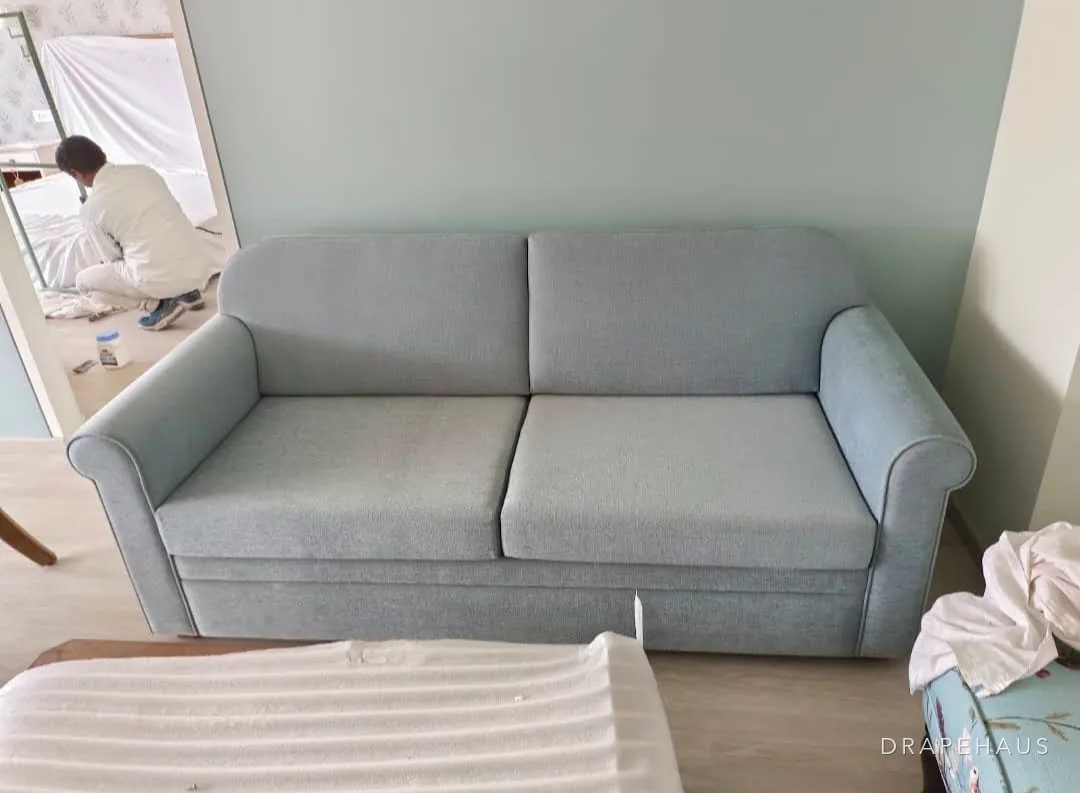
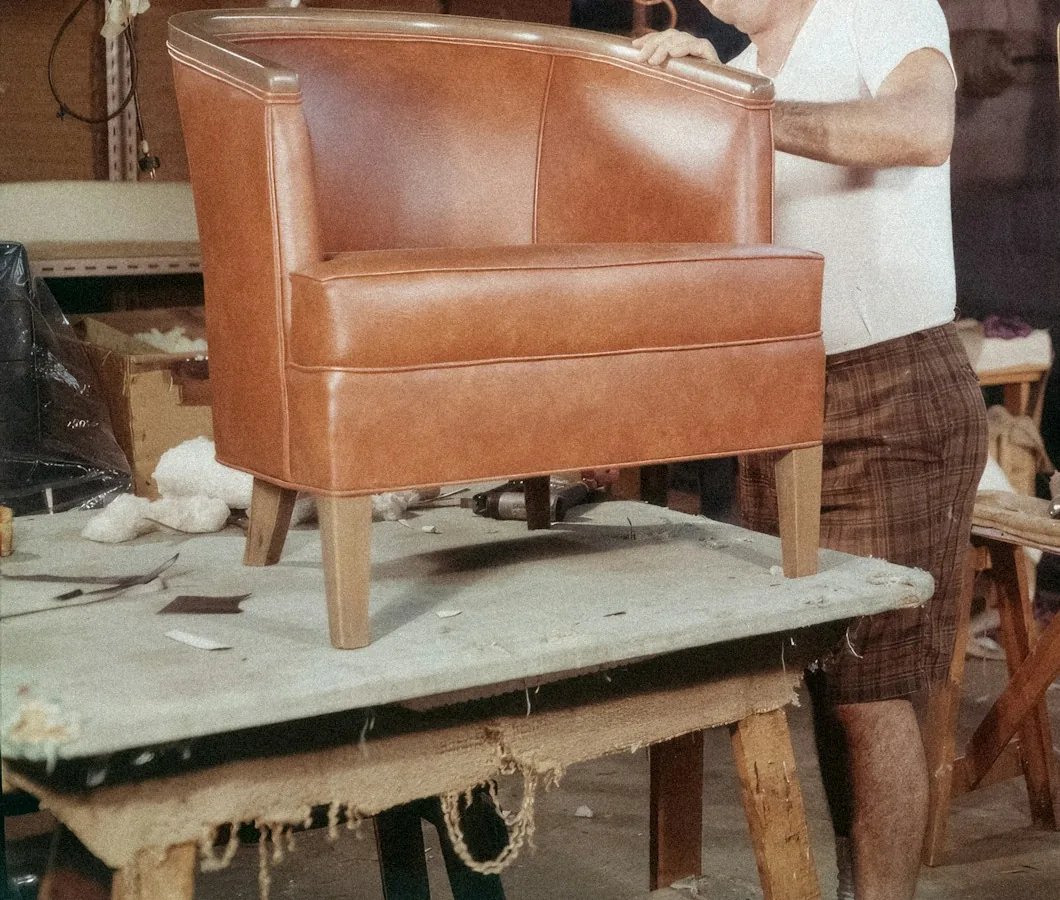
Most sofas that people think are finished have one or two failed parts. A rail has worked loose, a run of springs has come off its clips, a leg has cracked, a seam has opened, or the foam in the favourite seat has given up. The rest of the sofa — the frame, the fabric, the shape you chose — is fine. Sofa repair targets exactly the failed part and leaves everything else alone.
This is different from reupholstery. Reupholstery takes the whole piece back to the frame and recovers it in new fabric; it is the answer when the fabric is worn out as well. Repair opens the sofa only as far as it must, fixes what is wrong, and closes it again in its own fabric. Many sofas need only that, and the two are often done in sequence: a repair now, new fabric some years later.
Repair is worth doing on any sofa with a sound timber frame, and on many good-quality factory sofas whose frames are plywood but well built. It is not worth doing on sofas made of thin board and staples, or on frames that termites have hollowed. We will tell you which you have.
The details
Sofa repair is targeted work. Where reupholstery strips the whole piece and recovers it in new fabric, a repair opens only what it has to: a loose rail, a broken spring, a sunken seat, a cracked leg or a split seam. The cover goes back on afterwards and the sofa looks as it did, only firmer and quieter.
Most faults come from a short list. Glued joints loosen as timber swells and dries through the monsoon. Jute webbing stretches and rots in the humidity. Serpentine springs come away from their clips. Low-density foam crumbles. Legs snap where someone dragged the sofa, and recliner mechanisms bend or jam. Each has its own fix.
We start by diagnosing in your home: lifting the sofa, rocking it, pressing the seat and checking underneath. Small jobs like re-gluing a leg or re-stitching a seam can sometimes be done on site; anything inside the frame goes to the workshop.
If the repair reveals that the fabric is worn through as well, the sensible next step may be full reupholstery, and we will say so. If the frame is board or badly termite-damaged, we will tell you honestly that repair is not worth the spend.
Your options
Each symptom points to a likely cause. Recognising them helps you describe the problem, and helps you understand why a fix is or is not worthwhile.
Swipe for all 6 →
The honest view
Fixes the cause, not the look
A sagging seat or a creaking frame is a structural problem. Repair is the only option that addresses it without the scope of a full rebuild.
Your fabric stays
If you still like the upholstery, it is refitted after the repair. The sofa returns looking as it did, minus the sag and the noise.
Smaller and quicker than reupholstery
Opening one section and fixing it takes far less time and material than stripping a whole sofa.
Stops damage spreading
One loose joint strains the others, and one broken spring overloads its neighbours. Early repair prevents a bigger job later.
Old fabric limits what can be done
Fabric that is brittle or sun-rotted may tear when it is removed and refitted. We check before opening and discuss the risk.
Not every frame is worth it
Board frames held with staples and frames hollowed by termites rarely repay repair. We say so plainly.
Parts for some mechanisms are scarce
Some recliner mechanisms are specific to one maker's frame, and a compatible replacement may need adaptation.
Side by side
The right route depends on what has failed. Match the fault to the fix before choosing.
| Sofa repair | Reupholstery | Fitted cover | Replace | |
|---|---|---|---|---|
| Fixes frame and springs | Yes | Yes | No | Yes |
| Keeps existing fabric | Yes | No, new fabric | Hidden beneath | No |
| Fixes worn-out fabric | Locally only | Yes | Yes | Yes |
| Scope of work | Targeted | Complete rebuild | Surface only | Not applicable |
| Best when | One or two parts failed | Fabric and filling both finished | Sofa sound, fabric tired | Frame not worth saving |
Swipe to compare →
Repair first if the fabric is good; reupholster if it is not; cover if only the look needs changing.
Rather see it in your own room?
We bring samples to the house, measure every window, and specify for the light and exposure you actually have.
Room by room
The main sofa takes the most weight and movement. Catching a loose joint or a failing spring early here saves the most.
Guests are hard on sofas — sitting on arms, dragging pieces to the terrace. A quick repair between seasons keeps a good sofa in service.
Recliners and sofa-beds live here, and their mechanisms are the most frequent repairs we see.
Old carved sofas with original upholstery need careful handling; the fabric may not survive being opened, and a full rebuild may be wiser.
Sofas in closed houses often come out of the rains with loosened joints and damp foam. A post-monsoon check catches both.
In depth — tap a heading to read
Diagnosis starts with listening and pressing. We sit on every seat, lean on the arms, push the back, and listen for creaks that point to particular joints. We lift each end to feel the weight and whether the frame twists. Turning the sofa over or looking under the bottom cloth shows the webbing, the springs and the condition of the rails.
We also look for what caused the fault, because a repair that ignores the cause comes back. A leg broken by dragging needs glides; a joint loosened by damp needs a drier spot or better ventilation; a seat collapsed under someone who always sits on the same end may need firmer foam there.
Humidity is the main culprit. Timber frames take up moisture through the monsoon and dry out in the hot months, and that movement loosens glued joints year after year. Jute webbing and hessian absorb damp and lose strength. Lower-grade foams hold moisture and break down sooner. Steel springs and staples can rust where the air is salty.
Termites are the other risk, especially in ground-floor rooms and older houses. They can hollow a rail from inside while the outside looks sound. Any sign of activity must be treated and the damaged timber cut out before a repair is closed up, or the problem continues inside the sofa.
A sofa that creaks after every monsoon is telling you its joints are moving. Reglue before they break.
Mechanical sofas fail differently. Recliners stick when a linkage bends, usually from someone sitting on the open footrest, or when pivot bushes wear. Power recliners can also fail at the motor or the handset, which is a separate check. Sofa-bed mechanisms bend when forced closed with bedding inside.
We remove the mechanism, straighten or replace what we can, and re-bush pivots. Where the mechanism is beyond saving, we look for a compatible one, which may need adapting to the frame. We will tell you before starting if a repair is unlikely to be lasting.
Many people searching for sofa cleaning have a sofa that smells, has a ring-shaped stain or feels clammy. Surface cleaning lifts dirt from the fabric, but a musty smell after the monsoon usually comes from damp foam or webbing inside, and no amount of cleaning the outside reaches it. Replacing the foam in the affected seats is the lasting fix.
Where the sofa has removable covers, they can be washed or dry-cleaned according to the fabric. Fixed fabric needs careful spot treatment, tested on a hidden area first, because water marks on some fabrics are worse than the stain. We give advice on cleaning the fabric you have when we visit.
Sometimes the honest answer is that the sofa needs more than a repair. If the fabric is thin at the arms, faded on one side and stained on the seats, opening it for a spring repair and then closing it in the same fabric spends work on something that will soon need recovering anyway. In that case it is sensible to do both at once and go to full reupholstery.
Equally, if the fabric is good, there is no need to replace it. We give you both options with the reasoning, and you decide.
Living with it
Dragging puts the whole weight on two legs and the rail above them. Lift the sofa to move it, and keep glides on the feet.
Arms are not built to take a person's weight. It is the commonest cause of loose arm joints.
Open the room, lift off cushions and let the sofa breathe on the first dry days after the monsoon.
Never sit or stand on an open footrest, and close sofa beds with the bedding removed.
Rock the sofa gently at the end of each monsoon. A joint caught early is a quick fix.
Avoid these
Nails and screws into a loose glued joint split the timber. The joint must be opened, cleaned and reglued.
A board laid under a sagging seat hides the problem and makes the seat hard. Replace the webbing or springs.
Closing a sofa over active termites guarantees a bigger failure. Treat and cut out damage first.
A musty smell from inside a seat is the foam. Surface cleaning will not remove it.
One broken spring overloads the next. Repair early and the job stays small.
Checklist
More in upholstery
Reupholstering a well-built frame costs less than replacing it and keeps a piece you already love.
Our process
One team from the first visit to the last bracket, so nothing is lost between the person who specified it and the person who fits it.
FAQ
Repair fixes the failed part — frame, springs, foam, legs or mechanism — and keeps your existing cover. Reupholstery strips the sofa to the frame and recovers it in new fabric. Many sofas only need the repair.
Usually. A sag comes from stretched webbing, loose springs or tired foam, and all three can be replaced without changing the fabric.
Often. Bent linkages, worn pivots and loose mounting bolts can be straightened or replaced. If a part is beyond repair, we look for a replacement mechanism that fits the frame.
Small jobs such as legs, loose arms and seams can sometimes be done on site. Anything involving the suspension or frame is done in the workshop, and we collect and return the sofa.
Removable covers can be washed once a repair is done, and we advise on cleaning fixed fabric. Where a stain or smell comes from damp foam, replacing the foam is the real fix.
If the frame is solid and only one or two parts have failed, almost always. Repair keeps a sofa you like in service. If the frame is board or termite-damaged, it usually is not.
Yes. We fit a matching leg with a new fixing plate, or a complete set if you want a change, and add glides so the floor and the legs are protected.
Usually a loose glued joint in the frame, sometimes a spring rubbing against its clip. Both can be found by pressing and listening, and both are repairable.
Yes, by replacing the damp foam or webbing that holds the smell. Cleaning the fabric alone rarely removes it.
Next step
We visit, sit on the sofa, press, lift and look underneath, and tell you exactly what has failed and why. You get a clear explanation of the repair, whether it can be done in your home or needs the workshop, and whether reupholstery or a new cover would be a better use of the spend. If we take the sofa away, we collect it, repair it and bring it back. Book a home visit to have your sofa looked at.