 Drapehaus
Drapehaus
Preparing the room
Drapehaus
Preparing the room
Carpets
Wool is naturally resilient, soft underfoot and slow to show wear. A good wool rug anchors a seating area and lasts for years with the right care.
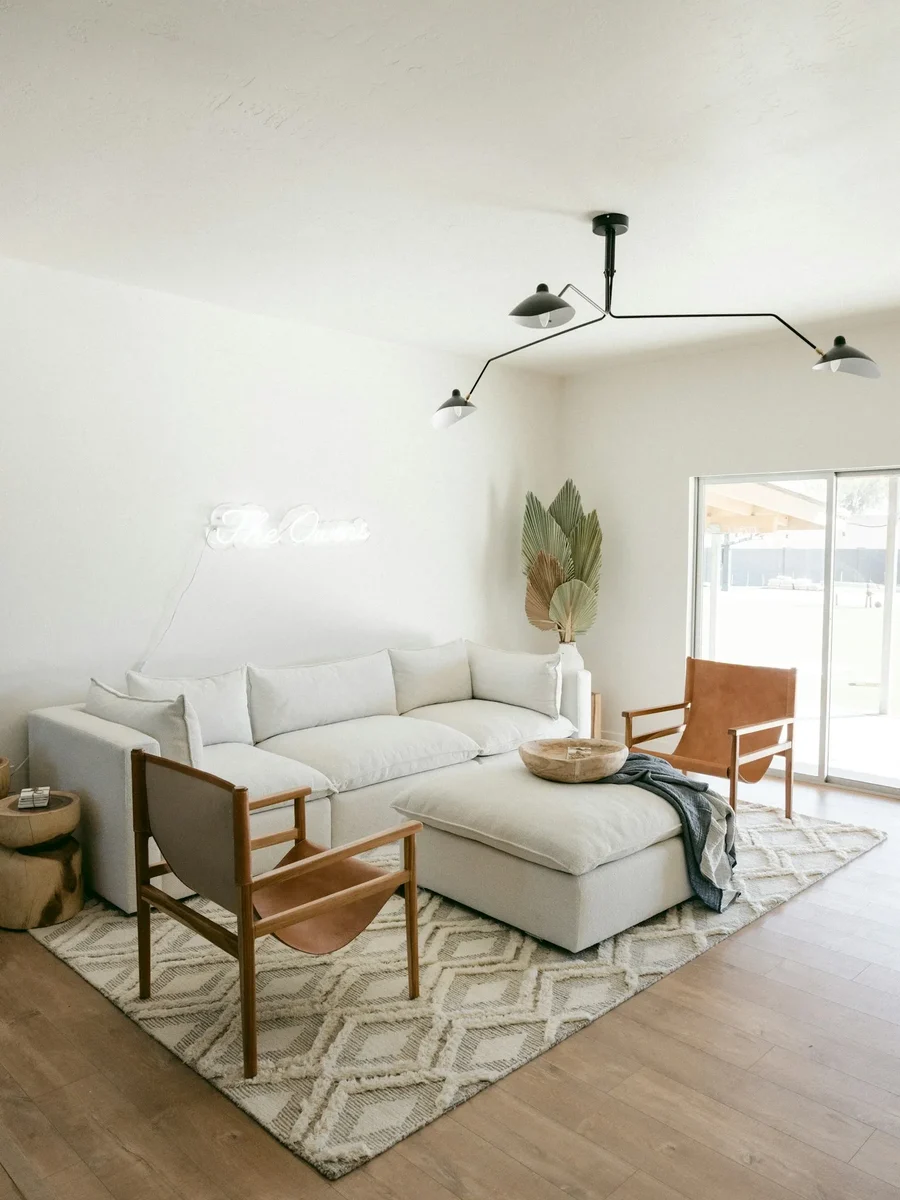
8 × 10 ft · advised
Room
Rug style
Standard sizes (ft)
Rug
8 × 10 ft
2.4 × 3.0 m
Floor border
3.0 ft
each long side
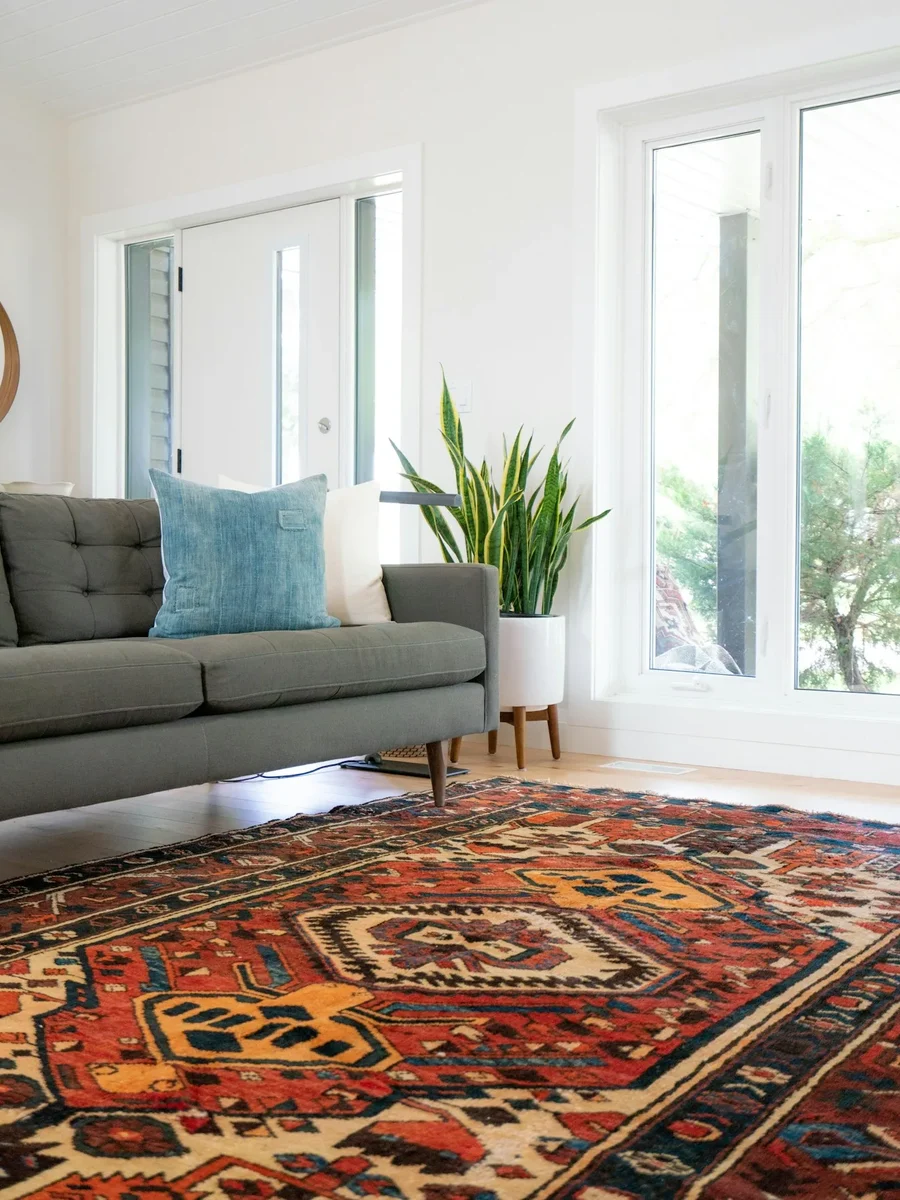
In a sitting area, the front legs of every sofa and chair should rest on the rug, with a margin of bare floor around it. We confirm the size on site, against the real furniture.
In short
By the Drapehaus studio · How we write
Is it right for you?
Wool is the fibre most rugs aspire to for good reasons. Each fibre is crimped and elastic, so pile springs back after it is walked on or pressed by furniture. Its natural lanolin and scaled surface make dirt slower to bind to it, and it holds dye in deep, even colour. It is also naturally slow to catch fire, which is why it has long been used in rooms with open flame.
In a coastal house, wool's relationship with moisture cuts both ways. It takes up humidity from the air and gives it back as the air dries, so it never feels clammy underfoot in the rains. But a wool rug that is kept damp, on a cold floor or in a shut room, will hold that moisture and begin to smell.
A wool rug suits anyone who wants a soft, long-lived rug under the main seating or beside the bed and is willing to give it airflow and a little attention in the monsoon. If a room is used heavily by guests you will never meet, or the rug will sit by a pool door, a flatweave or a solution-dyed synthetic will be easier to live with.
The details
Wool resists crushing and cleans well, but like any natural fibre it needs air. In a coastal house we advise lifting and airing wool rugs in the monsoon, and rolling them for storage if the house will be closed.
We size the rug to the furniture — front legs on, or all legs on — so the room feels considered rather than dotted with a mat.
Your options
Hand-knotted wool has its own page. Here are the other main wool constructions, and what each is like to live with.
Swipe for all 5 →
The honest view
Resilient pile
Wool fibres recover from crushing, so traffic lanes and furniture dents fade in a way synthetic pile often does not. A good wool rug looks better at five years than a synthetic one of similar weight.
Hides everyday soiling
The surface structure of wool resists dirt binding to it, so a wool rug stays presentable between cleans and releases soil readily when it is vacuumed or washed.
Comfortable in the monsoon
Because wool buffers moisture, it feels dry and warm underfoot on a humid day, where a synthetic can feel slightly clammy.
Deep, lasting colour
Wool takes dye generously, giving colours a depth that suits both strong patterns and quiet plains, and those colours hold well with sensible placement.
Shedding at first
New tufted and loomed wool rugs shed loose fibre for the first weeks or months. It is normal and settles with regular vacuuming, but it surprises people.
Needs airflow
A wool rug kept damp for weeks will develop odour and can attract mildew. It needs a breathable underlay and air in the rains.
Moths and beetles
Wool is a protein fibre and attractive to insects, especially under furniture and in rugs left rolled and forgotten. Regular vacuuming is the main defence.
Side by side
For the rug under a sofa group, the realistic alternatives to wool are a hand-knotted piece, a flatweave or a synthetic.
| Wool rug | Cotton or jute flatweave | Synthetic or blend | |
|---|---|---|---|
| Softness underfoot | High | Low | Medium to high |
| Recovers from crushing | Very well | Not applicable | Less well |
| Behaviour in humidity | Buffers, needs air | Dries fastest | Absorbs little |
| Stain handling | Good, releases soil | Cotton washes, jute marks | Very good |
| Ages | Gracefully | Softens and fades | Can look tired |
| Best for | Main seating, bedrooms | Verandahs, layering | Rentals, family rooms |
Swipe to compare →
Rather see it in your own room?
We bring samples to the house, measure every window, and specify for the light and exposure you actually have.
Room by room
The classic place for wool. Size it to the seating group and keep it a little away from the doors to the garden.
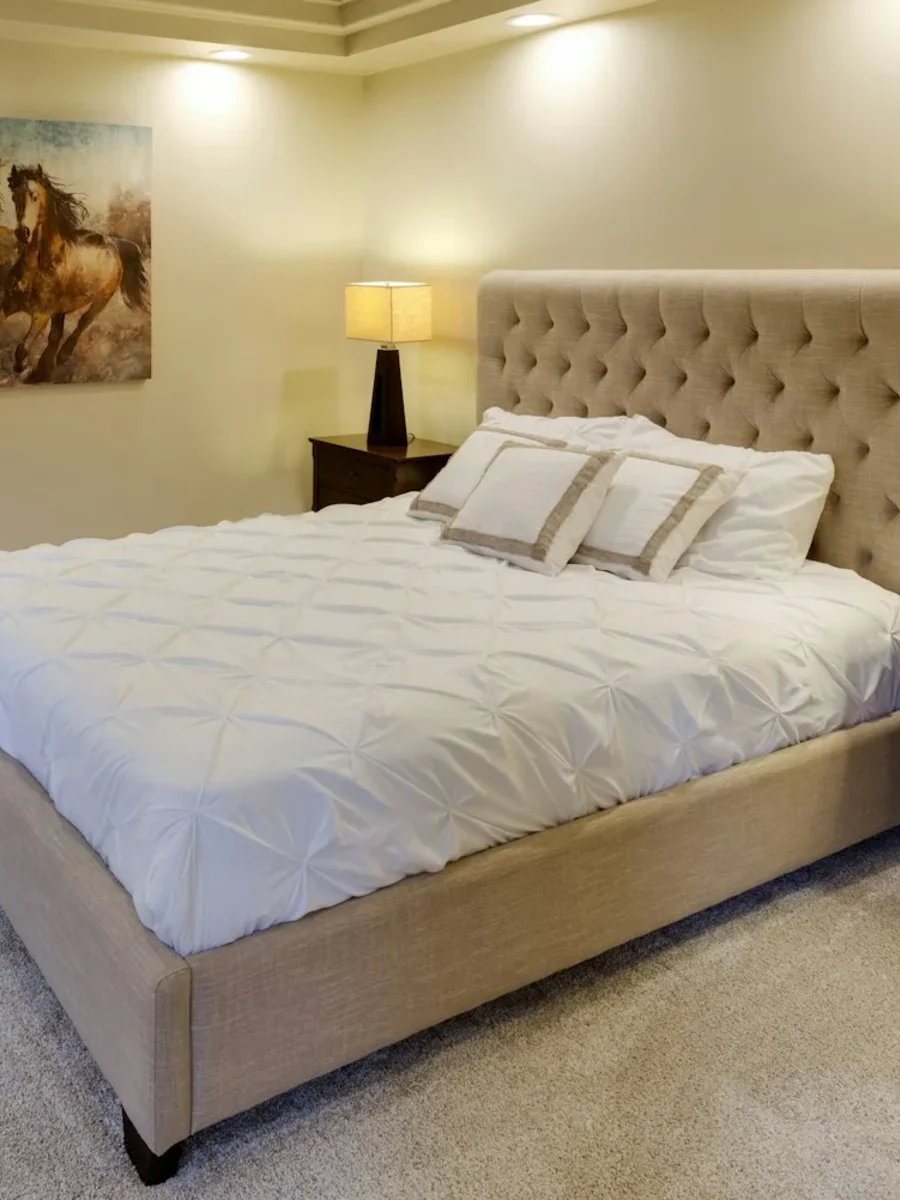
Soft and warm on waking, particularly in a cooled room. Run it well beyond the sides of the bed.
A low, dense wool rug softens the acoustic and takes a desk chair if you add a chair mat or choose a firm, flat weave.
Wool is forgiving and warm for floor play. Choose a mid-tone, a tight construction and a washable-backed or woven piece.
A deep pile catches crumbs and chair legs. If you want wool here, choose a flat, tight machine-woven or hand-loomed rug.
Too exposed to driven rain and sun. Use a flatweave or an outdoor-rated synthetic instead.
In depth — tap a heading to read
Size is decided by how the furniture relates to the rug. The two classic arrangements are front legs on, where the rug runs under the front legs of the sofa and chairs and the back legs stand on the floor, and all legs on, where every piece sits wholly on the rug. Front legs on suits most living rooms and keeps the rug a manageable size; all legs on gives a larger room a single, grounded island.
In practice, a three-seater with two facing chairs usually wants an 8 x 10 ft rug, a larger L-shaped group 9 x 12 ft or more, and a small reading corner a 5 x 8 ft or 6 x 9 ft. In a bedroom, a king bed needs a 9 x 12 ft rug to show a good width either side; a queen bed takes an 8 x 10 ft. Sketch the furniture on the floor with tape before choosing, and look at it from the doorway.
When torn between two sizes, the larger one is almost always right.
Pile height changes how a rug lives. A deep, soft pile is luxurious in a bedroom but holds sand and shows footprints; a short, dense pile or a looped texture wears better in a living room and releases grit when vacuumed. Near the sea we lean towards denser, lower constructions for rooms people walk into straight from outside.
Colour choices follow the light. The strong, low sun of a west-facing room will fade wool over several seasons, and it fades unevenly where furniture shades part of the rug. Mid-tones and heathered or tonal yarns disguise both fading and soiling far better than a flat pale ivory or a single saturated colour. If you love a pale rug, give it the room with the least traffic and the gentlest light.
Wool's ability to take up moisture is why it feels comfortable in the monsoon, and also why it needs air. When morning humidity near the coast runs at around 87 to 91 per cent from June to September, a wool rug lying on cool stone gradually loads with moisture from both the air and the floor beneath. If it never gets the chance to release it, odour follows.
The fix is simple and regular. On dry spells, lift a corner or fold the rug back for a few hours so the floor and backing dry. Keep a fan moving air in rooms that stay shut. Choose an underlay that grips without sealing. For hand-tufted rugs, a well-made backing matters: ask what the latex is and how the secondary backing is attached, because this is where poorly made tufted rugs fail in a humid climate.
Wool can work in a rental villa, but it needs choosing with care. A tight, machine-woven or hand-loomed wool in a mid-tone pattern hides wear and cleans well; a soft, pale tufted rug in the main room will look tired within a season of guests. Avoid viscose highlights entirely in let properties, since they mark with the first spilt drink.
In a family house, wool's resilience and warmth make it good for floor play, and its natural fire resistance is a small reassurance near candles and lamps. Keep a spare rug or two of standard size so a stained piece can go for cleaning without leaving the room bare.
Living with it
Vacuum a new rug regularly, with suction and a gentle brush, until the loose fibre settles. Shedding reduces as the surface bedding-in fibre is removed.
Blot spills straight away, then dab with a little cool water and blot again. Avoid hot water and strong detergents, which can felt the fibre or move dyes.
Vacuum under furniture and along edges where the rug is rarely walked on. Check rolled rugs in storage during the season.
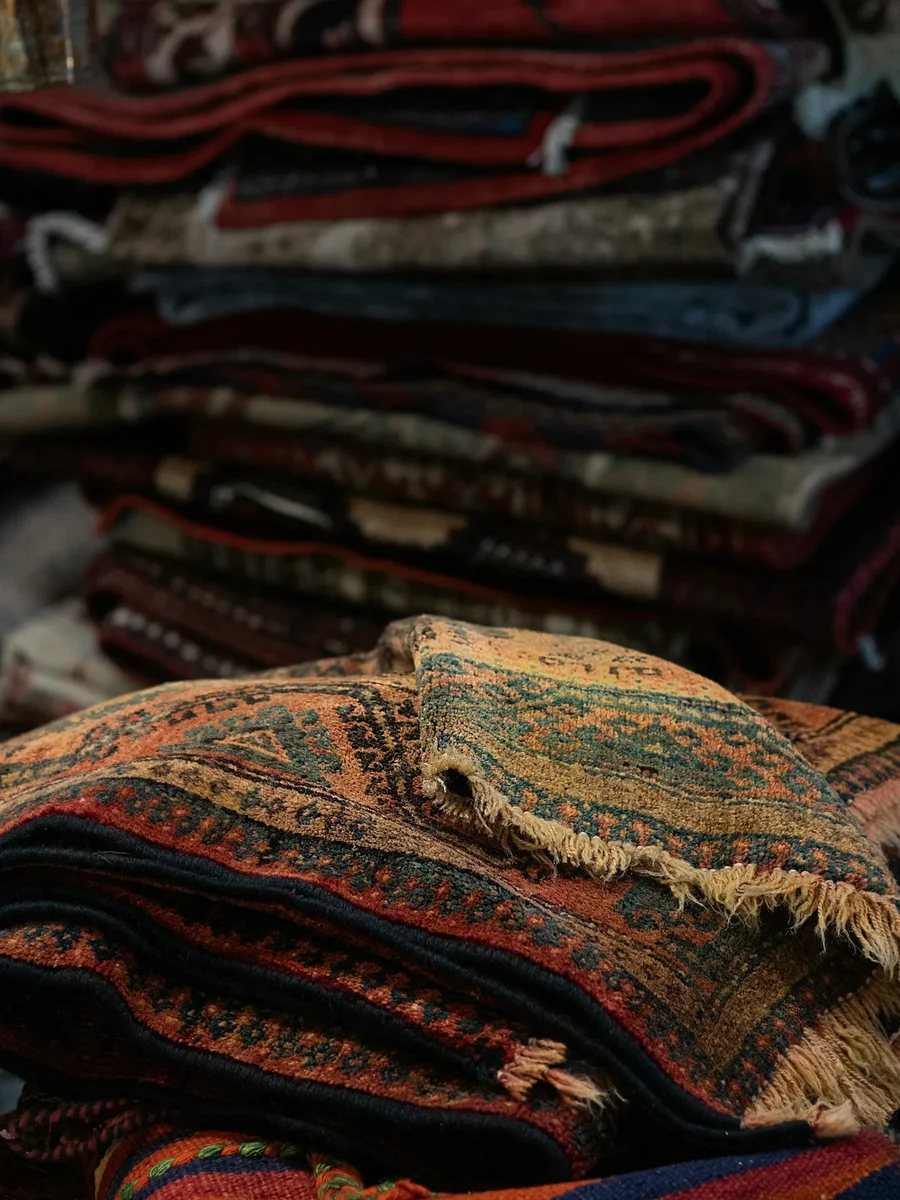
Before the house closes, have the rug cleaned, let it dry fully, roll it and wrap it in cotton sheeting. Plastic traps moisture and invites mildew.
Avoid these
A rug that looks right in a showroom can be too small at home. Measure the furniture group and choose the size first, then the design.
Wet feet, sand and sunscreen will mark it in weeks. Keep the soft pale rug for a bedroom, and use a flatweave where people come in.
A thick wool rug may not dry within days in the monsoon. Wash in the dry months, or have it cleaned professionally.
On a tufted rug, a poor latex backing is what fails first in humidity. Ask about it before you buy.
Checklist
More in carpets
Rugs, runners and fitted carpet chosen for a humid climate.
From the Journal
All articlesOur process
One team from the first visit to the last bracket, so nothing is lost between the person who specified it and the person who fits it.
FAQ
They can absorb moisture in a ventilated room. Lifting and airing them, and rolling them for storage in a closed house, keeps them healthy.
Big enough for at least the front legs of the sofa and chairs to sit on it. We measure the seating area rather than the room.
Tufted and loomed wool rugs contain short fibres left over from spinning, which work loose with use. Shedding is normal for the first weeks or months and reduces with regular vacuuming. Hand-knotted and tightly woven rugs shed less. If shedding does not ease after a few months, the yarn quality may be the issue.
Wool fibres are relatively long and not easily inhaled, and a rug can hold dust until it is vacuumed rather than letting it circulate. Regular vacuuming with a good filter is what makes the difference. In a humid climate, keeping the rug dry also matters, since damp encourages dust mites and mould.
A hand-knotted rug has each knot tied around the warps of a loom, so the pile is part of the structure. A hand-tufted rug has yarn punched through a backing cloth and held in place with latex. Tufting is faster and allows dense pile, but the glued backing is less durable, especially in humidity.
Wool recovers well. Move the furniture, then lightly mist the dent with water, work the pile upright with your fingers or a soft brush, and let it dry with good airflow. Placing furniture on cups or pads and shifting it slightly now and then prevents deep dents forming.
Only on a deep, fully covered verandah, and only in the dry season. Driven rain, sun and salt air will damage wool quickly. For open sit-outs, choose a cotton flatweave or an outdoor-rated synthetic rug, and bring it in when the rains start.
Next step
We visit and look at the room first: the furniture, the floor, the doors people come in by and where the afternoon sun falls. We measure the seating or bed and mark out the right size on the floor, then bring wool rugs and samples in different constructions to see in the room's own light. We source or make the rug to size, finish its edges, supply the right underlay and lay it. Book a home visit and we will help you choose.