 Drapehaus
Drapehaus
Preparing the room
Drapehaus
Preparing the room
Carpets
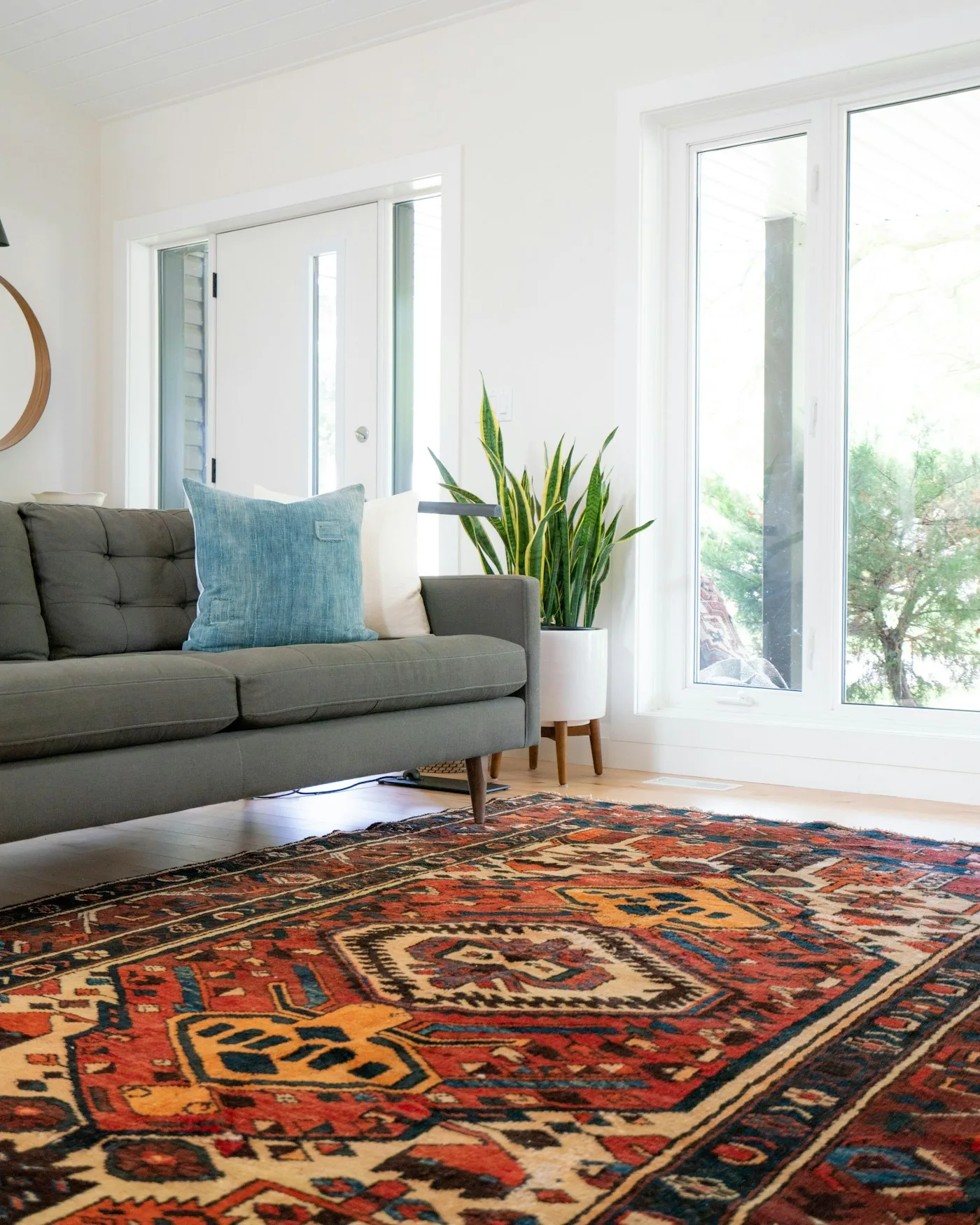
Hand-knotted rugs carry colour, pattern and craft that machine-made pieces cannot match — and they sit beautifully against the dark timber and patterned tiles of an old Goan house.
8 × 10 ft · advised
Room
Rug style
Standard sizes (ft)
Rug
8 × 10 ft
2.4 × 3.0 m
Floor border
3.0 ft
each long side
In a sitting area, the front legs of every sofa and chair should rest on the rug, with a margin of bare floor around it. We confirm the size on site, against the real furniture.
In short
By the Drapehaus studio · How we write
Is it right for you?
A hand-knotted rug is chosen differently from any other floor textile. It is usually the most important object in the room after the architecture, and it will likely outlast the curtains, the sofa and possibly the owners. So the question is less what fits the space than which rug the space should be arranged around. We work from the room, the light and the furniture towards the right piece, rather than the other way round.
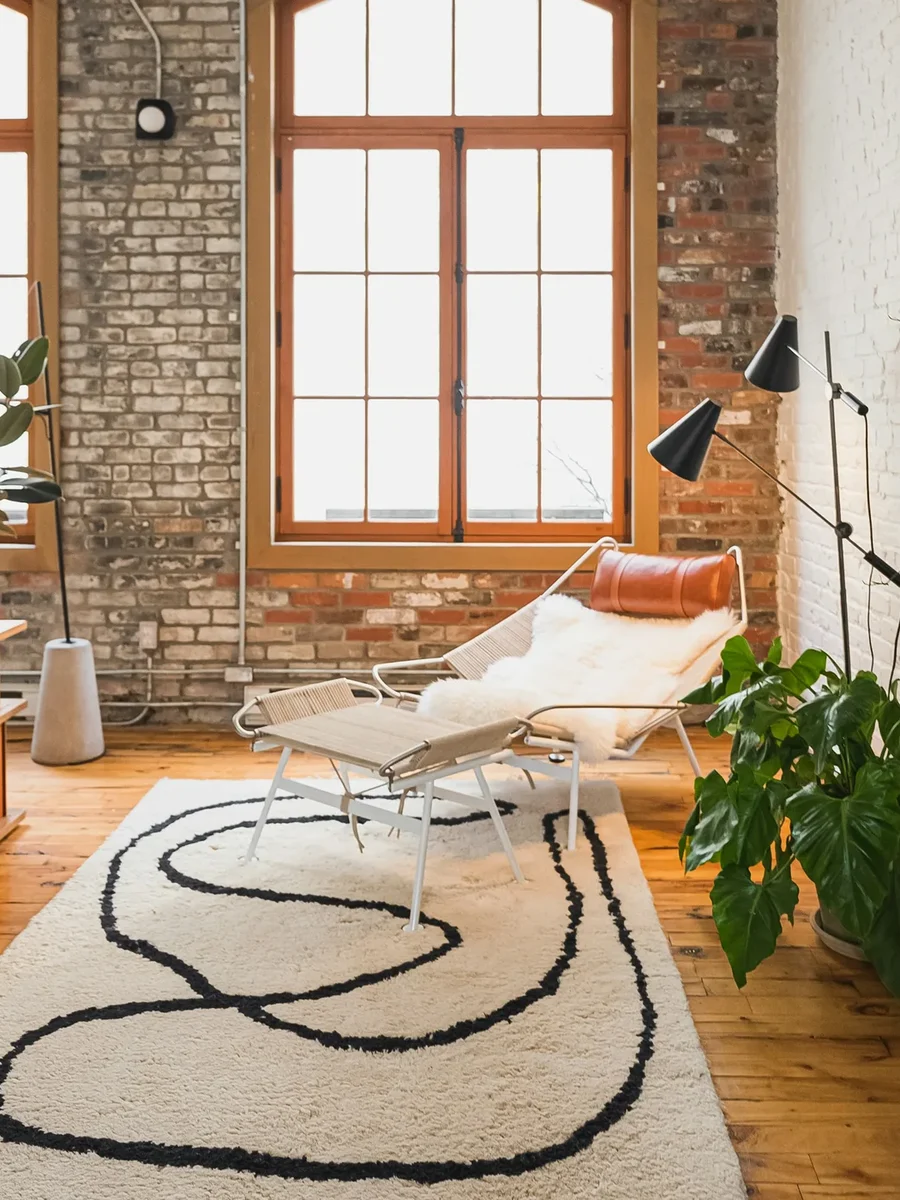
These rugs suit houses with character: dark timber ceilings, lime-washed walls, old patterned floor tiles and furniture with a history. They also give a spare contemporary room warmth and depth that nothing new can. They suit owners who like objects that change with time and who will give a rug a considered place, away from the pool door and the harshest sun.
For a room that takes wet feet, children's play or a steady rotation of rental guests, a hand-knotted rug is the wrong answer however beautiful it is. Put a flatweave or a hard-wearing modern rug there, and keep the heirloom for the room where it can be looked after.
The details
A hand-knotted rug is an heirloom piece and deserves care in a humid climate: good airflow, an underlay that lets it breathe, and professional cleaning rather than wet washing at home.
We help choose the size, palette and pattern for the room, and advise on placement away from strong direct sun, which fades natural dyes over time.
Your options
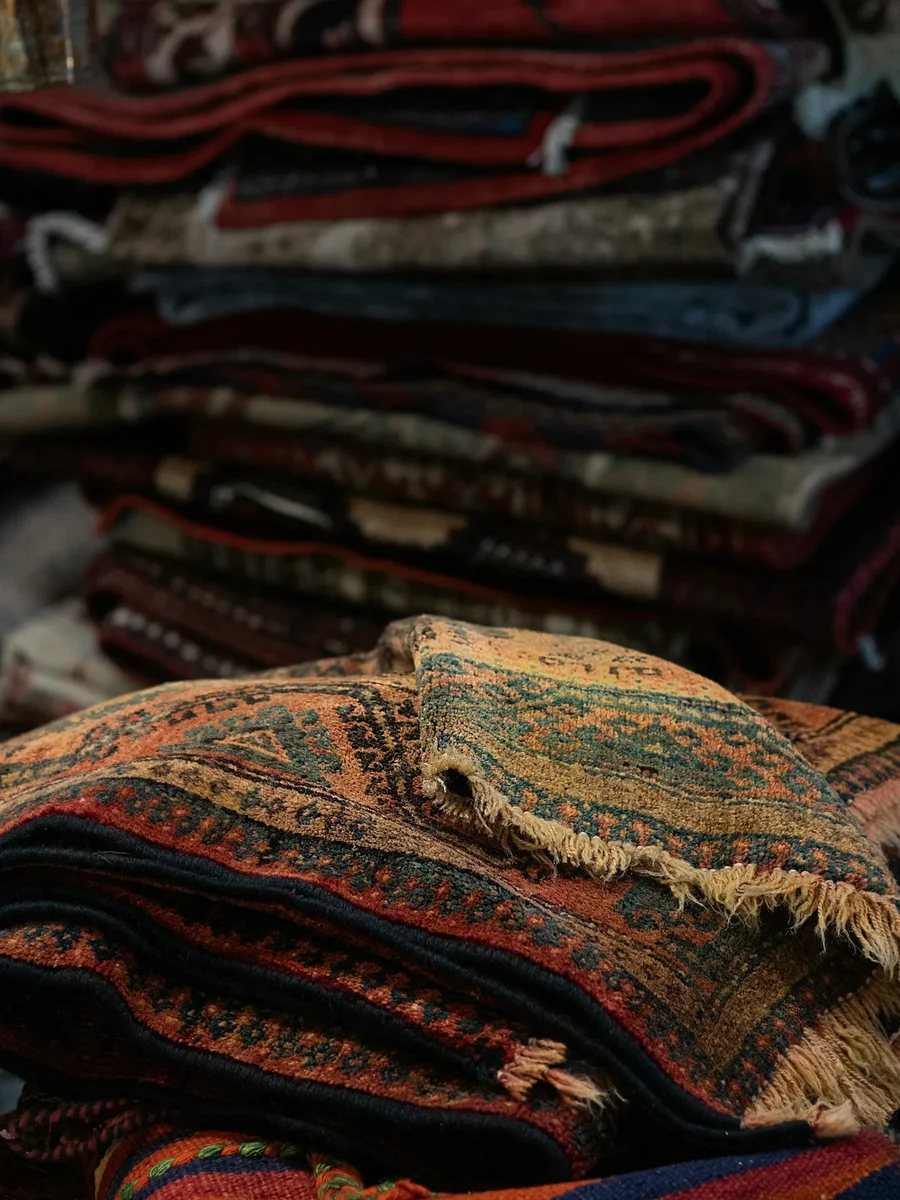
Hand-knotted rugs come from many weaving cultures. Rather than trace each one, it is more useful to think in broad families, each with its own character in a room.
Swipe for all 6 →
The honest view
Built to last generations
The pile is part of the structure, not glued on, so a well-made hand-knotted rug can be washed, repaired and relaid for decades. Wear softens it rather than ending it.
Colour with depth
Hand-spun wool and slight variations in dye batches, called abrash, give colour a movement and depth that flat, uniform machine dyeing cannot match.
Belongs with old architecture
Against dark timber, lime plaster and old tile, a hand-knotted rug looks as though it has always been there, which is rarely true of anything new.
Repairable
Worn ends, loose selvedges and moth patches can be rewoven by a skilled restorer, so damage is rarely the end of a good rug.
Needs a protected place
Sun, wet feet and heavy traffic shorten its life. It must be placed with thought, which sometimes means it is not in the room you first imagined.
Specialist cleaning only
Home washing risks dye bleeding and slow drying in humid air. Every full clean is a job for a specialist hand-washer, ideally in the dry season.
Assessment takes knowledge
Age, condition, dyes and previous repairs are not always obvious. Buying well needs an honest seller and time to look at both sides of the rug.
Side by side
Many rugs borrow the look of a Persian design. How they compare on the things that decide how long a rug lasts:
| Hand-knotted | Hand-tufted | Machine-woven traditional | |
|---|---|---|---|
| How pile is held | Knotted into the warps | Glued to a backing | Woven in by machine |
| Back of the rug | Pattern visible, knot by knot | Cloth backing | Pattern visible, very regular |
| Lifespan with care | Generations | Years, backing limits it | Many years |
| Can be restored | Yes | Rarely | Limited |
| Fringe | Ends of the warps | Usually sewn on | Usually sewn on |
| Humidity weak point | Slow drying if washed | Latex backing | Synthetic content varies |
Swipe to compare →
If you cannot see the design clearly on the back, it is not hand-knotted.
Rather see it in your own room?
We bring samples to the house, measure every window, and specify for the light and exposure you actually have.
Room by room
The natural home, under the main seating and set back from the garden doors so the first steps from outside land on something tougher.
A lower-pile piece large enough for chairs to stay on it. The formality of a medallion design suits a centred table.
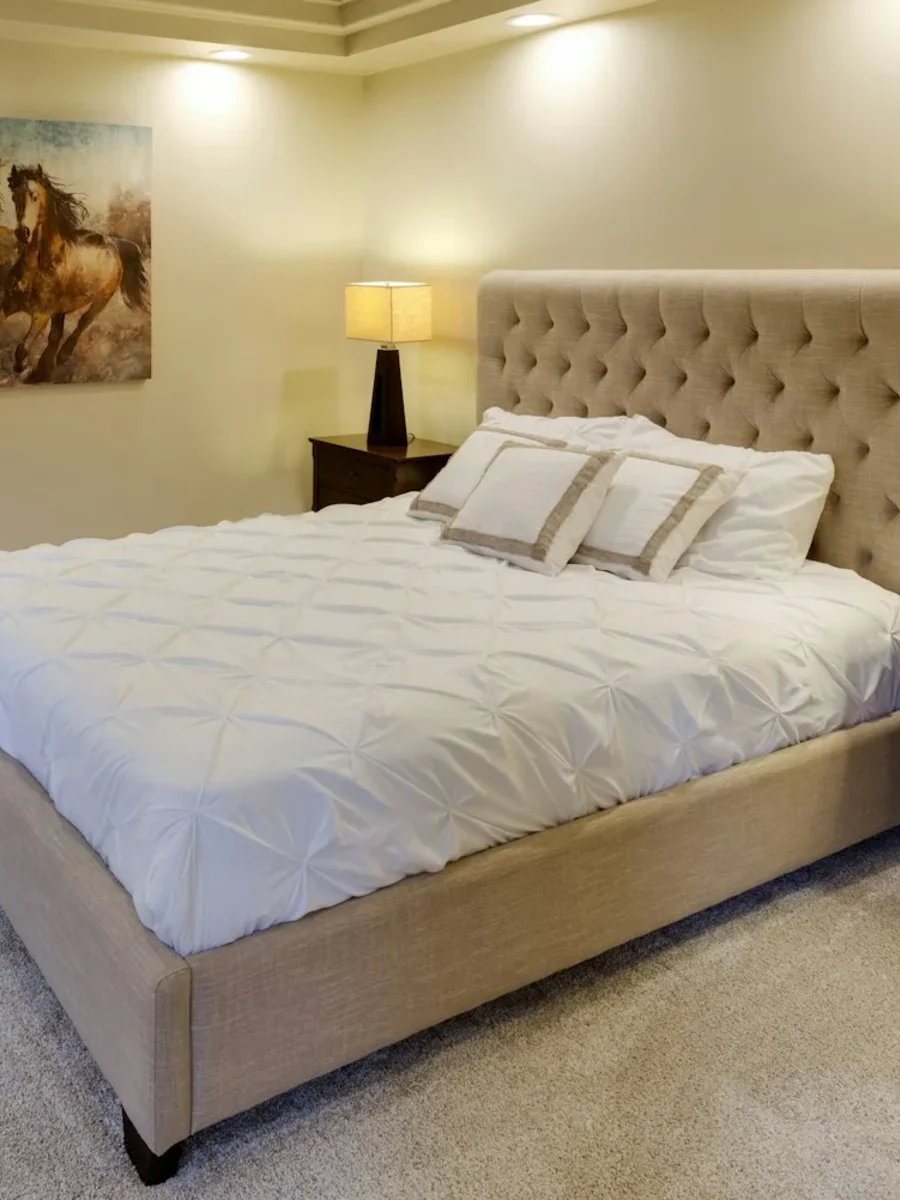
Lightly walked on and away from outside doors. A tribal piece beside the bed, or a larger rug beneath it, both work well.
A runner softens footfall and gives rhythm to a long passage. Rotate it regularly, since traffic is concentrated in one line.
Spills, crafts and play are hard on fine wool and silk. A sturdy village rug can cope; a fine or silk piece cannot.
Exposure to rain, sun and salt will damage it. Keep it indoors.
In depth — tap a heading to read
Older coastal houses often have long rooms, thick walls and deep window reveals that throw sharp pools of light across the floor. Before choosing the rug, watch where the sun lands at different times of day and in different months. A rug that spends every afternoon in a bright patch will fade in exactly that shape, and the difference shows as soon as the furniture moves.
Floors in these houses are rarely level and often mix materials: timber in one room, patterned tile in the next. A hand-knotted rug needs to lie flat without ridges, so we check the floor and choose an underlay thickness that bridges small irregularities. On patterned tile, let the rug's colours pick up the tile rather than compete with it; a quieter field or a softened antique often sits better than a busy formal design.
Plan the room around the rug: centre it on the architecture, then set the furniture.
Look first at how the rug lies. A well-made piece lies flat, with straight sides and square corners; ripples, a curved edge or a corner that curls usually point to uneven tension on the loom. The selvedges down the sides should be firmly wrapped, and the ends secured so the knotting cannot unravel.
Then look at the colour. Gentle horizontal bands of shade change, the abrash, are a sign of hand-dyed yarn and are welcome. Colours that have run into neighbouring areas, or a pale area painted in to hide wear, are not. Feel the wool: good wool is lively and slightly lustrous, not dry and brittle. Finally, ask about any repairs, and look for them on the back.
A formal medallion rug reads best when the medallion sits under the centre of the table or the seating group. That means the rug and the furniture should be centred on the same line, which is easier to plan before the furniture arrives. In a dining room, a rug of 8 x 10 ft or 9 x 12 ft typically suits a table for six to eight with chairs pulled out.
Where the right antique is simply the wrong size, there are two good answers. One is to layer it over a larger plain flatweave that sets the size of the area. The other, for contemporary hand-knotted pieces, is to have the rug knotted to measure, which takes longer but gives exactly the size and palette the room needs.
In a heritage hotel or a rental villa, a hand-knotted rug brings a sense of place that guests remember. The trick is to put it where it is seen and lightly walked on: a lounge, a library, a principal suite. Choose sturdy village or contemporary pieces in good wool with a mid-tone ground, rather than fine formal or silk carpets, and avoid the rooms nearest the pool.
Keep a simple record for each piece: size, origin, photographs of front and back, and any repairs. It helps with insurance and with judging condition after each season, and it means a damaged rug can be described precisely to a restorer.
Living with it
Have the rug checked for loose ends and selvedges and any moth activity. Decide whether it stays down in a ventilated, occupied room or is stored for the season.
If it stays down, keep air moving in the room and lift a corner on dry days. Keep it out of the path of wet feet and umbrellas.
The dry months are the time for specialist washing and repairs, when the rug can dry right through quickly.
Look under furniture and along edges for insect damage, and turn the rug if one end is getting more light or traffic.
Avoid these
The fringe is the ends of the warps that hold the knots. Cutting it off can let the rug unravel. Have worn ends secured by a restorer instead.
The back tells you how the rug was made and whether it has been repaired. Always turn it over before you commit.
Silk marks with water and shows traffic. Put it where it is walked on lightly, or choose wool.
A loose selvedge or small moth patch is simple to repair early and much harder once it spreads. Deal with it as soon as you see it.
Checklist
More in carpets
Rugs, runners and fitted carpet chosen for a humid climate.
From the Journal
All articlesOur process
One team from the first visit to the last bracket, so nothing is lost between the person who specified it and the person who fits it.
FAQ
Regular gentle vacuuming and professional cleaning. Wet washing at home can damage the dyes and foundation, especially in humid conditions where it dries slowly.
Natural dyes fade in strong direct sun over time. Placing the rug away from the brightest light, or rotating it, keeps the colour even.
A well-made hand-knotted rug can last for generations, can be washed and repaired repeatedly, and often keeps its value where a machine-made rug does not. Whether a particular piece is worth it depends on its wool, dyes, construction and condition. Buy one you love for its own sake, and have it assessed before you commit.
Persian usually refers to rugs from Iran and its weaving traditions. Oriental is a broader term for hand-knotted rugs from across Asia, including Turkey, the Caucasus, Central Asia, India, Nepal and China. The construction is similar; the designs, palettes and knotting styles differ by region.
In most cases, yes. A skilled restorer can reweave worn areas and moth holes, rebuild selvedges and secure ends. The earlier damage is treated, the less work it takes. Restoration is best done in the dry months, and should always be done with matching wool and dyes.
Yes. An underlay stops the rug creeping, cushions the knots against a hard floor and protects the floor finish. In a humid house, choose one that lets air pass rather than a solid rubber sheet that traps damp between rug and floor.
Very often it is exactly what a modern room needs. A softened antique or a village rug gives a spare, contemporary space warmth and history. Choose one where the palette relates to the room's materials, and keep the rest of the furnishing quiet so the rug is the focus.
Next step
We start with a visit. We look at the architecture, the floors and where the light falls through the day, measure the furniture group and talk through the feel you want. We bring a selection of hand-knotted rugs to lay on your own floor, so you can see each one in the room's light before you decide. We then supply the right underlay, lay the rug and advise on its place and care through the seasons. Book a home visit to begin.