 Drape Haus
Drape Haus
Preparing the room
Drape Haus
Preparing the room
Upholstery
New seat cushions for a sofa that has gone flat, fresh covers for tired ones, and throw cushions and bolsters that finish the arrangement — each filling chosen for how it behaves in Goa's damp months.
Durability scale (Martindale rubs, BS 2543)
15k
20k
25k
30k
40k
Who uses it
Where it lives
How it is used
Durability to ask for
30,000+ rubs
Severe domestic / general contract
Removable covers
Yes
zipped, washable, and a spare set
Fibres that suit
Avoid: Anything you cannot clean in place, on a piece used every day. Rub count is one number among several — weave, colour-fastness and how a fabric handles humidity matter as much. We bring samples to see in your room.
In short
By the Drape Haus studio · How we write
Is it right for you?
The cushions are the part of a sofa you actually touch. They take every sit, every lean and every afternoon nap, and they are usually the first thing to fail. A sofa whose frame is solid and whose fabric is fine can still feel worn out simply because the seat foam has softened and the back cushions have lost their loft. Replacing those is quicker, less disruptive and far less costly than any larger job.
This page covers the cushions of a sofa specifically: new seat cushion inserts, refilling or replacing back cushions, new covers for existing cushions, and the throw cushions and bolsters that finish the arrangement. If you are looking for cushions across the whole house — window seats, beds, runners — our cushions and soft furnishings page deals with those.
Cushion work is the right answer when the sofa is sound underneath. Press down firmly through the seat cushion to the deck: if the base beneath is firm and level, new cushions will restore the sofa. If your hand meets loose webbing or broken springs, the sofa needs repair first, and new cushions will simply sink into the same hole.
The details
Most sofas wear out at the cushions long before the frame. Seat foam softens and loses its spring, back cushions slump to the bottom of their covers, and the sofa starts to feel tired even though nothing is broken. Replacing the cushions alone is often all a sound sofa needs.
We work on three layers. Seat cushions get new foam cut to the frame, wrapped in fibre so the edges stay soft. Back cushions get fibre, feather or a blend depending on how you sit. Throw cushions and bolsters are the finishing layer, sized to the sofa rather than bought in a standard square.
The filling matters more here than almost anywhere else in the house. Feather absorbs humidity and can smell in a room closed through the rains; fibre dries quickly but flattens sooner; foam holds its shape but needs a breathable cover. We choose by the room and how it is used.
Covers can be made to match the sofa, or deliberately to contrast with it, and every one has a zip so it can come off for washing.
Your options
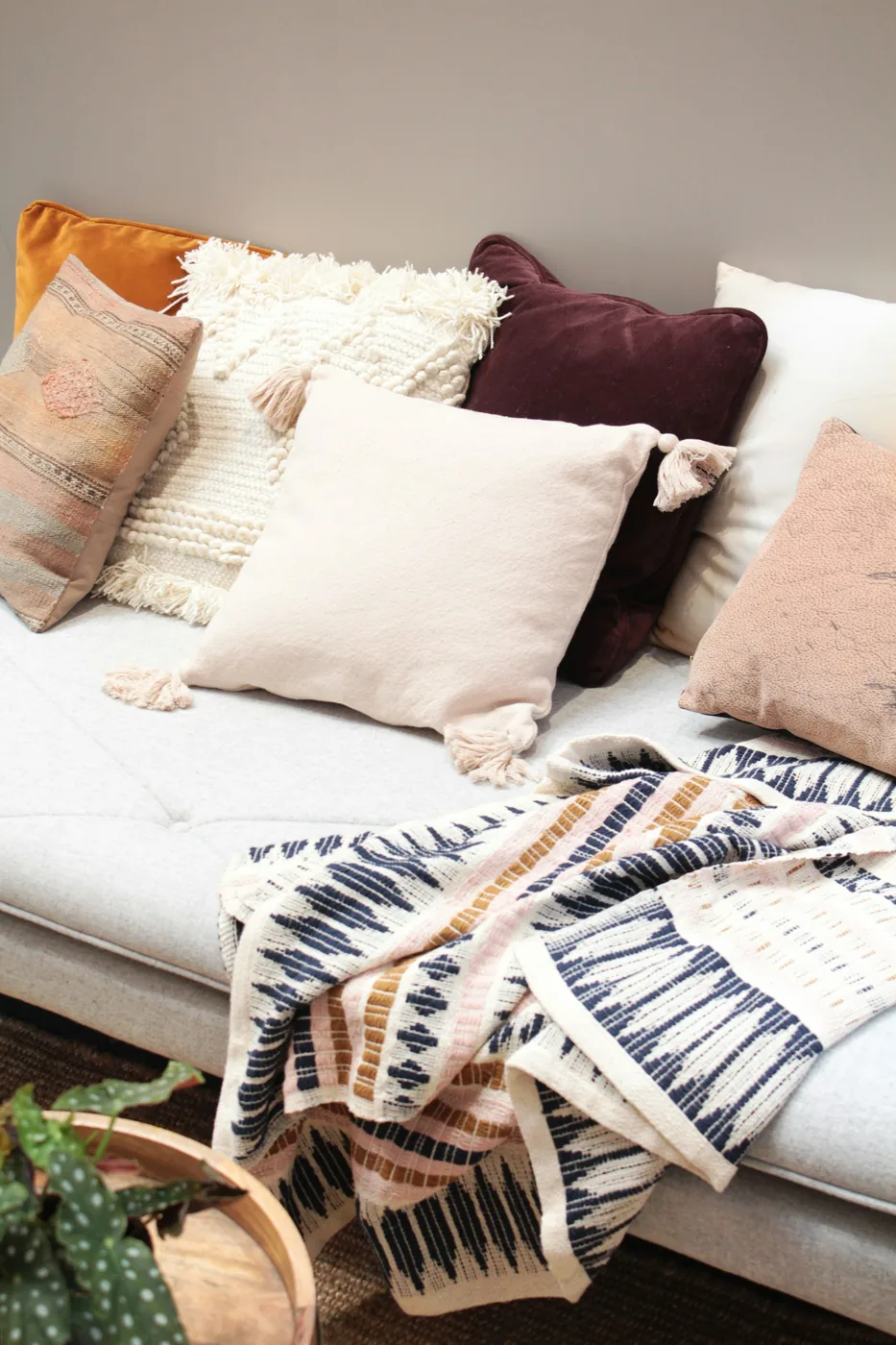
A sofa has several kinds of cushion, each doing a different job. The filling for each should be chosen for that job and for the room — not simply copied from whatever was there before.
Swipe for all 5 →
The honest view
The biggest comfort gain for the least work
New seat foam changes how a sofa feels more than any other single change. The frame, fabric and look stay the same; the sitting experience is new.
No sofa leaves the house
We measure the cushions and take them away, or make new ones to the measurements while you keep using the sofa.
Fillings chosen for the climate
Replacing inserts is the chance to swap a damp-holding filling for one that suits a humid house, or a house that is closed for months.
Throws change a room by season
A set of throw cushion covers in dry-season colours and another for the monsoon is the easiest way to refresh a sitting room through the year.
Does not fix the base
If the springs or webbing under the seat have failed, new cushions sink into them. Test the deck first.
Matching old fabric is hard
New covers in the original fabric are rarely possible if the sofa is more than a few years old. Contrast is often the better route.
Feather needs attention
Feather-filled cushions are wonderful to sit on but need daily plumping and dry air; neglected, they flatten and can smell in the rains.
Side by side
The filling decides how a cushion feels on day one and how it behaves after two monsoons. Here is how the main options compare in a Goan home.
| Foam (fibre-wrapped) | Polyester fibre | Feather and fibre blend | Feather and down | |
|---|---|---|---|---|
| Feel | Supportive, springy | Soft, light | Deep, relaxed | Very soft, sinking |
| Holds its shape | Very well | Fair, needs plumping | Fair | Needs daily plumping |
| Copes with humidity | Good with a breathable cover | Very good, dries fast | Fair | Poor in closed rooms |
| Washable insert | No, cover only | Often | Rarely | No |
| Best use | Seat cushions | Backs and throws in rentals | Backs in lived-in homes | Throws in air-conditioned rooms |
Swipe to compare →
Foam for seats, fibre for anything that must cope with damp or heavy use, feather only where the room stays dry and lived-in.
Rather see it in your own room?
We bring samples to the house, measure every window, and specify for the light and exposure you actually have.
Room by room
Firm, fibre-wrapped seat foam and blended back cushions give a sofa that supports during the day and relaxes in the evening. Throws in two sizes add depth.
Fibre backs and foam seats, all covers zipped and washable, with a spare set of seat covers. Avoid feather where guests leave doors open to the humid night.
Feather and low-grade foam hold moisture over a closed season. Choose fibre and quality foam, and store throws in breathable bags.
The one place feather-filled throws and backs work well year-round, because the air stays dry.
Indoor cushions under cover can work with quick-dry fibre and tightly woven covers. Fully exposed seating needs outdoor cushions instead.
In depth — tap a heading to read
Seat inserts are cut to the deck of the sofa, not to the old cushion, which has usually shrunk and lost its shape. We measure the width and depth of the seat between the arms and back, the height of the old cushion, and any shaping at the front corners or around the arms on a T-cushion. On a sofa with several seat cushions, each is measured, because the end ones often differ from the middle.
Firmness is a matter of taste and use. A firm seat suits upright sitting, older family members and anyone who works on the sofa with a laptop. A softer seat suits a television room. We bring foam samples so you can press them and sit on them, and we can make the end seats a touch firmer than the middle if two people like different things.
Humidity is hard on fillings. Feather absorbs moisture from the air, clumps and, in a closed room, can begin to smell by the end of the rains. Low-density foam holds damp in its cells and breaks down to crumbs. Polyester fibre barely absorbs water and dries quickly, which is why it is the safe choice for rentals and houses closed for months.
Good-quality foam copes well if it can breathe. That means a cotton or breathable ticking layer under the cover, rather than plastic wrap, and a cover fabric that is not coated. Lifting seat cushions and standing them on edge in a breezy room on a dry day after the monsoon lets them air thoroughly.
If a cushion smells musty after the rains, the insert, not the cover, is the source.
Every sofa cushion cover we make has a zip, placed along the back or underside so it does not show. Seat covers are cut to fit snugly over their inserts, because a loose seat cover creases and slides. Piping strengthens the edges, which take the most wear, and defines the shape; knife-edge and flanged finishes are softer and suit throws.
For seat covers, choose a fabric rated for heavy use. Throws can be anything: linen, cotton prints, handloom weaves, velvet in an air-conditioned room. Matching the throws to the curtains is one of the simplest ways to tie a sitting room together.
On a three-seater, two larger cushions at the ends with a smaller or rectangular one in the middle is a reliable start. On a deep L-shape, put more cushions in the corner, where people lean back sideways, and fewer along the straight run. Mixing a plain, a texture and a pattern within a related colour range looks considered without becoming busy.
A sofa throw — a light blanket folded over the arm or back — adds comfort on cooler evenings and protects the most-touched parts of the sofa. In Goa, cotton and light linen throws suit most of the year; heavier knits are only for air-conditioned rooms. We can make throws from the same fabric as the cushions.
Living with it
Flip seat cushions and swap their positions every week or two, so the favourite seat does not hollow out faster than the rest.
Fibre and feather back cushions need a daily shake and a punch at the corners to keep their loft.
On the first dry, breezy days, stand inserts on their edges in a ventilated room for a few hours.
Wash covers from the same sofa together so they fade evenly, and refit them while slightly damp for a snug fit.
Strong west light fades covers and weakens foam. Rotate cushions out of the sunniest spot.
Avoid these
The old insert has shrunk. Measure the deck, or the new cushion will be too small.
Plush foam feels wonderful in the showroom and dips within months on a sofa used all day.
A second home locked through the rains is no place for feather. Fibre is the safe choice.
Throw cushion inserts should be slightly larger than the cover so it looks full rather than flat.
Test the seat deck before ordering. If it gives way, repair it first.
Checklist
More in upholstery
Reupholstering a well-built frame costs less than replacing it and keeps a piece you already love.
Our process
One team from the first visit to the last bracket, so nothing is lost between the person who specified it and the person who fits it.
FAQ
Yes. We measure the seat and the old cushions, cut new foam to fit, and either reuse your existing covers or make new ones. It is often all a sound sofa needs.
Fibre and foam cope best with humidity. Feather is the softest but absorbs moisture, so it suits air-conditioned rooms or homes that are lived in and aired year-round.
Yes. Show us the inserts and we make covers to fit them, slightly snug so the cushion looks full.
Usually two on a two-seater, three to five on a three-seater, and more on a large L-shape. Fewer, well-filled cushions look better and leave room to sit.
Take the seat cushions off and press the deck. If it is firm and even, new cushions will fix the sofa. If it sags, creaks or you can feel loose springs, the base needs repairing first.
Yes. We measure the frame and make seat and back cushions from scratch, with covers in a fabric that relates to the sofa or the room.
Yes. A throw in cotton or linen, made from the same fabric as the cushions or a complementary one, is a practical way to protect the arms and back.
Usually the foam is too low in density for daily use, or the fibre wrap has compressed. Higher-density foam with a fresh fibre wrap lasts considerably longer.
Next step
We visit, take the cushions off and check the seat deck, then measure every cushion position and talk through how you like to sit. We bring foam samples to press, fillings to compare and fabrics for covers and throws. New inserts and covers are made in our workroom and brought back to fit on the sofa. Book a home visit and we will look at the whole sofa, not just its cushions.