 Drape Haus
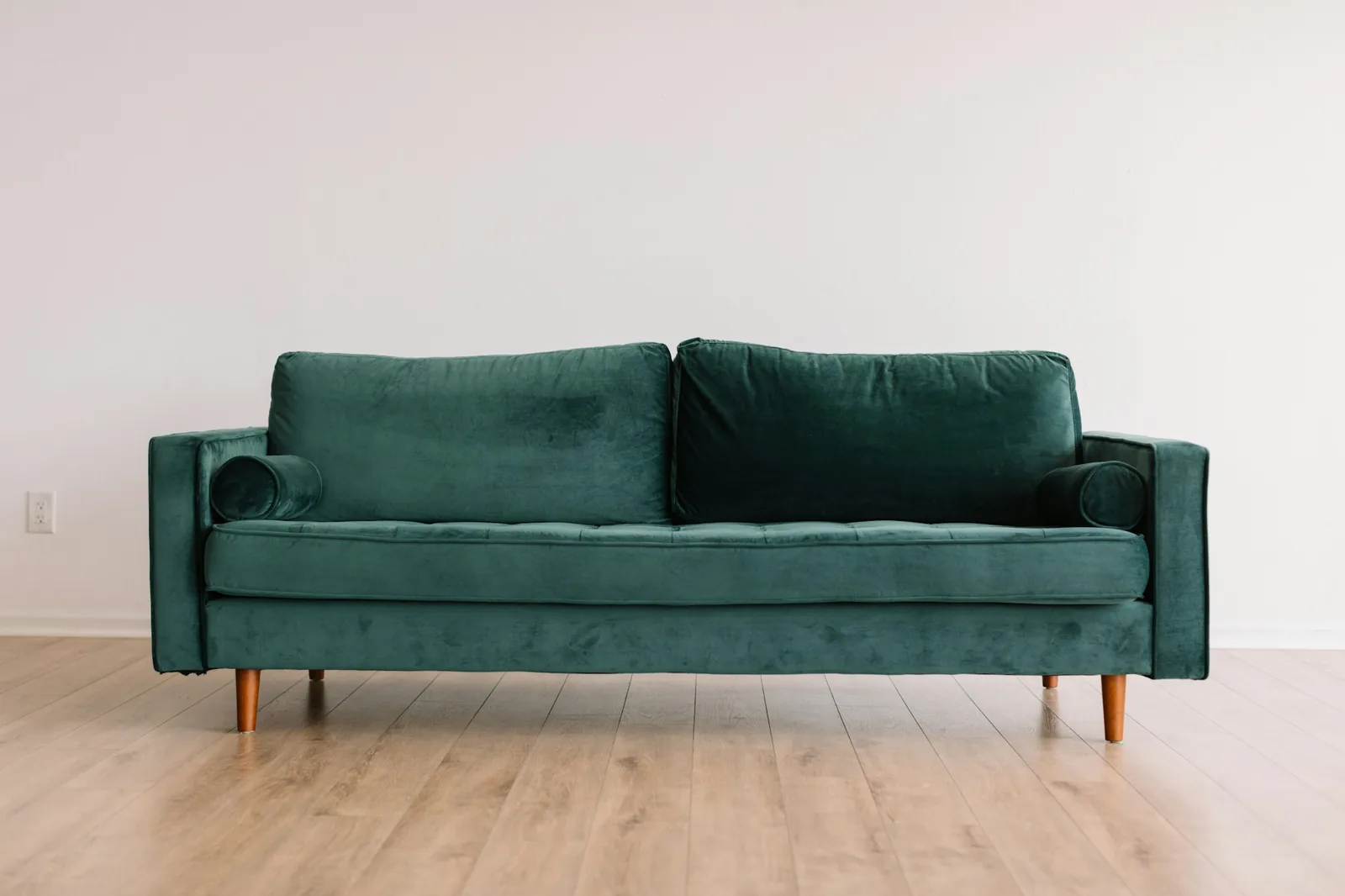
Sofa legs get chosen last and noticed least, yet in a Goan house they decide a surprising amount. Their height decides whether a mop or a robot vacuum can reach under the sofa, and whether air moves beneath it through the monsoon. Their material decides whether the feet slowly soak up mop water and soften, or rust and leave orange rings on a tiled or oxide floor. And because most legs simply screw on, they are one of the easiest parts of a sofa to change.
For most homes here the practical answer is a raised sofa, with clear space beneath, on hardwood legs whose feet are sealed and capped, or on powder-coated or good stainless steel legs, finished with glides suited to the floor. Plinth bases and skirts that reach the floor look tidy but hide dust and trap damp air.
This guide covers height, materials, rot and rust, floor protection, replacing and raising legs, and how to match them to the sofa and the room.
Why sofa leg height matters for mopping, robot vacuums and airflow
Most Goan homes have hard floors, tile, stone or oxide, and most are wet-mopped daily. A sofa on short legs or a solid base means dust, sand and red laterite grit collect underneath where the mop cannot reach, and the strip of floor along the front edge never quite dries. A sofa raised clear of the floor lets the mop pass under and the floor dry evenly.
Robot vacuums and mops add a precise requirement. Each machine has a body height, and if the clearance under the sofa is less than that, it either bumps off or wedges itself. Measure your machine's height, allow a little extra, and set the leg height to give that clearance beneath the lowest rail, not just beneath the leg tips. Remember that a sagging seat lowers the underside when someone sits.
Air movement is the less visible benefit. In the monsoon, when the India Meteorological Department records morning humidity of 87–91% across the state, the still air trapped under a low or skirted sofa stays damp longest. The US Environmental Protection Agency recommends keeping indoor humidity below 60%; a raised sofa does not achieve that on its own, but it lets fans and dehumidifiers reach the underside of the frame and the base of the cushions instead of leaving a damp pocket.
Height also changes how the sofa sits. Legs are part of the seat height, so taller legs raise the seat and the arms. Before ordering taller legs, sit on the sofa and check your feet still rest flat on the floor, and that the arm will not end up awkwardly above a side table.
Choose leg height from the floor up: mop and robot clearance first, seat comfort second, looks third.
Wood, metal and plastic legs compared for durability
Each material has a place. Hardwood legs are warm, traditional and easily refinished, but timber takes up water through its end grain, which is exactly the surface standing on a wet floor. Metal legs are slim and strong, and their weakness is corrosion where a coating chips or the grade is wrong for sea air. Plastic legs and feet are rot- and rust-proof and quiet on tile, but rarely handsome, so they are usually hidden under a skirt or used as glides.
The table compares them on the points that matter most in a coastal house.
| Material | Strength | On wet-mopped floors | Near the sea | Look |
|---|---|---|---|---|
| Hardwood, sealed | Good if the grain runs straight | Fine if the foot is sealed and capped | Fine | Warm; turned, tapered or block |
| Hardwood, unsealed foot | Good at first | End grain wicks water; can soften and stain | Fine | As above, until it marks |
| Mild steel, powder-coated | Very good | Fine while the coating is intact | Rusts where chipped | Slim, modern, any colour |
| Stainless steel | Very good | Fine | Grade matters; 316 is listed for coastal use | Brushed or polished |
| Brass or brass-plated | Good | Fine; may tarnish | Plating can wear through | Warm metallic, period look |
| Aluminium | Good for light sofas | Fine | Can pit and whiten in salt air | Light, modern |
| Plastic or nylon | Adequate for short feet | Unaffected | Unaffected | Utilitarian; best hidden |
Planning something like this?
We visit homes across North and South Goa, measure on site, and bring samples to see in your own light.
Rot on wooden legs and rust on metal legs from wet floors
Wooden legs fail from the bottom up. The foot of the leg is end grain, which draws water up the fibres far faster than the sides absorb it, and a daily mop leaves a film of water round it every morning. In the monsoon the floor dries slowly, so the foot may never fully dry out. The Society for the Protection of Ancient Buildings, whose advice on timber decay applies to any wood, notes that dry timber is immune to attack and that decay is arrested by eliminating dampness and bringing moisture content below 20%. A leg standing in a damp film for months is the opposite of that.
The signs are a dark ring creeping up from the foot, a soft or splintering base, and sometimes a musty smell. Catch it early by sealing the foot: let it dry fully, then seal the end grain with a suitable varnish or sealer, and fit a cap or glide so the timber no longer touches the wet floor. A leg that has gone soft should be replaced; a sound leg can be cleaned and refinished. Mould on the leg surface, as opposed to decay, is covered in our guide to fungus on wooden furniture. Hollow legs, fine powder or mud tubes are insects, not rot; see termites and timber.
Metal legs fail where the protection fails. Powder-coated mild steel is durable until the coating chips, usually at the foot where it is knocked by mops and vacuums; rust then spreads under the coating and can leave orange marks on tile or oxide. Stainless steel is better, but the grade matters near the sea. The International Stainless Steel Forum lists grade 316 and its derivatives as suitable for coastal environments, so for a house near the beach, ask which grade a stainless leg is before you buy it. Our guide to salt air damage explains why houses near the shore are harder on metal.
Floor protectors and glides for tiles and oxide floors
Glides do two jobs: they protect the floor from the leg, and they protect the leg from the floor. On a wet-mopped floor the second job matters as much as the first. Felt pads, the default in many homes, are excellent on dry wooden floors but a poor choice here: felt soaks up mop water and holds it against the foot of the leg, and it picks up grit that then scratches tile and oxide when the sofa is moved.
Hard plastic or nylon glides shed water, slide easily and keep the timber off the wet floor. Rubber or soft polymer caps grip better and stop a sofa creeping on polished tile, but check them on a hidden part of the floor first, because some rubbers can mark or discolour light stone and oxide surfaces over time. Whatever you choose, it should cover the whole foot so no end grain touches the floor.
Red, black and coloured oxide floors, common in older Goan houses, deserve extra care. They are polished surfaces that scratch and scuff more readily than vitrified tile, so lift the sofa rather than dragging it, and avoid small, hard point loads such as a narrow metal leg without a glide. A wider foot spreads the weight.
Replacing or raising sofa legs to update an older sofa
Changing the legs is one of the quickest ways to update a sofa, and often the easiest repair. Many legs are fixed with a threaded bolt into a metal insert or mounting plate under the frame; these unscrew by hand, and a new leg with the same thread screws straight in. Older sofas may have legs glued and dowelled, or bolted through a rail, which needs more work.
Before ordering new legs, turn the sofa over and look. Check the thread or fixing, whether the rail around it is sound, and whether a broken leg has split the timber it was fixed to. Legs usually break because a sofa was dragged or tipped, and the force often cracks the corner block or rail as well. Fitting a new leg to a cracked rail only moves the problem. That is when sofa repair is the right call: the corner is reinforced and a proper mounting plate fitted before the new legs go on.
Raising a sofa is possible within limits. Taller legs lift the seat, so check comfort first; the frame must be able to take a longer lever without wobbling; and very tall, slim legs on a heavy sofa can rack sideways. If you want much more clearance than the sofa was built for, a new, more substantial leg with a wider fixing plate is safer than a simple extension. For a new sofa, leg height and material can be set from the start; it is one of the choices we make with you on our custom sofas.
Matching leg style, colour and finish to the sofa and the room
Legs set the period of a sofa more than people realise. Turned and bun feet read as traditional and suit carved furniture and heritage rooms; tapered, angled legs read as mid-century; block legs and slim metal sleds read as contemporary. A plinth base, where the upholstery stops at a recessed timber or metal base, looks modern and solid, but as noted above it hides the floor and traps damp.
For colour, either match or deliberately contrast. Matching the legs to the timber of the coffee table, door frames or a wooden sofa nearby ties the room together; our wooden sofas page shows how exposed timber carries through a room. A dark leg under a pale sofa makes it look lighter on its feet; a leg the colour of the fabric makes it look like a single block.
Finish matters for upkeep. Matt and satin finishes hide mop splashes and scuffs better than gloss. Polished brass shows every water mark; brushed metal shows fewer. And if the sofa stands in a room that is mopped every morning, choose a finish you are happy to wipe dry, because the feet are the one part of a sofa that gets wet every day.