 Drape Haus
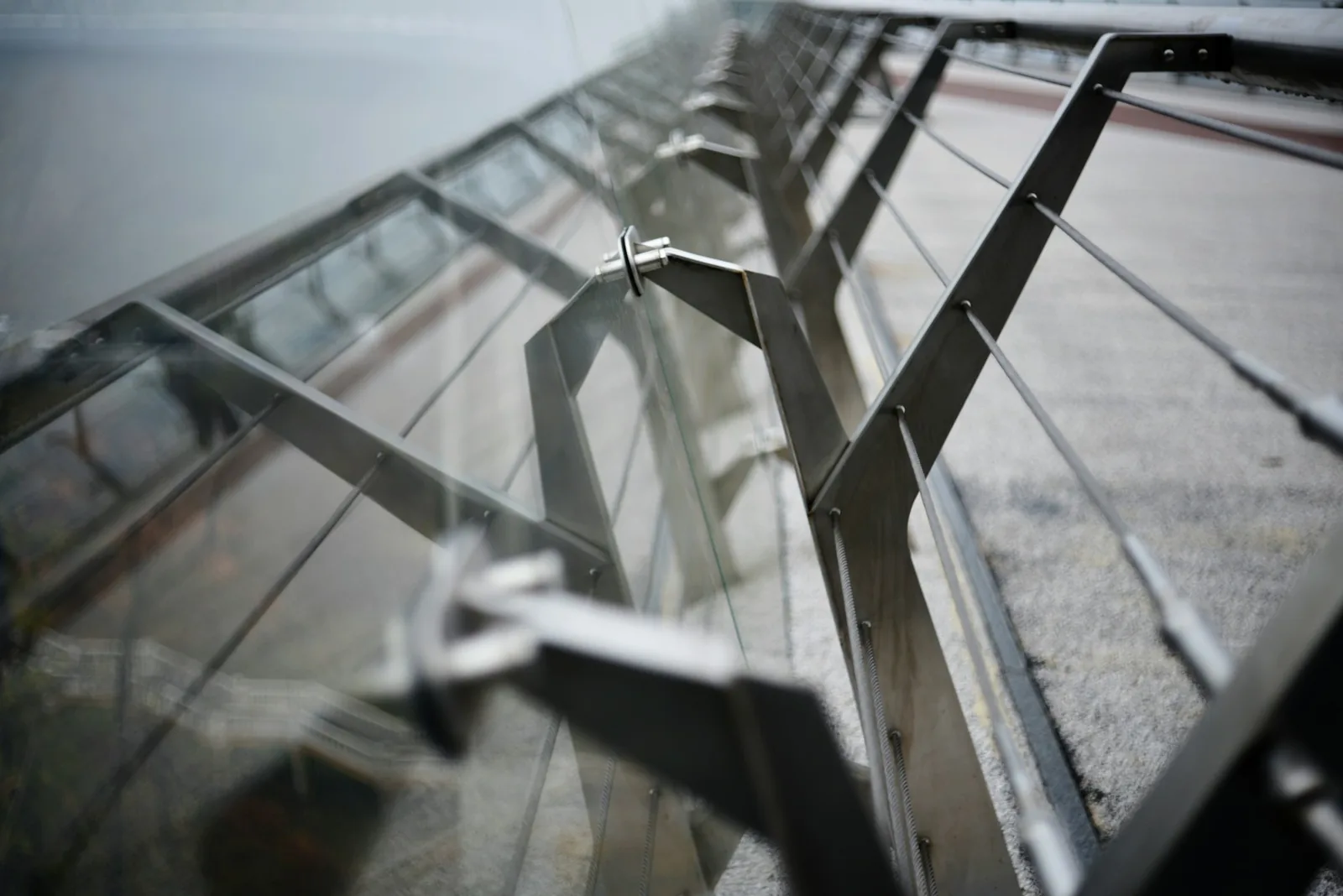
An invisible grill is a row of thin, tensioned steel cables fixed across a balcony or window opening, close enough together to stop a child or a pet slipping through, and fine enough that the view survives. It is a fall-safety product. A mosquito net is a mesh screen that keeps insects out of a room or a balcony. It is an insect product. The two are often discussed as alternatives when people plan balcony work in a Goan flat, and they are not alternatives at all.
The short answer is this. If anyone in the house could fall from the balcony, a child, a grandparent, a dog or a cat, the fall risk comes first, and mesh does not solve it. If mosquitoes are the problem, a grill does nothing, because its gaps are many times wider than any insect. Where both risks exist, the two systems can share the same balcony without fighting, as long as they are planned in the right order.
We should be clear about our own part. Drape Haus makes and fits mosquito nets, door screens and balcony mesh enclosures. We do not make or install invisible grills, so this guide explains what to ask a grill installer rather than selling you one.
What an invisible grill is, and the job it does
An invisible grill replaces the old box grille of welded bars with slim stainless-steel wire ropes, usually sheathed in a nylon or polymer coating. The cables run vertically or horizontally between aluminium channels that are anchored into the slab, the beams or the walls around the opening, and each cable is tensioned so that it does not bow when pushed. From inside the flat the cables almost disappear against the sky, which is why people choose them over bars.
Its job is simple and serious: to stop a person or an animal going over or through the edge. Toddlers climb, older children lean, and pets jump at birds. Child-safety organisations put the point bluntly. Safe Kids Worldwide advises parents to move chairs, cots and other furniture away from windows so small children cannot climb, and not to let children play on high balconies unless an adult is supervising. A properly installed grill adds a physical barrier on top of that vigilance.
Because it is a safety product, the questions to ask an installer are about load and fixings, not looks. How far apart are the cables, and why that spacing? What load has the system been tested to, and is there a document that says so? What are the anchors fixed into, and how deep? If the answers are vague, keep looking.
Why a grill does nothing for mosquitoes, and a net does nothing for falls
The gap between two grill cables is designed around the size of a child, not an insect. Mosquitoes, moths and the swarms of flying ants that come with the first rains pass straight through. So a balcony with an invisible grill is exactly as open to insects as a balcony without one, and the bedroom door behind it still needs its own screen if you want to leave it open at night.
The reverse is the dangerous mistake. Insect mesh, however strong it looks, is a light woven fabric in a light frame. It is held into its frame by a rubber spline or a clip strip and is meant to keep out a mosquito, not to hold the weight of a body. The US Consumer Product Safety Commission's advice is to never depend on screens to keep children from falling out of windows, and Safe Kids Worldwide puts it more simply: screens are meant to keep bugs out, not children in.
We fit pet-resistant mesh on balconies where owners want a cat to sit out, and it stands up to claws far better than ordinary fibreglass. But a mesh enclosure is never a fall barrier for a person, and we will not describe it as one. If a child could reach the parapet, the balcony needs a proper railing height, a grill or a locked door, whatever mesh is fitted.
Grill for falls, net for insects. Neither does the other's job, so decide which risks your balcony actually has before choosing.
Planning something like this?
We visit homes across North and South Goa, measure on site, and bring samples to see in your own light.
Invisible grill and mosquito net compared
Set side by side, the two products barely overlap. The table below is a plain summary of what each one does and does not do on a typical apartment balcony. It is not a ranking, because the right answer depends on who lives in the flat and what is bothering them.
Most families with young children on an upper floor end up with both: a grill on the outer edge for safety, and a net on the door or across the balcony for comfort in the evening. A couple without children or pets in a first-floor flat may need only the net. A flat with a toddler and an air-conditioned bedroom that is never opened to the balcony may need only the grill.
| Invisible grill | Mosquito net or mesh enclosure | |
|---|---|---|
| Main job | Stop falls through or over the edge | Stop insects entering |
| Stops mosquitoes | No, gaps are far too wide | Yes, when closed and well sealed |
| Stops a child or pet falling | Yes, if correctly spaced and anchored | No, mesh is not a safety barrier |
| Keeps pigeons out | Partly, birds can perch on cables | Yes, if the balcony is fully enclosed |
| View and breeze | Almost unchanged | Some light and air lost through mesh |
| Where it sits | Outer edge of the balcony | On the door, or inside the outer edge |
| Monsoon care | Rinse salt, check tension and anchors | Clean mesh and tracks, check seals |
Fitting both on the same balcony opening
When a balcony gets both, the grill goes on the outermost line, at the parapet or the edge of the slab, because its job is to stop anything leaving the balcony. The insect protection then goes in one of two places. The first, and usually the simplest, is on the door between the room and the balcony: a sliding door net running in its own track, or a pleated net that folds into a slim post. The balcony itself stays open to the air behind the grill, and the room stays free of insects.
The second is to enclose the balcony with framed mesh panels, so the balcony becomes a screened room you can sit in at dusk. In that case the mesh frames should sit just inside the grill line, on their own fixings, with enough of a gap that you can reach the cables to clean them and the installer can retension them. Never fix mesh frames into the grill's channels or rely on the grill to hold the mesh up; the two systems should be independent so that work on one does not disturb the other.
Plan the order of work. If the grill is going in first, tell the grill installer that mesh will follow, so the channels leave room. If the nets already exist, the grill installer needs to know where the net tracks and handles are, so the cables do not stop a sliding leaf from parking. Our balcony mosquito net visits include this check, and the mosquito net chooser lets you compare a door net with a full enclosure before anyone measures.
Salt air: cable grades, coatings and corrosion near the sea
On the coast, the metal is what fails first. For stainless steel, the grade matters. The Australian Stainless Steel Development Association advises grade 316, or one with equivalent corrosion resistance, as a minimum within five kilometres of the surf, and warns that lower grades such as 304 will probably tea-stain or corrode further in a marine environment. Tea staining is the brown surface discolouration that appears on poorly chosen stainless near the sea. The Association describes it as cosmetic rather than structural, but on a cable system you also cannot see what is happening inside the coating.
That is the question to press on any grill quote. What grade is the steel core? Is the coating sealed at the ends, where water can wick in? What are the end fittings and tensioners made of, and are they the same grade as the cable? Are the aluminium channels powder-coated, and are stainless screws isolated from the aluminium where they pass through it? A cable that looks perfect from the room can be corroding at the fitting where the salt and rain collect. Our guide to salt air damage explains why mixed metals corrode faster in sea air.
The same logic applies to nets. The mesh near the sea should be fibreglass, pet-resistant polyester or a marine-grade stainless, never plain aluminium or galvanised wire. Net frames should be powder-coated aluminium with stainless fixings. Both systems on a sea-facing balcony face exactly the same air, so it makes little sense to specify one carefully and the other carelessly.
Society rules and façade approvals in Goan apartments
Many apartment buildings in Goa are run by a co-operative housing society or a residents' association, and many have rules about anything fixed to the outside of the building. Invisible grills are often accepted more readily than box grilles because they barely change the façade, but that is the society's call, not the installer's. Before you sign any quote, ask the society office or managing committee in writing whether external grills, balcony enclosures or door nets need permission, and whether they set a colour for frames and channels.
In a new building still under the developer's maintenance, check the handover documents and ask the developer as well, since drilling into the slab edge or the parapet can affect waterproofing that is still under their care. Tell both installers about any waterproofing membrane on the balcony floor, because anchors through it must be sealed properly or the flat below will hear about it in July.
Think about emergencies too. Safe Kids Worldwide recommends window guards that adults and older children can open easily in an emergency. Ask the grill installer whether any section can be opened, and avoid closing in an opening that the building treats as a way out. Mesh on the door from the room to the balcony should always open from inside without a tool.
Looking after grills and nets through the monsoon
Goa's rain is concentrated: the India Meteorological Department's climate summary for the state records about 91 per cent of annual rainfall in the south-west monsoon, with westerly and south-westerly winds strengthening from June to August. A balcony takes all of it. Before the rains, walk the balcony with both systems in mind. On the grill, look for cables that have slackened, rust marks at tensioners and end fittings, and anchors that have started to crack the plaster around them. Retensioning is a job for the installer; do not tighten fittings yourself without knowing the design load.
On the nets, clean the mesh and the bottom track, check the brush seals and the edges for gaps, and make sure every leaf locks. The NCVBDC's vector control compendium notes that screening works as a physical barrier when it covers all the openings, including eaves, so a torn corner or a missing seal undoes the rest. While you are outside, empty saucers under plant pots and check the drip tray of the air-conditioner unit; the same document lists flower pots, condensation pans and blocked sunshade drains among the places Aedes mosquitoes breed.
After the monsoon, rinse both systems with fresh water to take off the salt that has settled through the season, and avoid bleach or chloride-based cleaners on stainless, which the stainless steel association specifically warns against. A soft brush is enough for cables; mesh needs a gentler hand, and our article on cleaning mosquito nets covers the method.