 Drape Haus
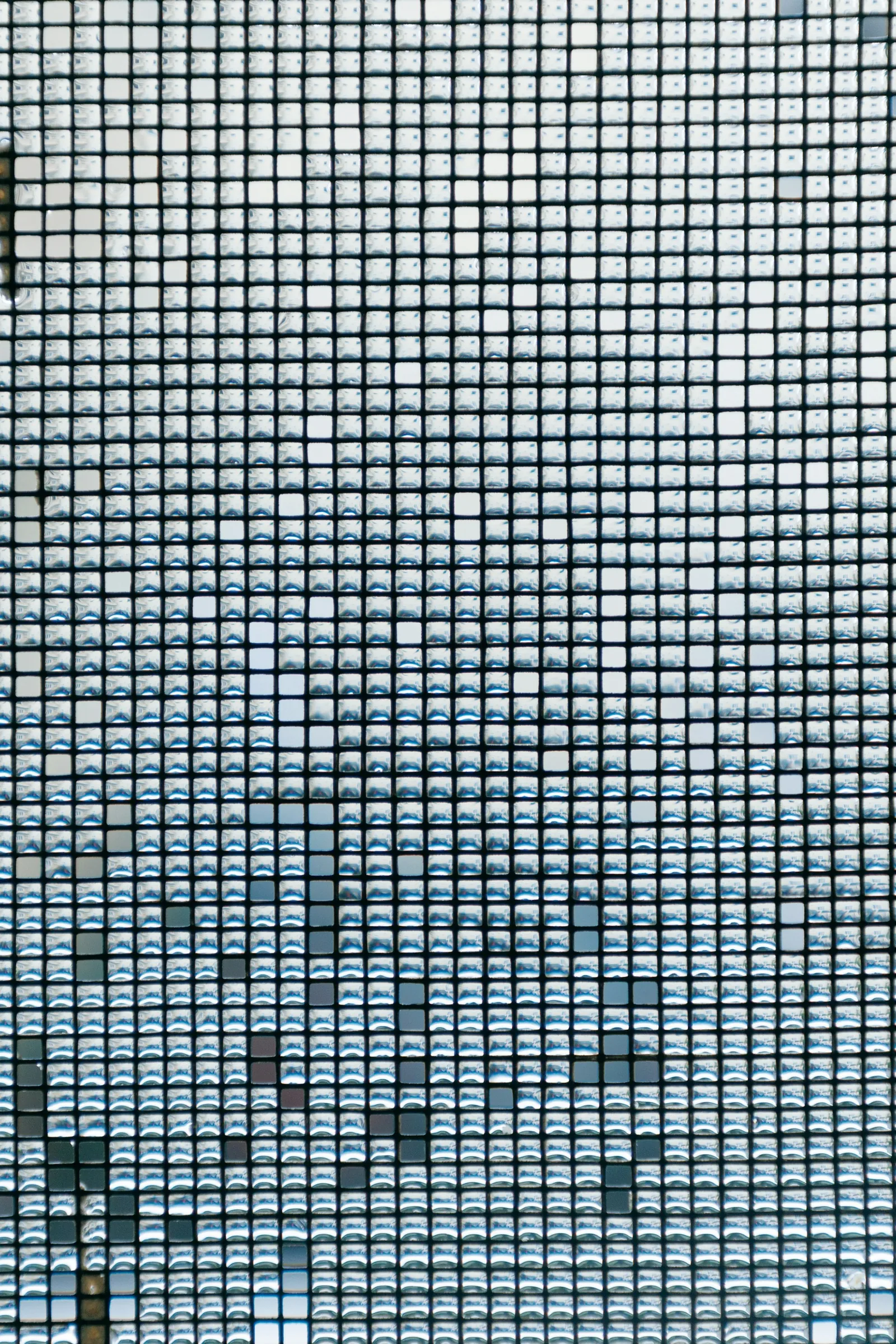
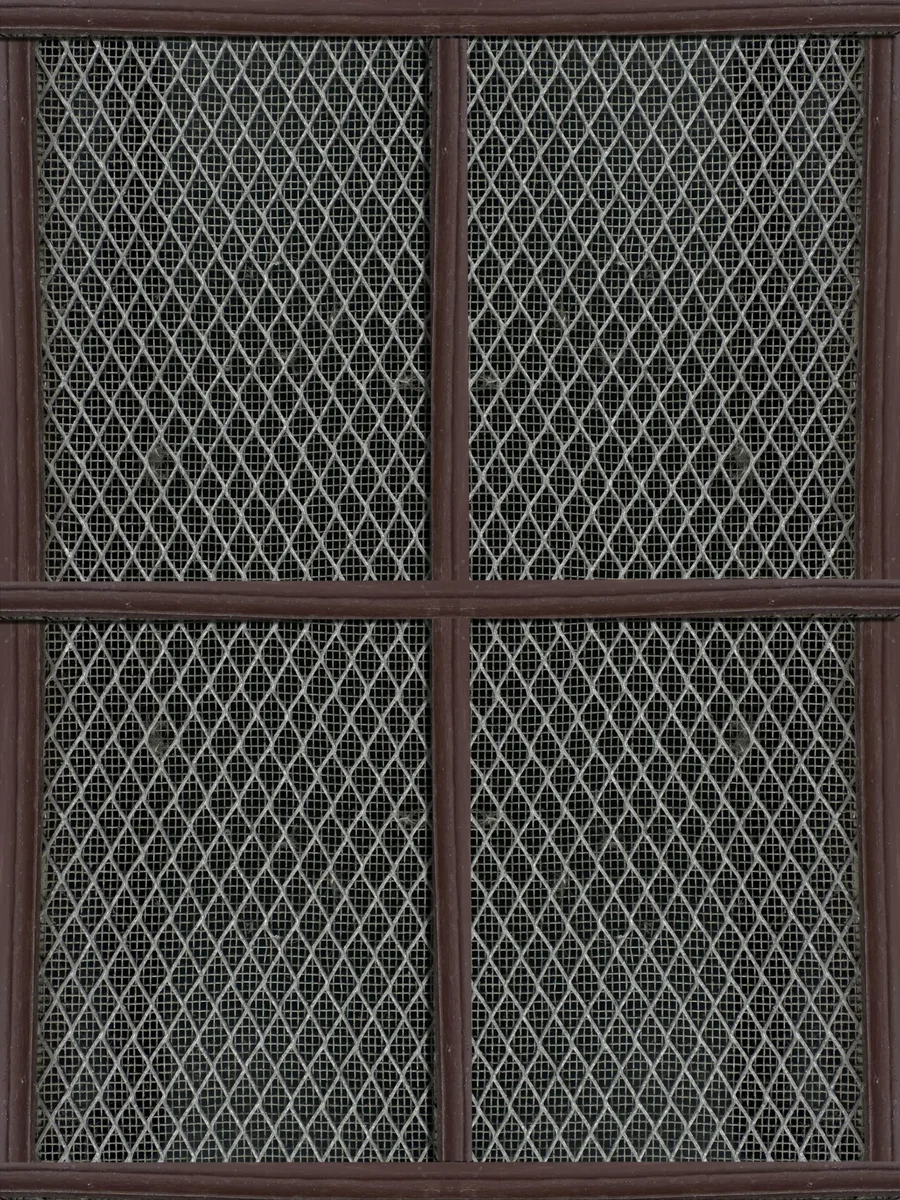
Mosquito mesh for windows comes in four main materials: PVC-coated fibreglass, heavier coated polyester sold as pet-resistant mesh, aluminium wire and stainless steel wire. Fibreglass is the everyday choice. Polyester is for pets, children and doors that take a beating. Stainless steel is the strongest, but only the right grade belongs by the sea. Aluminium, still common on older nets, is the one that usually fails first on the Goan coast.
Material is only half the choice. How fine the mesh is, how thick its strands are and what colour it is decide how much breeze and light come through, how clearly you see the view and how quickly salt and dust show on it. Those trade-offs matter more in Goa than in most places, because the hot, humid months are exactly when you want the most air through an open window.
Below, each material in turn, then what mesh counts mean, why colour matters more than people expect, and the questions to put to anyone quoting for new nets or re-meshing.
Fibreglass mesh: the standard for most windows
Fibreglass insect mesh is made from glass-fibre yarn coated in PVC, woven and fused into a fabric mesh. That is how the US federal guide specification for aluminium windows describes it, referring to the ASTM standard for insect screening woven from vinyl-coated glass yarns. The coating gives the mesh its colour, protects the glass fibre and lets it be handled without fraying.
Its strengths suit most windows. It does not rust or corrode, so salt air does not attack it. It is flexible and does not dent or crease the way metal mesh does. It is light, so frames can stay slim. And it is the easiest mesh to replace, which keeps re-meshing simple.
Its weaknesses are abrasion and force. Fibreglass tears rather than bends, so a dog's claws, a child's fist or a broom handle can open a hole in it. After many years of strong sun the coating can turn dull and chalky, and the mesh becomes more brittle. On a west-facing window in Goa that is worth knowing: a screen that has turned pale and stiff is ready for re-meshing.
Polyester and pet-resistant meshes
Pet-resistant mesh uses a much heavier coated polyester yarn. It is far tougher against scratching and pushing than standard fibreglass, which is why it is used on doors that dogs nose open, on screens at a child's hand height and on balconies where cats sit. The trade-off is a coarser look, a little more light lost and a stiffer mesh that needs a sturdier frame and spline.
Makers publish their own strength figures for these meshes, measured in different ways, so they are hard to compare. Rather than compare numbers, ask to see and handle a sample, press it with a thumb, and choose by feel against the job. On a sliding door used by a large dog, a heavy mesh across the lower half of the leaf, or the whole leaf, prevents most tears.
One limit applies to every mesh, however tough: it is not a safety barrier. Safe Kids Worldwide puts it simply: screens are meant to keep bugs out, not children in. The same holds for a cat on a balcony or a child at an upstairs window. Pet-resistant mesh keeps claws from shredding a screen; it does not hold a weight that falls against it. Grilles, railings and restrictors do that job, and our invisible grill or mosquito net guide explains how the two work together on a balcony.
Pet-resistant means claw-resistant. No insect mesh is a fall barrier for children or pets.
Planning something like this?
We visit homes across North and South Goa, measure on site, and bring samples to see in your own light.
Aluminium mesh and white powder on the coast
Aluminium wire mesh is still found on many older nets in Goan houses. The same US specification offers it as the alternative to fibreglass: an 18 × 16 mesh of coated aluminium wire 0.2794 mm thick. Inland, coated aluminium mesh can last well. On the coast it is usually the first mesh to fail.
Salt is the reason. Once the coating is scratched or worn, salt deposits on bare aluminium hold moisture and start corrosion, which shows as a white, powdery bloom on the strands, then pinholes, then a mesh that crumbles when touched. The monsoon makes it worse, because the mesh rarely dries. If you rub an old aluminium net and white powder comes off on your finger, it is near the end of its life.
Aluminium mesh also dents and creases permanently when pushed, so a net that has been leaned on keeps the bulge. For both reasons, when we re-mesh an older aluminium net near the sea, we replace the mesh with a non-corroding one rather than like for like. The aluminium frame is a different matter: a powder-coated or anodised frame with sealed cut ends and stainless fixings holds up well.
Stainless steel mesh: why the grade matters by the sea
Stainless steel mesh is the strongest insect mesh and, for its strength, one of the clearest to look through. It resists claws, pushes and knocks. It is used on exposed doors, security screens and openings where nothing else lasts. Its weak point near the sea is not strength but grade.
The Australian Stainless Steel Development Association, a trade body whose guidance on coastal corrosion is widely used, explains that stainless steel exposed to an environment more aggressive than its grade can resist develops tea staining, a brown surface corrosion. Its advice is to use grade 316, or one with equivalent corrosion resistance, as a minimum within five kilometres of the surf. It adds that lower-alloyed grades such as 304 will probably tea-stain or corrode further in a marine environment, and that crevices, rough surfaces and areas the rain does not wash are where trouble starts. A woven mesh is, in effect, thousands of tiny crevices.
So a quote that says only stainless steel does not tell you enough. Ask for the grade in writing. Look after it as the same guidance advises: a light, regular wash with fresh water, perhaps whenever you wash the windows, and no abrasive cleaners or cleaners containing chlorides or bleach. Steel wool is a bad idea too, because it can leave carbon steel particles on the surface, which the association lists as a separate cause of staining.
Mesh count, airflow and visibility: what the numbers mean
Mesh is described by its count, the number of strands, and so openings, per inch or 25.4 mm. The US Food Code, for example, names screens of 16 mesh to 25.4 mm, alongside air curtains and other effective means, for food premises whose windows or doors are kept open for ventilation. The federal window specification above calls for 18 × 16, a count of 18 one way and 16 the other. Those two figures are useful reference points for a standard insect screen.
The count alone does not tell you how open a mesh is. The size of each opening depends on the count and on the thickness of the strand: at the same count, thicker strands leave smaller openings. So two meshes sold with the same count can let through different amounts of air and light. Finer meshes, sold for very small biting insects, stop more but cost noticeably more breeze, and any mesh clogged with dust costs more still.
A standard window mesh in good condition keeps mosquitoes out, so for most Goan homes the useful question is not how fine, but how much air and light the mesh lets through for the job it does. In the humid months, when the breeze is the main comfort, that is worth weighing. The World Health Organization's guidance on housing and vector control notes that screening can reduce indoor ventilation and that the effect on comfort should be considered. We could not find independent, published open-area figures for the common meshes, so rather than quote one, we suggest you ask for it.
- The mesh count in both directions, per inch or per 25.4 mm
- The strand or wire thickness
- The open area, as a percentage, if the maker publishes it
- For stainless steel, the grade, in writing
- Whether a sample can be seen against your own window light
Mesh colour, and how dust and salt film show
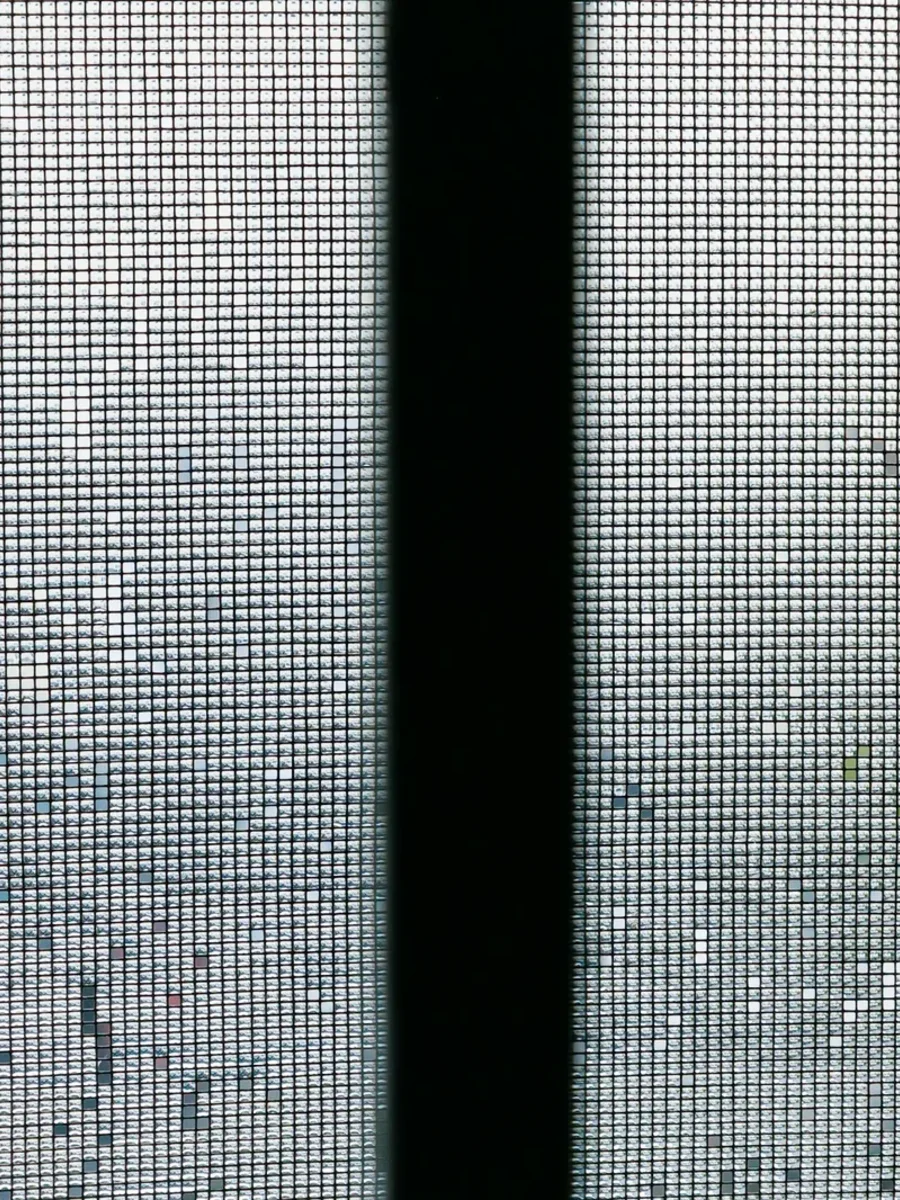
Colour changes how a mesh looks more than any other choice. A black or charcoal mesh is the most see-through, because it does not catch the light; your eye passes through it to the view. Grey mesh is a little more visible, and white or silver mesh, or bright bare metal, catches light and reads as a pale veil across the window, especially with the sun on it.
Colour also changes what shows. Salt dries on mesh as a pale film, and fine dust settles grey. On black mesh both show up as a haze, so a sea-facing black screen tells you when it needs rinsing. On grey mesh the same film is easier to live with. White mesh hides pale dust but shows mould spots and grime after the monsoon.
For most Goan windows, especially those looking at a garden or the sea, charcoal or black is the right default, rinsed with fresh water every few weeks in the dry season near the beach. Grey is a sensible choice for a dusty roadside window that will not be cleaned often. The mosquito net chooser shows how mesh sits in different openings.
Choosing a mesh for a Goan house
Put together, the choice is usually straightforward. For an ordinary window in a bedroom, study or kitchen, PVC-coated fibreglass in charcoal is the right answer almost everywhere, including by the sea. For any door or low screen that a dog, cat or child will push, choose pet-resistant polyester at least across the lower part. For a very exposed opening, or one where strength matters most, use stainless steel in grade 316. Avoid plain aluminium and galvanised mesh near the coast.
The rest of the screen matters as much as the mesh. A good mesh in a frame with mild-steel screws will still streak rust down the wall, and a non-corroding mesh in a track that holds water will still grow mould. The IMD records morning humidity of 87–91% in Goa from June to September, so drainage, stainless fixings and a clean track are part of the specification. Our guide to salt air damage covers the frames and fixings around the mesh.
When you are ready, our sliding nets are specified with the mesh chosen for each opening, and existing frames can often be re-meshed rather than replaced. For how the mesh fits into each kind of screen, see our guide to the types of mosquito nets for windows.
| Fibreglass | Pet-resistant polyester | Aluminium | Stainless steel | |
|---|---|---|---|---|
| Salt air | Unaffected | Unaffected | Corrodes once coating wears | 316 or better near the surf |
| Claws and pushing | Tears | Resists | Dents | Resists |
| View through it | Good | Slightly coarser | Good | Very good |
| Re-meshing | Easy | Needs a sturdier spline | Replace with another mesh | Specialist |
| Best use | Most windows | Pets, children, doors | Inland only | Exposed, high-wear openings |