 Drape Haus
Mangalore tile roof repair is mostly a question of finding the real cause and fixing it in the dry months. An old Goan roof rarely fails all at once. A few tiles crack or slip, a valley silts up with leaves, ridge mortar washes out, a batten rots under a long-forgotten drip, and the first heavy storm of June finds the gap. Caught early, each of those is a small job.
This guide is for owners, not roofers. Drape Haus makes and fits soft furnishings; we do not repair roofs. What follows explains what is involved, drawn from the Indian Standard code for Mangalore tile roofing and from conservation guidance on clay tile roofs, so you can judge the advice you are given, ask the right questions, and plan the work around the season.
It also covers the part we do know well: protecting curtains, rugs and furniture while the roof is open, and checking the rooms afterwards. For how the roof works in the first place, start with our guide to Mangalore tiles and Goan roofs.
Why the repair has to finish before June
The calendar is the first constraint. The India Meteorological Department's climate summary for Goa gives normal state rainfall of 6.6 mm in April and 81.3 mm in May, most of May's coming as pre-monsoon thunderstorms, and then 908.5 mm in June. The southwest monsoon sets in over the state by about the first week of June, and July alone brings about a third of the year's rain. A roof that is open in late May is gambling on the weather.
That makes the useful window roughly November to early May, and the earlier the better. Inspecting in the months after the rains, and booking the work for January to March, gives time to source matching tiles, replace timber properly and finish before the thunderstorms start. It also lets you see the roof's behaviour fresh from the last monsoon, while the stains are still visible.
Inspect in October or November, book in December, work in January to April. Late May is too late to start.
What actually fails on an old tiled roof
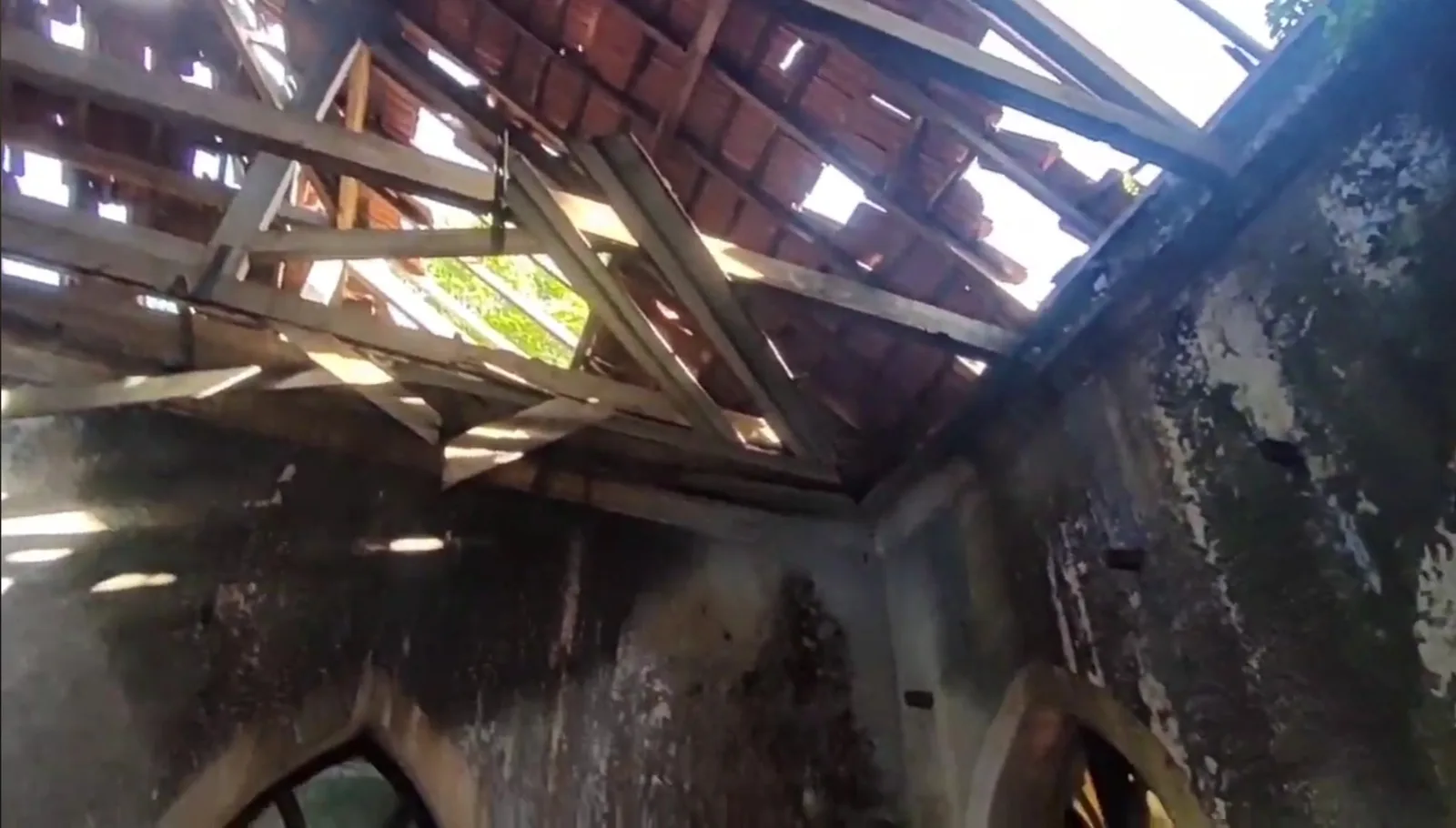
The tiles are usually the last thing to go. Conservation guidance on historic clay tile roofs from the US National Park Service is blunt: tiles are most likely to be damaged by frost, which Goa does not have, but the roof system most commonly fails through the breakdown of its fastening system. In a Goan roof that means the timber battens, called reepers in the Indian Standard, their nails, and the rafters they hang on.
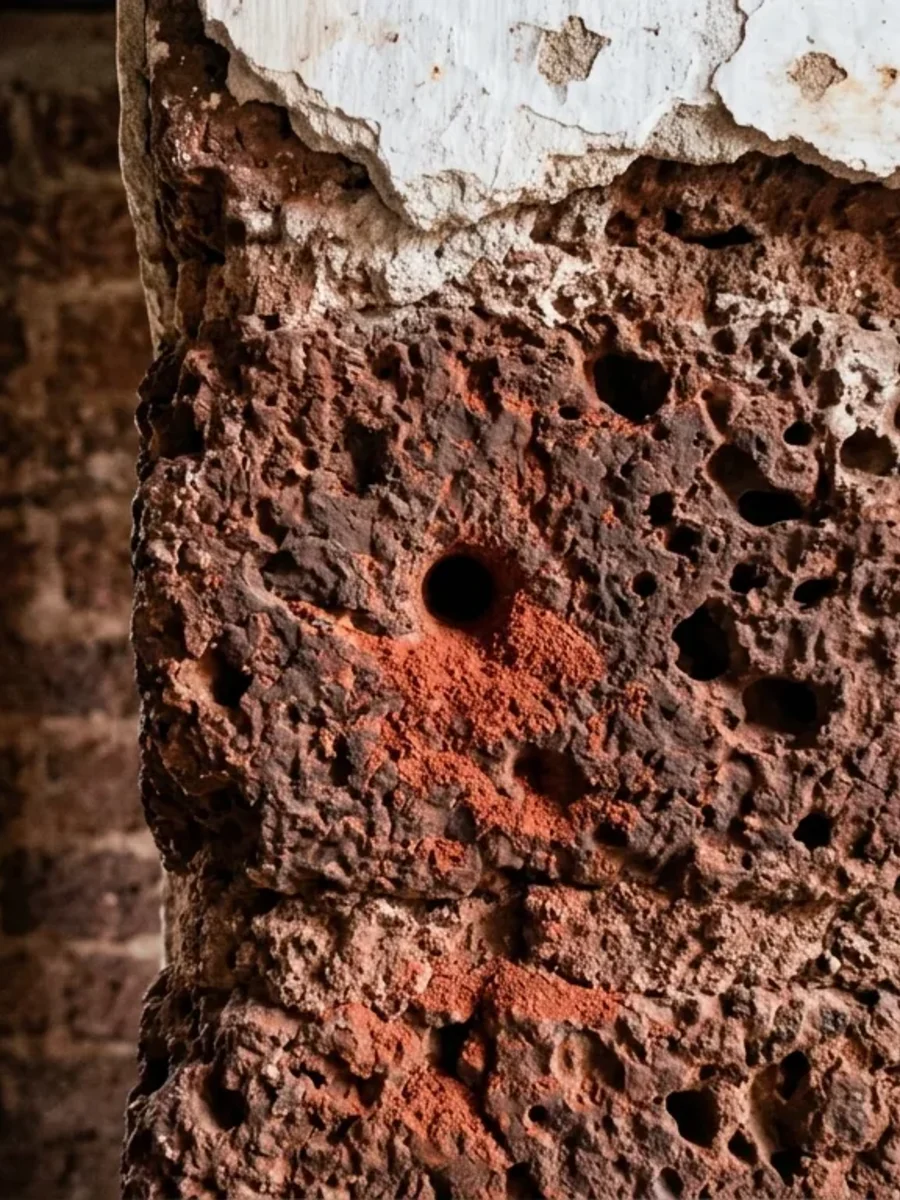
Timber decays where it stays wet. Old Goan rafters were often matti, which The Wood Database rates as only moderately durable with poor insect resistance, and the University of Kentucky's entomologists note that anobiid wood-boring beetles, which can seriously damage beams and joists, need wood at about 13 to 30% moisture content to develop. A batten under a leaking valley or a blocked gutter is exactly that wood. Treat insect damage in the roof as a symptom of water first.
The other weak points are predictable. The Indian Standard code describes valleys as particularly vulnerable because they are pitched lower than the slopes around them and carry water from both sides. Ridge and hip tiles sit on mortar that cracks and washes out. Tiles at the eaves lift in wind unless wired down. And gutters choked with leaves send water back under the bottom course and into the wall plate.
- Cracked, broken or slipped tiles, often after a branch fall or careless foot traffic
- Sagging rows, where battens have rotted or their nails have rusted through
- Blocked or corroded valleys, the most common source of serious leaks
- Washed-out mortar under ridge and hip tiles
- Lifted tiles at eaves and verges where the wiring has failed
- Blocked gutters and downpipes backing water into the roof edge
- Rot or insect damage at rafter feet and the wall plate
Planning something like this?
We visit homes across North and South Goa, measure on site, and bring samples to see in your own light.
Finding the leak: inside first, then the roof
A stain on the ceiling does not mark the leak. The Park Service guidance warns that water may come in at one place and travel along a roofing member some distance before it shows as a stain, plaster damage or rotted timber. A drip in the middle of a room often started at a valley or ridge two metres away.
So inspect from inside first. If there is a hatch into the roof space or a gap above a wooden ceiling, look up with a strong torch after heavy rain, as the guidance recommends, and follow the water marks on the rafters and battens uphill to their source. Note daylight showing through, dark wet timber, fresh powder from beetle holes and any sagging. Photograph everything and mark the positions on a rough plan of the roof; it saves time and argument later.
Then let the roofer confirm it from above, lifting tiles selectively in the suspected area. Walking on an old tile roof breaks tiles. The Park Service notes that roofers can damage tiles by walking carelessly on an unprotected roof, and that the professional approach is to spread weight with boards, planks or sandbags, or to hook a ladder over the ridge. If a roofer climbs straight onto the tiles in shoes, expect to buy more tiles than you planned.
Patch, re-lay a section, or re-roof
There are three scales of repair, and the right one depends on what you found. Replacing individual cracked or slipped tiles is quick and is exactly what the system was designed for: the Indian Standard notes that broken tiles can be replaced without much disturbance to the roof as a whole, and that a laid tile is designed to carry the weight of a man during repairs.
Where battens have failed under one slope or around a valley, the roofer lifts that section, stacks the sound tiles, renews the battens and any valley lining, and re-lays the same tiles. Where the frame is failing across the roof, the whole roof is stripped, the timbers repaired, and the tiles relaid. In every case, the Park Service guidance is to retain and reuse as many original tiles as possible. Clay tiles often outlast the building, it notes, and can be relaid with new corrosion-resistant fixings once the frame is put right.
Sound old tiles are worth keeping, and the Indian Standard gives simple tests for a tile: no cracks, twists or laminations, corners that sit within 6 mm of flat, and a clear ring when tapped rather than a dull note. Replacements must match the size of the old ones, since IS 654 sets three different sizes, and the Park Service suggests ordering 10 to 20% extra for breakage and spares. Keep a stack of spare tiles somewhere dry for future repairs.
| Repair | When it fits | What it involves |
|---|---|---|
| Replace individual tiles | A few cracked or slipped tiles; frame sound | Lift neighbours, swap tiles, re-wire eaves tiles |
| Re-lay a section | Rotten battens or a failed valley in one area | Lift and stack tiles, renew battens and valley lining, re-lay |
| Strip and re-roof | Widespread sagging, rotten rafters, failed fixings everywhere | Strip tiles, repair frame, new battens, re-lay sound tiles plus matched replacements |
Questions to ask a roofer before work starts
You do not need to be a roofer to ask good questions, and the Indian Standard code gives you the vocabulary. It specifies that battens should be treated against decay and termites, fixed with galvanised nails that penetrate at least 2 cm into the rafters, and joined only over rafters, with joints staggered between rows. Tiles are laid from the eaves to the ridge, interlocked and breaking joint. Valley gutters are galvanised steel at least 1.25 mm thick and 1.2 m wide, with a 300 mm overlap at any joint. The lowest courses are wired to the battens with galvanised wire.
Ridge tiles are bedded in mortar; the code allows either a lime mortar of one part lime to three of sand or a composite cement-lime-sand mix. On an old house, ask which the roofer intends to use and why, since lime is more compatible with the old fabric, as our guide to lime plaster and limewash explains.
- Where exactly is the leak coming from, and how did you trace it?
- Which battens and rafters need replacing, and what timber and treatment will you use?
- Will you reuse our sound tiles, and how will you protect them while they are stacked?
- Where will replacement tiles come from, and do they match our tile size?
- How will you line the valleys, and with what thickness of galvanised sheet?
- How will you move on the roof without breaking tiles?
- What will you do if it rains while the roof is open?
- How will you protect the rooms below, and who clears up the dust?
Tarpaulins: a stopgap, not a roof
When a roof cannot be repaired before the rains, a tarpaulin over the worst slope is the usual emergency answer, and the Park Service guidance accepts temporary protection with plastic or roofing felt until proper repairs can be made. For larger jobs it describes a scaffold enclosed in polyethylene sheeting over the whole roof, which keeps rain off the open frame while work continues.
A tarpaulin has costs if it stays. It has to be weighted and tied so the monsoon wind cannot lift it and drag tiles with it. It stops the air movement through the tile joints that normally dries the roof space, so any water already trapped beneath stays there longer; the Park Service makes a similar point about waterproof felt laid under tiles, which can prevent adequate ventilation. And plastic over the roof for a whole season is what an essay on Goa's vanishing architecture in Question of Cities singles out as the most dispiriting sight in the monsoon: a cover-up for a roof that no longer drains the way it was built to. Use it for weeks, not years, and book the repair for the next dry season.
Protecting curtains, rugs and furniture while the roof is open
Roof work fills a house with fine dust, broken mortar and the occasional shower of debris through an old ceiling, and if the weather turns, water. The US National Park Service's technical note on protecting historic interiors during construction starts from a clear principle: furnishings should be moved out of the work area altogether, and protection should be agreed and specified in advance, not left to the contractor's goodwill. It also warns against covering floors in a way that traps spilled water against them, and lists fire as the greatest risk during building work, down to rags soaked in finishing wax that once burned a historic building from a waste bin.
For a Goan house that translates into a short plan. Take curtains down before work starts, not when the dust arrives: lined curtains and sheers hold dust in their folds, and dust in a fabric that then meets monsoon humidity becomes a stain. Have them cleaned and stored dry until the house is finished, or let us handle it as a monsoon take-down. Roll rugs and store them off the floor in a room away from the work. Move upholstered pieces to rooms with a sound ceiling; what cannot move should be wrapped in cotton dust sheets with polythene over the top only during working hours, taken off each evening so moisture is not sealed in.
Close and tape doors to rooms you are protecting, and keep a cotton dust sheet over the floor at the door. Agree a route for workers that does not cross a carpet. If a room below the open section has to stay in use, empty it of anything that a dropped tile or a sudden shower could ruin. Once the roof is closed, vacuum before you dust, so you are not grinding grit into wood and fabric.
After the repair: checks in the first rains
A repaired roof proves itself in the first heavy storms. Within the first fortnight of the monsoon, go into each top-floor room and the roof space after a downpour. Look for new stains on ceilings, damp patches high on external walls, fresh drips along the wall plate and a musty smell in rooms under the repaired area. Mark any old stains with pencil before the rains, so you can tell whether they are growing.
If something does get wet, act fast. The US Environmental Protection Agency advises drying wet materials within 24 to 48 hours to prevent mould in most cases, and keeping indoor humidity below 60%. Lift a wet rug at once, pull furniture away from a damp wall, and take down a curtain that has been dripped on rather than leaving it to dry in place. Re-hang curtains in rooms under new work only when the ceilings are dry and the dust has settled; we can measure and re-hang when the house is ready. Our before the monsoon guide covers the rest of the house's preparations.
The owner's sequence for a pre-monsoon roof repair
What the owner does, and when. The roof work itself belongs to an experienced roofer.
Inspect after the rains
In October or November, check ceilings, top-floor walls and the roof space for stains, daylight, wet timber and beetle powder. Photograph and mark each on a rough roof plan.
Book an experienced roofer early
Ask for a roofer who works on old tiled roofs, and get the inspection done while the evidence is fresh. Ask the questions above and get the scope in writing.
Agree the scale of repair
Decide between replacing tiles, re-laying a section or re-roofing, based on what the roofer finds under the tiles, not on the ceiling stains alone.
Source matching tiles
Measure a sound old tile and source replacements of the same size, with 10 to 20% extra for breakage and a stock of spares.
Clear the rooms below
Before work starts, take down and store curtains, roll rugs, move furniture out of rooms under the work and seal doors against dust.
Keep work within the dry window
Aim to finish by the end of April. If work runs late, agree a plan to cover any open section securely before the May thunderstorms.
Check in the first storms
After the first heavy rains, inspect the roof space and top-floor rooms. Dry anything wet within 24 to 48 hours, and call the roofer back at once if a leak appears.