 Drape Haus
Drape Haus
Preparing the room
Drape Haus
Preparing the room
Wall Panels
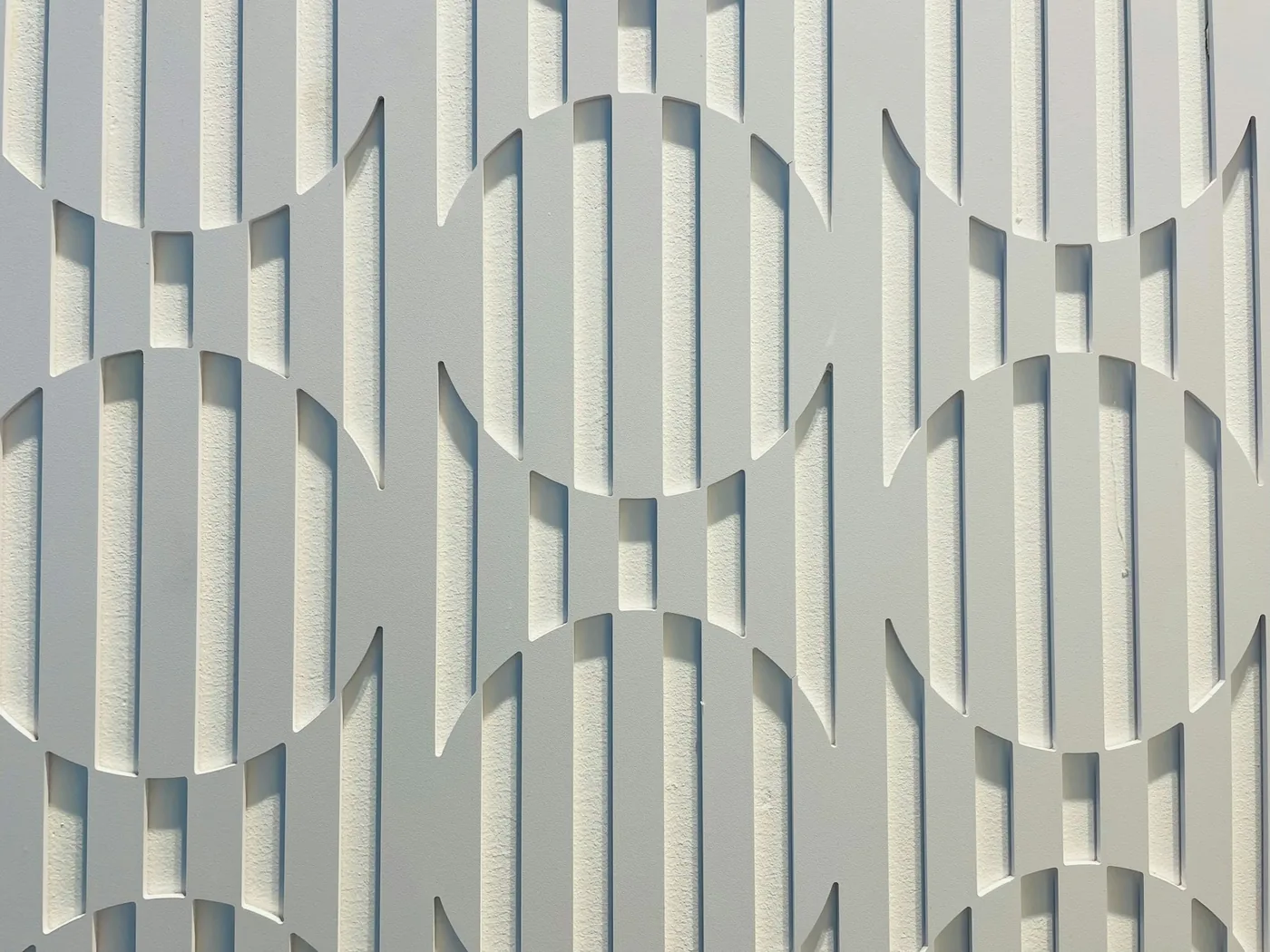
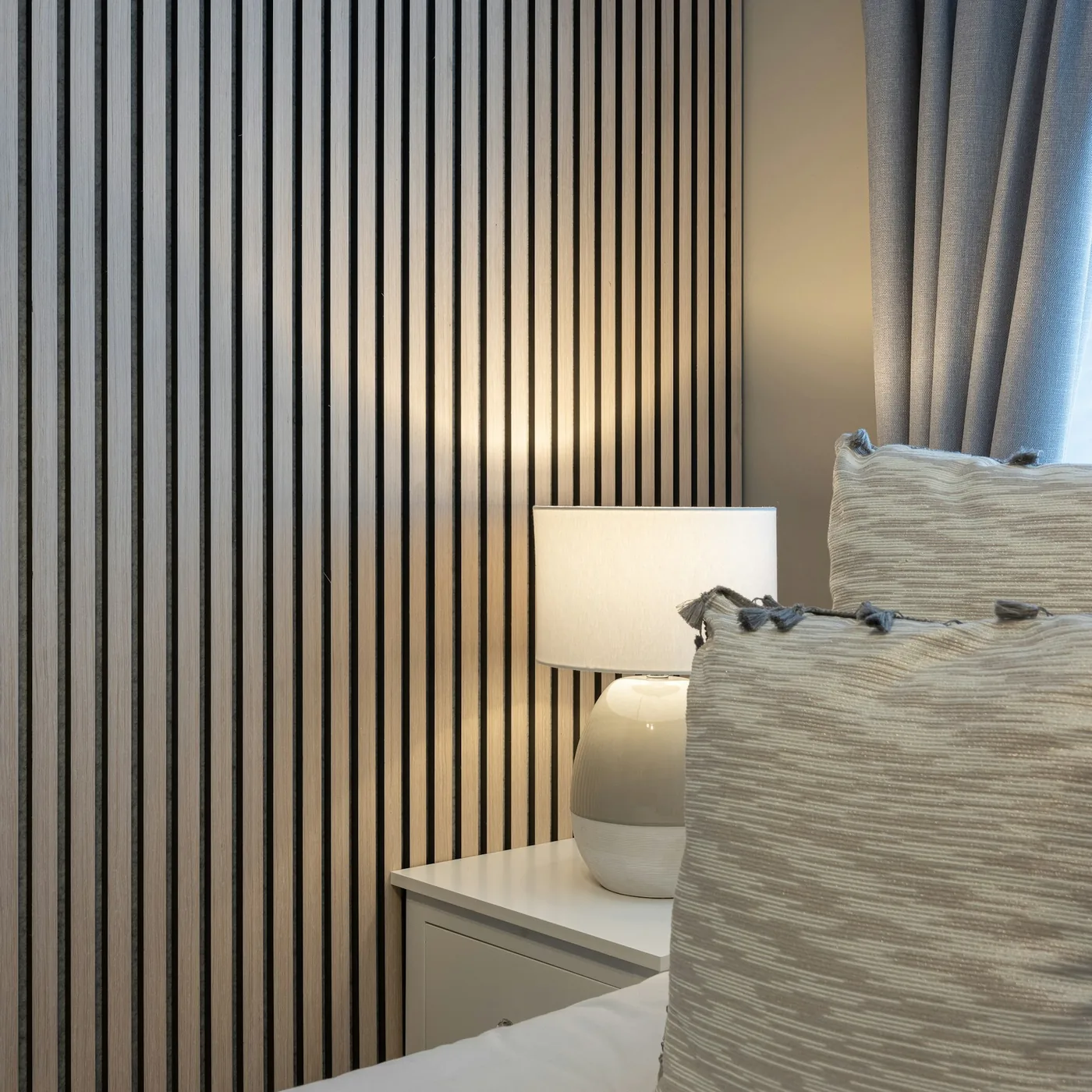
Slim slatted panels, usually a composite sheet with a wood, stone or metallic finish, sold as charcoal panels or charcoal louvers. They give a ribbed feature wall quickly and with very little mess.
In short
By the Drape Haus studio · How we write
Is it right for you?
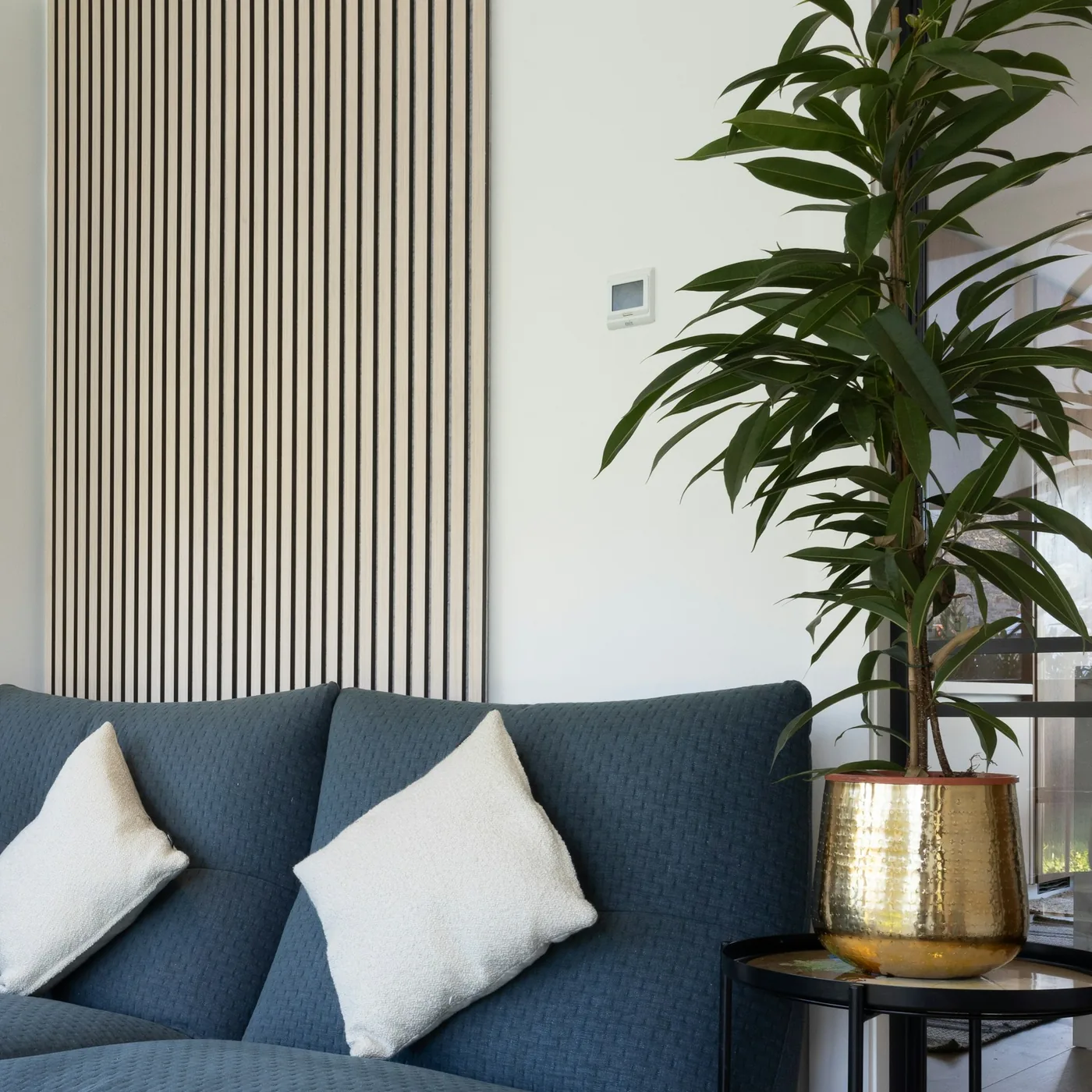
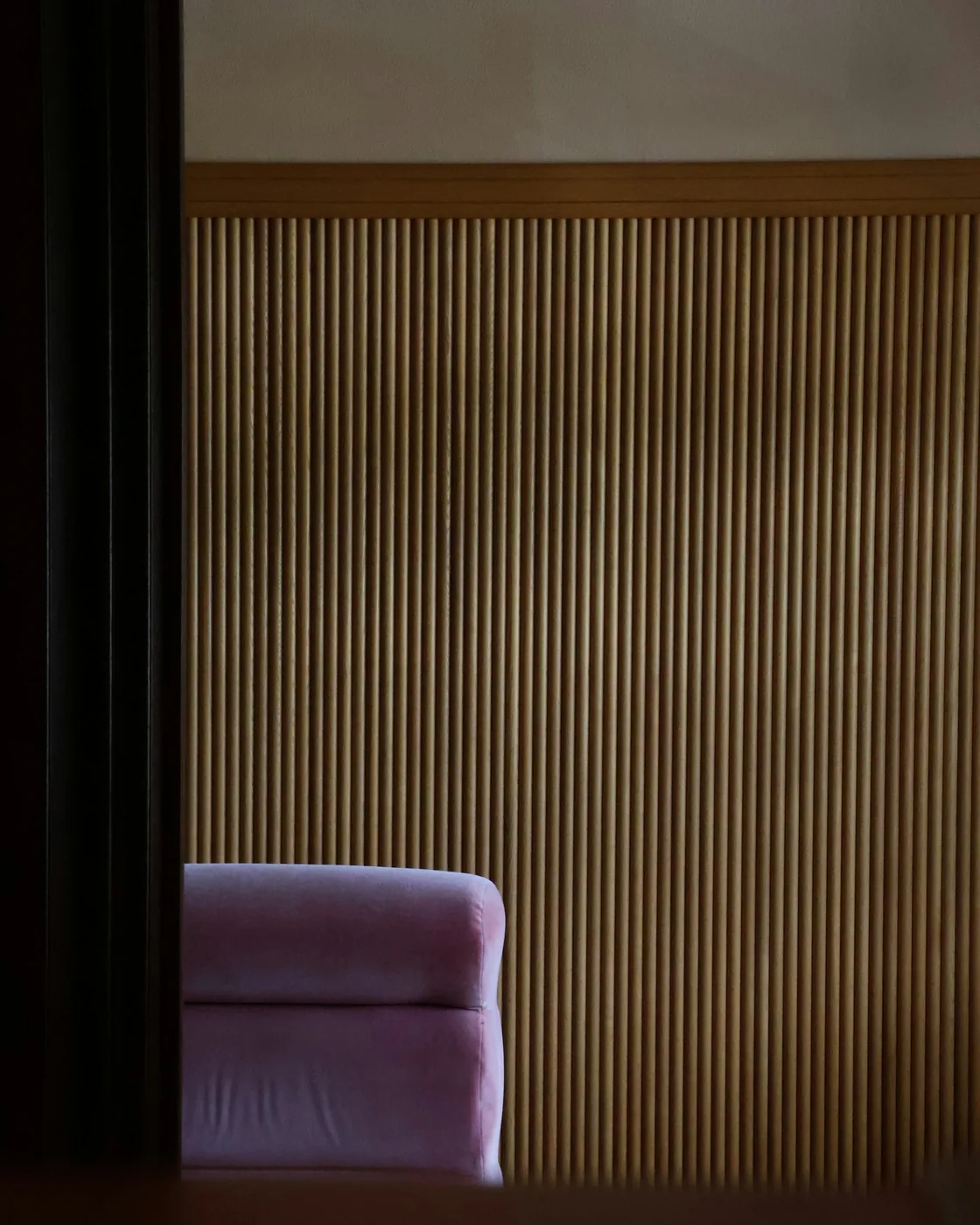
Charcoal panels, often sold as charcoal louver panels, are thin slatted wall panels made from a composite of PVC or a similar polymer with fillers, sometimes described as containing charcoal or bamboo charcoal. They come in long strips, typically with a raised louver or fluted profile on the face and a decorative film in wood grain, stone, concrete, plain colours or metallic tones. They are light, slightly flexible and quick to fix, which is why they have become one of the most asked-about wall finishes for bedrooms, TV walls and shop interiors.
It is worth being clear about the name. The charcoal content, where there is any, is a filler in the core. We have not seen convincing evidence that these panels clean the air, absorb odours or control humidity in a room, and we do not recommend them on that basis. Judge them as what they are: a light, damp-tolerant, easily installed decorative cladding.
On those terms they are useful. They give a slatted, three-dimensional look without the weight or upkeep of timber, they do not swell in the monsoon or attract termites, and the range of finishes is wide. Their limits are about heat, edge finishing, the quality of the film and the wall underneath. This guide covers all of them.
The details
The panels are thin, light and slightly flexible, with a printed or wrapped surface over a composite core. They come in wide sheets that cover a lot of wall at once, and can be fixed with adhesive or with clips on a frame. Matching end and corner trims finish the edges.
The name comes from the charcoal-coloured core or carbon content some versions contain. We treat claims about air purification sceptically; the reason to choose these panels is the look and the speed of fitting, not their effect on the air.
Their weakness is the fixing surface. Adhesive needs a dry, flat, sound wall, and on a Goan wall that is damp or has salt bloom it will let go within a monsoon or two. On doubtful walls we fix on a plywood or composite backing on battens.
They also dislike heat. Keep them away from hot lamps, hobs and unshaded west-facing glass, where the surface can soften or the sheet can bow.
Your options
The core is similar from panel to panel. What changes the result is the slat profile, the face film and how the panel is meant to be fixed.
Swipe for all 6 →
The honest view
Light and quick to fit
The panels are light enough to fix with adhesive and clips, so a feature wall can often be done in a day with little dust or noise.
Indifferent to humidity
The polymer core does not swell or rot in the monsoon and does not interest termites, which suits closed houses and ground-floor rooms.
Wide choice of looks
Wood, stone, plain and metallic finishes can be combined on one wall, so a design can be adjusted without changing the system.
Flexible for curves
Thinner grades bend round columns and rounded corners that rigid panels cannot follow.
Sensitive to heat
The core and film soften and can discolour near sustained heat: halogen lamps, poorly ventilated light drivers, stove areas or direct hot sun on a wall behind glass.
Film quality varies
A thin or poorly bonded film can scratch, peel at the edges or fade in strong light. The finish is only as good as the film.
Edges show quickly
Raw cut ends look unfinished. Every edge needs a trim, a return or a planned stop, or the wall looks home-made.
Not a cure for a bad wall
Adhesive on a damp, dusty or flaking surface fails, and the panel can trap moisture against the plaster.
Side by side
For a slatted feature wall, the realistic alternatives are WPC louvers, real timber slats and fluted PVC panels.
| Charcoal panels | WPC louvers | Timber slats | Fluted PVC | |
|---|---|---|---|---|
| Weight | Very light | Heavier, rigid | Moderate to heavy | Light |
| Humidity and termites | Unaffected | Unaffected | Needs treatment | Unaffected |
| Look up close | Printed film | Laminated or solid colour | Real grain | Printed film |
| Heat tolerance | Low | Moderate | Good | Low |
| Curves | Flexible grades bend | Limited | Difficult | Limited |
| Outdoor use | No | Exterior grades exist | With care | No |
Swipe to compare →
If you want slats on a veranda or exterior wall, look at exterior-grade WPC louvers rather than charcoal panels, which are made for interiors.
Rather see it in your own room?
We bring samples to the house, measure every window, and specify for the light and exposure you actually have.
Room by room
A slatted wall behind the bed is the most common use. The panel copes with a room left shut and humid, and a soft cove light above it shows the profile without heating it.
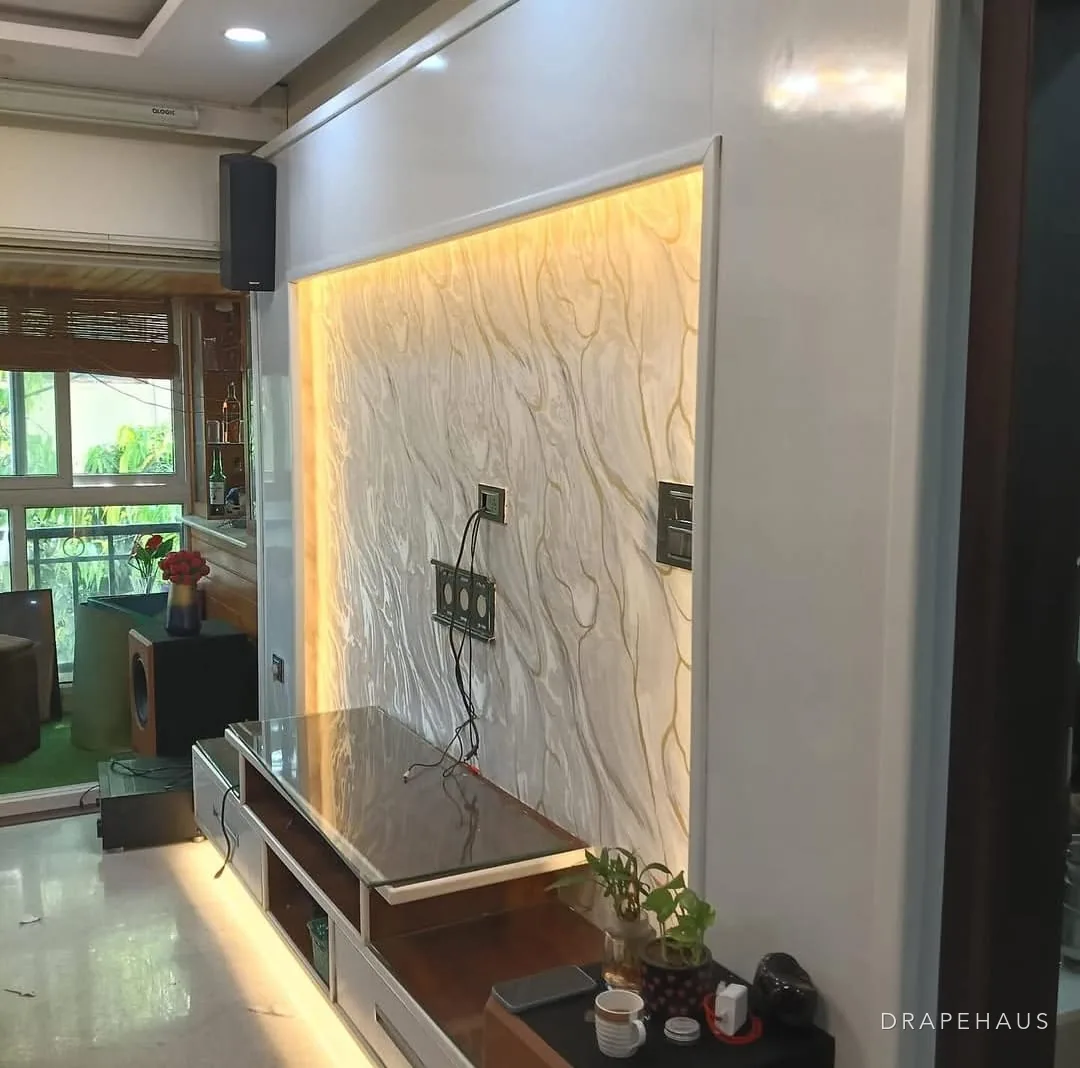
A good backdrop, as long as cable routes, the wall bracket and any light drivers are planned first. The bracket must fix through to the masonry, not to the panel.
Works well as a single feature or a band. Choose a textured wood film; flat prints look thin across a large living-room wall.
Fine on a wall away from the cooking area. Never behind or beside a burner, where heat will distort the panel and the film.
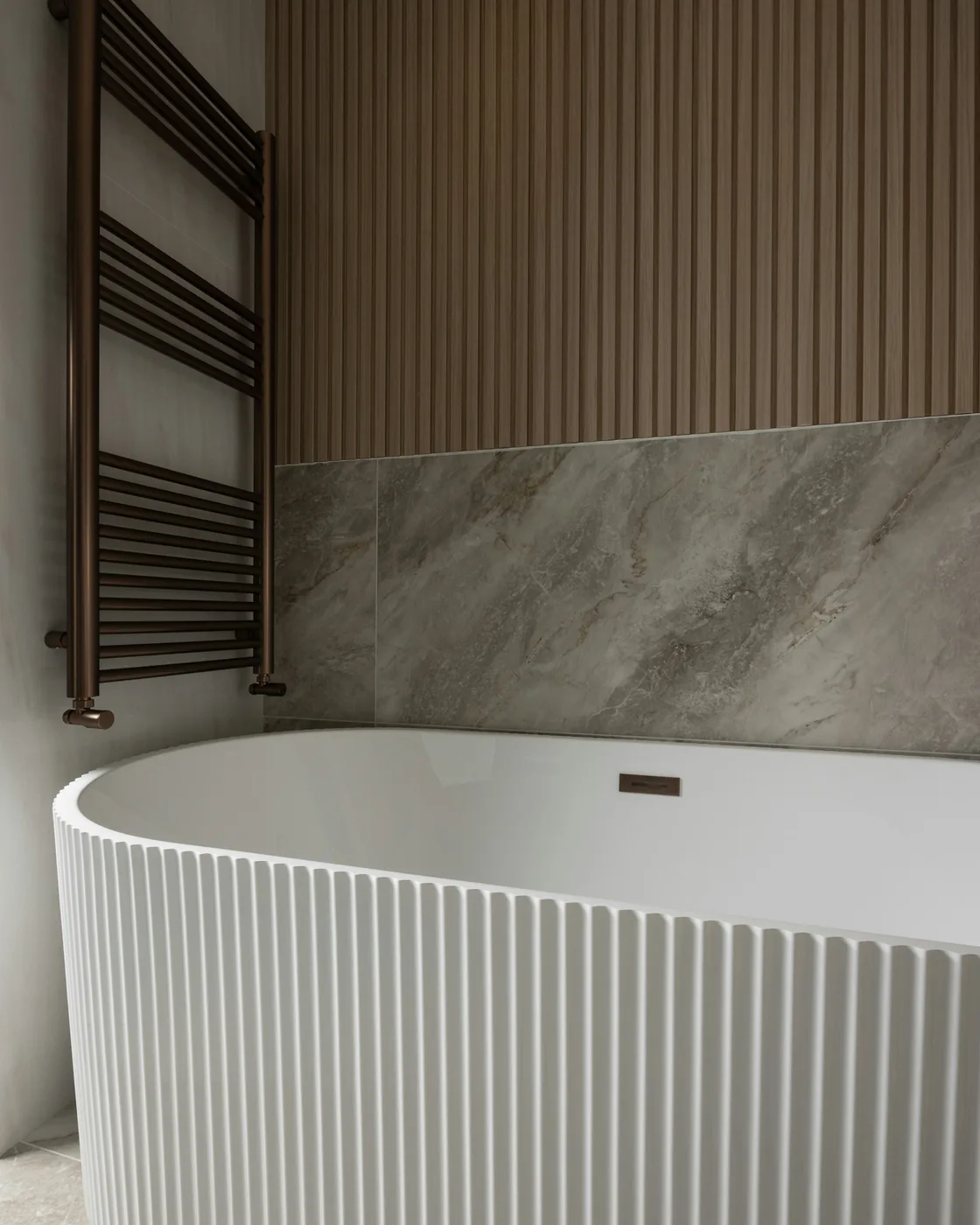
The core tolerates humidity, but grooves trap soap and splashes, and panels are not a waterproof lining. Use only on dry walls outside the wet zone.
Quick to install with little disruption, easy to change at the next refit, and the mix of finishes suits branding zones and display walls.
Most charcoal panels are interior products. Rain, salt and direct sun will fade and distort them outdoors.
In depth — tap a heading to read
Charcoal panels are usually bonded with a construction adhesive, sometimes with clips or concealed screws as well. An adhesive bond is only as strong as the surface it grips. Loose paint, dust, salt bloom and damp plaster all make it fail, and a panel that lets go at one end is hard to refix neatly.
We start with a moisture check across the wall. On laterite walls that take the monsoon on their outer face, readings can be high long after the rain stops. A wet wall needs its cause repaired before cladding. On a dry, sound wall, loose paint is scraped back and the surface cleaned and primed if needed. On uneven or older walls, the panels go on a framework of composite or treated battens, which also leaves a ventilation gap behind them.
The weakest point of a polymer panel is heat. Fixed close to a halogen downlight, an old incandescent fitting or an LED driver squeezed into a closed void, it can yellow, warp or lose its film. Modern LED strip in an aluminium profile is generally fine, provided the driver is mounted where air can reach it and where it can be serviced without removing panels.
Sunlight is the other source. A dark panel on a wall that takes direct afternoon sun through a large window can get hot enough to move. Pale finishes, a blind on that window or choosing a different wall all help. Never fit these panels behind a cooktop, beside a geyser outlet or round a fireplace.
If you cannot comfortably keep your hand on a light fitting after an hour, it is too hot to sit against the panel.
The difference between a professional and an amateur slatted wall is at the edges. Cut ends of the panel show the core, so they need an end cap, a metal or matching trim, or a stop against a contrasting surface such as a painted wall or a ceiling cove. External corners take a corner profile; internal corners are set out so the last slat is not a narrow sliver.
Long runs need a little allowance for expansion, especially on walls that warm up through the day, and joins should line up across the wall. Switches and sockets are moved or extended to sit on a flat slat or in a planned flat zone rather than straddling a groove.
Charcoal panels are often marketed with claims about purifying air, absorbing odours or regulating humidity. A wall panel sealed under a plastic film has very little exposed surface to do any of that, and we do not make or repeat those claims. If a room smells musty, the cause is almost always damp in the wall or poor ventilation, and that needs fixing directly.
What the panels do offer is real enough: they are light, stable in humidity, termite-proof and easy to fit. Buying them for those reasons, and judging the quality by the thickness of the panel, the bond and texture of the film and the accuracy of the profile, gives a better result than choosing on a label.
Near the sea, salt film settles on the slats and in the grooves and can leave a dull haze on dark finishes. A wipe with a damp cloth every few weeks in sea-facing rooms keeps it clear. Metallic films show salt and fingerprints the most, so keep them for trims and inlays rather than large areas.
For homestays and short lets, the panels are a practical way to give a room a recognisable feature wall that tolerates a closed, humid season. Choose mid-tone wood or stone finishes, which hide scuffs, and put a slat or two aside from the same batch so a damaged section can be replaced later.
Living with it
Run a soft brush or vacuum attachment along the slats to lift dust before it combines with humidity into a film.
Wipe marks with a damp cloth and a little mild soap, then dry. Avoid solvents and abrasive pads that cut through the film.
Do not add lamps, heaters or kettles against the wall later. Heat is what damages these panels.
If a trim or end begins to lift, refix it early before dust and moisture get behind it.
Store a few offcuts or a spare panel from the same batch so repairs match in colour and pattern.
Avoid these
The adhesive fails and moisture is trapped behind the panel. Test the wall and repair damp first.
Hot fittings and enclosed drivers discolour and warp the panel. Keep heat sources ventilated and accessible.
Exposed ends look unfinished and chip. Plan trims and stops before fixing.
Buy them for their look and damp tolerance, not for promised air purification.
Rain, salt and full sun break them down. Use exterior-grade WPC louvers on verandas and outside walls.
Checklist
More in wall panels
PVC, WPC, wood, fluted, acoustic and marble-effect panels, chosen for the wall they are going on as much as for the look.
Our process
One team from the first visit to the last bracket, so nothing is lost between the person who specified it and the person who fits it.
FAQ
Some contain carbon or charcoal in the core. In use they behave like other composite panels, and we would not choose them for any effect on air quality.
On a dry, flat, sound wall, yes. On a wall with damp or flaking paint, they need a backing board on battens instead.
In a dry zone of a ventilated bathroom they can. In shower spray, a PVC panel with sealed joints is the safer choice.
Indoors, on a properly prepared wall and away from heat, for many years. Most early failures come from adhesive on damp walls.
We do not recommend them on that basis. The core may contain a charcoal filler, but it sits under a sealed film with little exposed surface. Choose them for their look, light weight and resistance to damp and termites.
The core does not absorb water and copes with high humidity. That does not make the wall waterproof: water can still get behind the panels at joins and edges, so they are not suitable inside showers or as a substitute for damp-proofing.
On a clean, dry, sound wall, adhesive is often enough for short runs, but we usually add clips or screws on tall walls and use battens on uneven or older plaster. A damp wall must be repaired first.
Yes, but the bracket fixes through the panel into the masonry, often with spacers so the panel is not crushed. Cable routes and sockets are planned before the panels go up.
Most are made for interiors and will fade and distort in rain and direct sun. For a veranda or exterior wall, exterior-grade WPC louvers are the better choice.
Next step
A slatted wall looks right when the edges, lights and switches are planned around it. We visit, check the wall for moisture and soundness, note every fitting and light source, and bring full-length samples of the finishes so you can see them in your own light. Then we set out the slats, trims and fixings and fit the wall with our own team. Book a home visit to get started.