 Drapehaus
Drapehaus
Preparing the room
Drapehaus
Preparing the room
For owners of portuguese-era and traditional goan houses
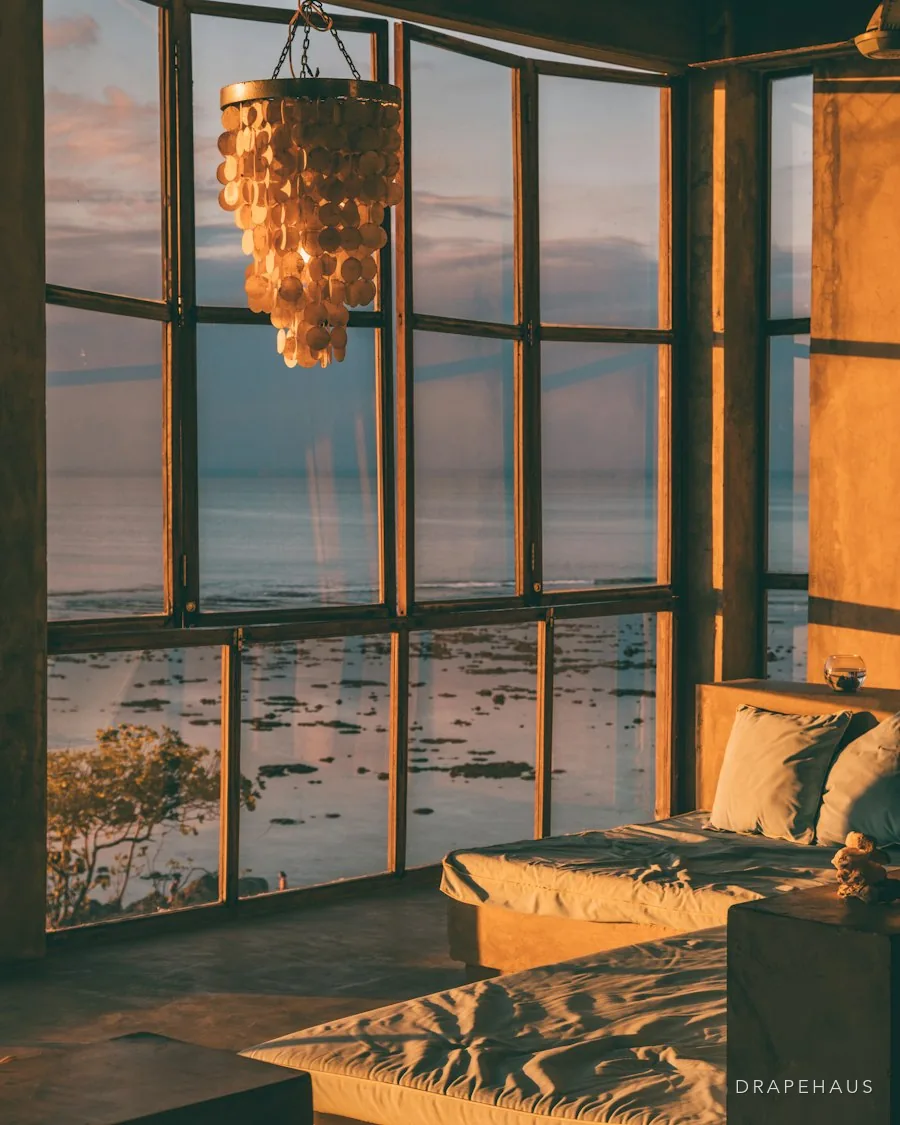
Heritage houses are the buildings where standard curtain practice does the most damage. A track fixed across the reveal disables shutters that have worked for a century. A bracket drilled carelessly into laterite takes a fist-sized piece of wall with it. A lined curtain over oyster-shell panes kills the exact quality of light those panes exist to create.
Four to eight weeks depending on the number of openings. Survey is slower than a modern house and should not be rushed.
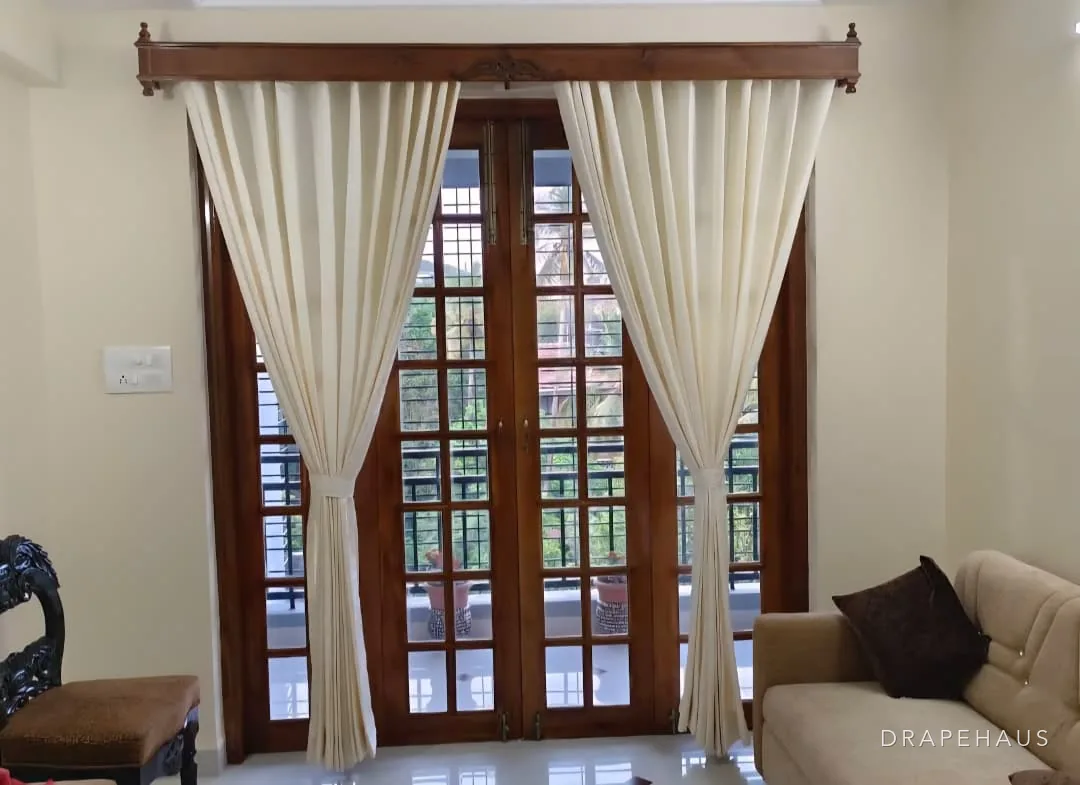
The work here is often subtractive. Usually the right answer involves less fabric than expected, hung further forward, on fixings chosen for the wall rather than for the curtain.
We survey by hand before quoting. It is the one category where we will not work from photographs.
How it runs
What’s included
Not every project uses all of these. We scope against what the property actually needs.
Typically these homes
FAQ
Not if the fixing method suits the wall. Laterite and lime plaster will not hold standard plugs under the cyclic load of a curtain. We use resin anchors into sound substrate, spread the load across extra brackets, or fix into the original hardwood frame instead.
You should, and protecting that is the first thing we design around. Anything we fit goes face-mounted above and wide of the reveal so the shutter leaf clears the fabric. Where the room cannot take that width, we would rather leave the window bare than disable the shutters.
Rarely during the day. Carepa panes already diffuse light beautifully and adding a sheer behind them just makes the room dim. A curtain that draws fully clear in daylight and closes in the evening gets the best of both.
Because the wall has to be assessed by hand. Whether the plaster is lime or cement, whether it is bonded or lifting, and whether the masonry behind is sound cannot be judged from an image, and getting it wrong damages the building.